Plan your trip to Nepal's national parks
Nepal's national parks span the most dramatic elevation range of any country on Earth. In a single trip you could watch a one-horned rhino graze the floodplain at sunrise and stand below the summit of Everest a week later. Few countries make this possible.
This is the planning hub for international visitors. The whole site exists to help you decide which of Nepal's 13 national parks to visit, when, and how — without selling you a tour. We don't take bookings, we don't recommend specific operators, and we don't take commissions. We're here to give you the most honest, most thorough English-language guide we can to Nepal's parks. Everything else — flights, lodges, guides — you'll arrange yourself or through trusted local providers you've chosen on your own terms.
If this is your first trip to Nepal, start at the top. If you know what you're after, jump ahead.
Start here if you're new to Nepal
Nepal is a small country with extraordinary range. It sits between India and China (Tibet), is roughly the size of Greece or the US state of Tennessee, and is divided into three climate zones that run east–west like stripes:
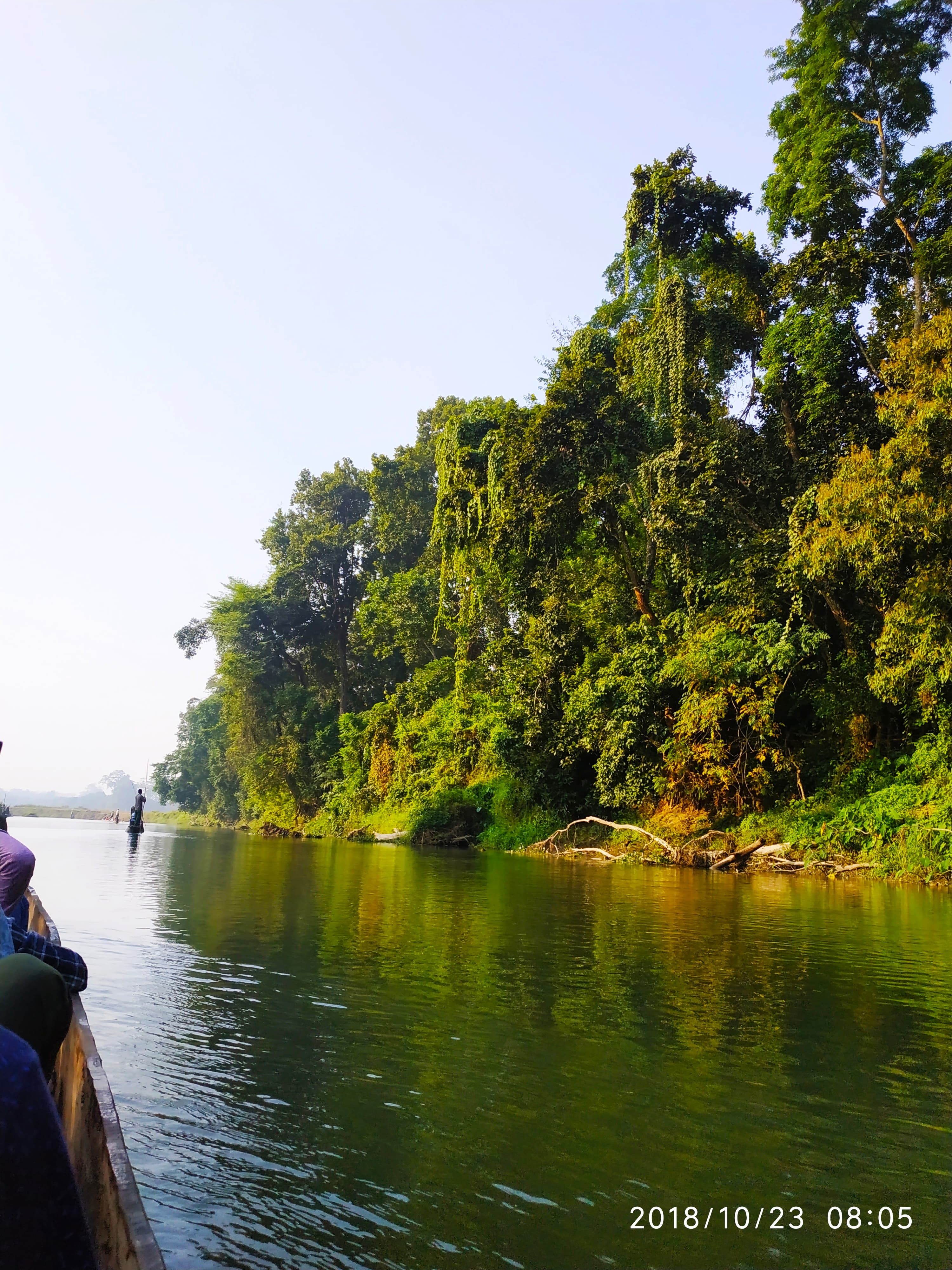
- The Terai — the flat subtropical lowlands along the Indian border. Hot, humid, jungle and grassland, big animals. This is Chitwan, Bardiya, Banke, Parsa, Shuklaphanta.
- The hills — the rolling middle, where most Nepalis live. Subtropical valleys to subalpine forest. Khaptad and Shivapuri Nagarjun.
- The high Himalaya — the mountain north, including Everest, the world's highest peak. Sagarmatha, Langtang, Shey Phoksundo, Makalu Barun, Rara, Chhayanath.
Most international visitors arrive at Tribhuvan International Airport in Kathmandu. From there, you'll travel out to the parks by domestic flight or by road. For practical purposes, treat Kathmandu as the start of every trip.
The country is structured around two main seasons that matter to visitors:
- The dry season (October to April) — clear skies, mild temperatures, the best wildlife visibility and the standard trekking windows. This is when most foreign tourists come.
- The monsoon (June to September) — wet, humid, the rivers run high, many trails wash out or close, the views close in with cloud. Travel is harder. The terai parks become more challenging; the high Himalayan trekking routes are mostly off-limits.
Plan around the dry season unless you have a specific reason to come during monsoon.
Common visitor decisions
Most international visitors face one of three broad choices. We've written guides to each:
- When to visit — month-by-month, park by park. The most-asked question on this site.
- Getting around Nepal — from Kathmandu to every park, by flight and by road. Realistic times, what each option costs you in time vs. money.
- Permits and fees — what every park costs to enter and what additional permits you need. The system is more complex than most countries; we explain it clearly.
Beyond those, three more:
- What to pack — by park type. Wildlife trips and Himalayan treks need very different kits.
- Safety and altitude — the serious one. Altitude sickness in particular kills people in Nepal every year.
- Visiting respectfully — the parks sit on the lands of communities (Tharu in the Terai, Sherpa in the Khumbu, Tamang around Langtang, Dolpo in the far west). They are part of why these places exist as they do. How to travel here in a way that respects that.
Which park?
If you have a specific Nepal trip in mind, the comparison tool lets you put any two or three parks side by side. If you're not sure where to start, the park finder asks you four short questions about what kind of trip you want and ranks the parks accordingly.
You can also browse all 13 parks on the homepage, or read our long-form pieces on the biggest planning questions:
- Your first trip to Nepal's national parks
- Choosing between Chitwan and Bardiya
- Trekking vs. wildlife — the two Nepals
- Sagarmatha or Annapurna? A national-park perspective
Practical realities you should know before booking flights
Three things every international visitor should understand up front.
Visas. Most nationalities can get a tourist visa on arrival at Tribhuvan International Airport in Kathmandu and at several land border crossings. The current fees, set by Nepal's Department of Immigration and standard for 2026, are USD 30 for 15 days, USD 50 for 30 days, and USD 125 for 90 days, payable in clean USD cash on arrival (cards are sometimes accepted but don't rely on them). Visas are multiple-entry by default and extendable up to a total of 150 days per calendar year through the Department of Immigration in Kathmandu or Pokhara. Indian citizens need no visa under the 1950 Indo-Nepal Treaty; SAARC citizens (Bangladesh, Bhutan, Maldives, Pakistan, Sri Lanka) get a free 30-day visa once per calendar year. A small number of countries — including Nigeria, Ghana, Zimbabwe, Cameroon, Ethiopia, Liberia, Somalia, Eswatini, Afghanistan, Iraq, Syria — are not eligible for visa on arrival and must apply through a Nepalese embassy before travelling. Your passport needs at least six months of validity beyond your arrival date. Always confirm the current rules with the official Department of Immigration of Nepal before you fly; this is the only authority on current fees and eligibility.
Permits beyond the visa. Most national parks charge an entry fee, and many trekking areas require additional permits (a TIMS card, conservation-area permits, restricted-area permits for some regions). The system varies park by park and isn't always intuitive. We cover this in permits and fees.
Altitude. If you're heading into the high Himalaya — Sagarmatha, Langtang, Shey Phoksundo, Makalu Barun — altitude is the single most important factor in trip planning. Acute mountain sickness (AMS) is real, can be life-threatening, and doesn't care how fit you are. You will need acclimatisation days built into your itinerary; experienced trekkers go slowly. See safety and altitude.
Two short notes on how we work
Everything on this site is sourced. Every fact — populations, fees, dates, distances — traces back to a real source (Nepal's Department of National Parks and Wildlife Conservation, the Nepal Tourism Board, UNESCO, peer-reviewed research, established travel literature). Where we can't verify something, we mark it as needing verification rather than guessing. You'll see "verified [date]" notes throughout. We update them as we re-confirm.
Things change. Park fees go up. Roads close. Trails wash out. Operators come and go. We can't catch every change in real time. For anything that matters to your safety or your wallet — permit costs, trail conditions, weather windows — confirm directly with the official sources we link to before you commit.
We're glad you found us. Nepal's parks are extraordinary, and we want your trip to be as good as it can be.