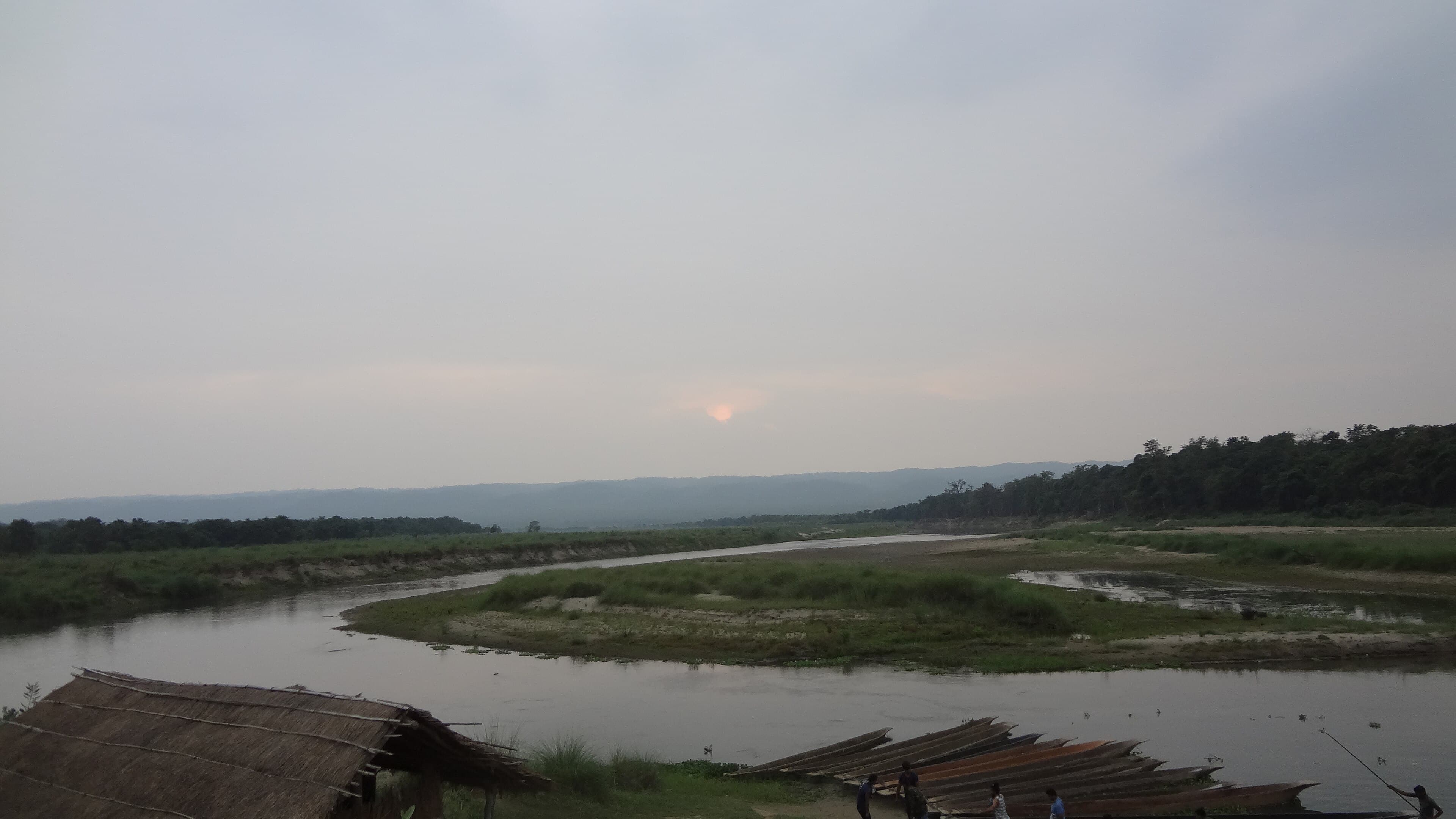
The DNPWC: how Nepal administers its national parks
Nepal protects close to a quarter of its land area inside a system of national parks, reserves and conservation areas. That system is administered by a single government department: the Department of National Parks and Wildlife Conservation — in Nepali, राष्ट्रिय निकुञ्ज तथा वन्यजन्तु संरक्षण विभाग — known almost universally by its English initials, DNPWC.
This page is reference material. It explains how Nepal's protected-area system is run: where DNPWC sits in the structure of government, the law it operates under, how it is led and organised, what it manages, and the army units and partner organisations it works alongside. It is not a promotional page, and it is not the place to look for the name of a particular park's chief warden — those are administered separately and rotate regularly (see Park leadership on each park's page).
DNPWC at a glance
DNPWC is a department of the Ministry of Forests and Environment of the Government of Nepal. It is headquartered at Babar Mahal, Kathmandu, and is responsible for the conservation and management of the country's national parks, wildlife reserves, hunting reserve, conservation areas and their associated buffer zones — the legally protected landscapes that together cover 23.39% of Nepal's land area.
The department's mandate runs from field-level park protection through to national policy: it manages protected areas on the ground, regulates wildlife and the trade in wildlife products, leads anti-poaching enforcement, runs species-recovery and habitat-management programmes, administers buffer-zone community institutions, and represents Nepal in international conservation agreements such as CITES. Its official website is dnpwc.gov.np.
History and legal foundation
Nepal's modern conservation system predates the department itself. The foundational law is the National Parks and Wildlife Conservation Act, 1973 — the statute under which Chitwan, Nepal's first national park, was established that same year. The Act remains the backbone of protected-area law in Nepal and has been amended several times since.
The Department of National Parks and Wildlife Conservation was established in 2037 BS (1980 AD) to administer the growing protected-area network that the 1973 Act had set in motion. From a single park in 1973, the system DNPWC oversees has grown across five decades into the present network of twenty-some protected areas spanning the Terai lowlands, the midhills and the high Himalaya.
Several later instruments sit on top of the 1973 Act:
- The buffer-zone concept was introduced as a fourth amendment to the NPWC Act in 1993, with the Buffer Zone Management Regulation following in 1996. This created the legal mechanism by which a defined zone around each park shares in park revenue and takes part in management — the foundation of Nepal's community-conservation model.
- The CITES Act, 2017 gave Nepal domestic legislation to implement the Convention on International Trade in Endangered Species, strengthening the legal basis for controlling wildlife trade.
DNPWC's longer-term direction is set out in published strategy documents, most recently the Protected Area Management Strategy 2022–2030.
Current leadership
DNPWC is headed by a Director General (DG), a senior civil-service post within the Ministry of Forests and Environment. As of this page's verification date in June 2026, the Director General is Dr. Buddhi Sagar Poudel, whose appointment was announced via the DNPWC homepage. He succeeded Dr. Ramchandra Kandel, the recent previous Director General.
The role has turned over through the normal course of civil-service appointments. An earlier Director General, Dr. Maheshwar Dhakal, signed the Protected Area Management Strategy 2022–2030 during his tenure.
DNPWC's senior structure includes deputy and divisional posts beneath the Director General, but this page does not name individual deputies: those positions are filled through internal personnel processes that are not reliably published, and naming a holder without direct DNPWC confirmation would risk stating something already out of date. Where a current name matters — at department or park level — the authoritative source is DNPWC itself.
Departmental sections
Below the Director General, DNPWC's work is divided among functional sections. The divisions visible on the department's own staff structure cover the major areas of its remit:
- Ecology — species and habitat science, monitoring of populations and ecosystems.
- Planning — programme and budget planning, protected-area planning, project coordination.
- Management — operational management of the protected-area network.
- Conservation Education — public awareness, outreach and environmental education.
- Monitoring and Evaluation — tracking the performance of programmes and protected areas.
- Wildlife Crime Control — coordination of anti-poaching and anti-trafficking enforcement.
- Administration — personnel and general administration.
- Account — financial administration.
- Information Technology — data systems and digital infrastructure.
Each park headquarters then reports up into this departmental structure, with a chief warden leading day-to-day management on the ground and reporting to the department in Kathmandu.
The protected-area system
DNPWC manages a network of protected areas across Nepal's three physiographic zones. With the gazetting of Chhayanath National Park in August 2025, the system comprises 21 protected areas, broken down as:
- 13 national parks
- 1 wildlife reserve — Koshi Tappu
- 1 hunting reserve — Dhorpatan
- 6 conservation areas — Annapurna, Api Nampa, Gaurishankar, Kanchenjunga, Krishnasaar (Blackbuck) and Manaslu
- 13 buffer zones attached to the parks and reserves
A note on the count: Chhayanath, Nepal's thirteenth and newest national park, was gazetted on 29 August 2025 — approved by the Cabinet on a proposal from the Ministry of Forests and Environment — carved from the Dolphu area of Mugu that had previously been managed as part of Shey Phoksundo National Park. Because the change is recent, some of DNPWC's published top-line materials still read "12 national parks" and "20 protected areas"; those figures lag the gazette rather than contradict it, and should read 13 and 21 once revised. This site counts Nepal as having 13 national parks; expect to see both totals in circulation while DNPWC's published figures catch up, and take the current DNPWC figure, with its date, as authoritative for any official purpose.
Together these protected areas cover 23.39% of Nepal's land area — close to a quarter of the country under formal protection. The buffer zones are central to how this works in practice: a defined share of each park's revenue is returned to buffer-zone community institutions for local development and conservation, the mechanism that ties the protected-area system to the communities living at its edges.
The Nepal Army's role
A distinctive feature of Nepal's system is that the Nepal Army provides protection deployments inside the major national parks. This is not an ad-hoc arrangement: army protection of parks dates from Chitwan's founding in 1973 and has been a continuous element of Nepal's anti-poaching model ever since.
Army units stationed in and around the parks staff protection posts, run patrols, and operate alongside DNPWC's civil staff and the buffer-zone communities. DNPWC retains overall management authority for each protected area — policy, planning, science, community programmes and warden-led operations — while the army contributes the physical-protection and patrolling capacity that has underpinned Nepal's results against poaching, including its well-documented stretches of zero rhino poaching.
The partner ecosystem
DNPWC does not work alone. A consistent set of national and international conservation organisations appears throughout the department's programmes and documents, providing technical support, funding, research and community-programme delivery:
- National Trust for Nature Conservation (NTNC) — a national conservation organisation that manages several conservation areas and runs major species and community programmes in partnership with DNPWC.
- WWF Nepal
- Zoological Society of London (ZSL) Nepal
- IUCN Nepal
- Bird Conservation Nepal (BCN)
- Himalayan Nature
These organisations integrate with DNPWC operations in different ways — co-managing protected landscapes, funding and running field programmes, providing scientific monitoring, and supporting buffer-zone community institutions — but always under the department's overall authority for the protected areas concerned.
How to contact DNPWC
For institutional enquiries, DNPWC is reached through its headquarters and official channels:
- Address: Department of National Parks and Wildlife Conservation, Babar Mahal, Kathmandu, Nepal
- Website: dnpwc.gov.np
- Parent ministry: Ministry of Forests and Environment
The appropriate route depends on the enquiry:
- Research and academic enquiries — including research permits inside protected areas — go through DNPWC headquarters in Kathmandu.
- Media enquiries go through the department's headquarters.
- Permits and fees for visiting the parks are administered by DNPWC and the Nepal Tourism Board; see this site's permits and fees page for the practical detail.
- Park-specific enquiries are best routed via DNPWC headquarters or the relevant park headquarters.
This page does not publish the personal phone numbers or email addresses of individual officials. Those change with personnel, and the correct point of contact is the institution rather than the post-holder.
Sources
- Department name, Nepali name, parent ministry, headquarters and website — Department of National Parks and Wildlife Conservation, dnpwc.gov.np; Ministry of Forests and Environment, mofe.gov.np.
- Establishment of the department, 2037 BS (1980 AD) — DNPWC institutional history, dnpwc.gov.np.
- National Parks and Wildlife Conservation Act, 1973, and the 1973 founding of Chitwan as Nepal's first national park — NPWC Act, 1973 (with subsequent amendments).
- Buffer-zone fourth amendment (1993) and Buffer Zone Management Regulation (1996) — NPWC Act amendments and buffer-zone regulation.
- CITES Act, 2017 — Government of Nepal.
- Protected Area Management Strategy 2022–2030, signed under DG Dr. Maheshwar Dhakal — DNPWC.
- Current Director General, Dr. Buddhi Sagar Poudel, succeeding Dr. Ramchandra Kandel — DNPWC homepage announcement, dnpwc.gov.np (verified June 2026).
- Departmental sections — DNPWC staff structure, dnpwc.gov.np/en/staffs.
- Protected-area breakdown (13 national parks, 1 wildlife reserve, 1 hunting reserve, 6 conservation areas, 13 buffer zones; 21 protected areas total) and the 23.39% coverage figure — DNPWC, with the national-park and protected-area totals updated for the August 2025 gazetting of Chhayanath; DNPWC's older top-line materials may still show 12 and 20 pending revision.
- Chhayanath National Park, Nepal's 13th, gazetted 29 August 2025 from the Dolphu area of Mugu (formerly part of Shey Phoksundo) — Cabinet decision on a Ministry of Forests and Environment proposal; Government of Nepal gazette notice, August 2025.
- Nepal Army protection of parks since 1973 — DNPWC and Nepal Army; long-established element of Nepal's anti-poaching model.
- Partner organisations (NTNC, WWF Nepal, ZSL Nepal, IUCN Nepal, BCN, Himalayan Nature) — referenced throughout DNPWC programme documents.
This is a reference page, last reviewed on the date shown above. Counts of protected areas and the identity of office-holders change; for any official purpose, confirm the current figures directly with the DNPWC. This is not an official government website.