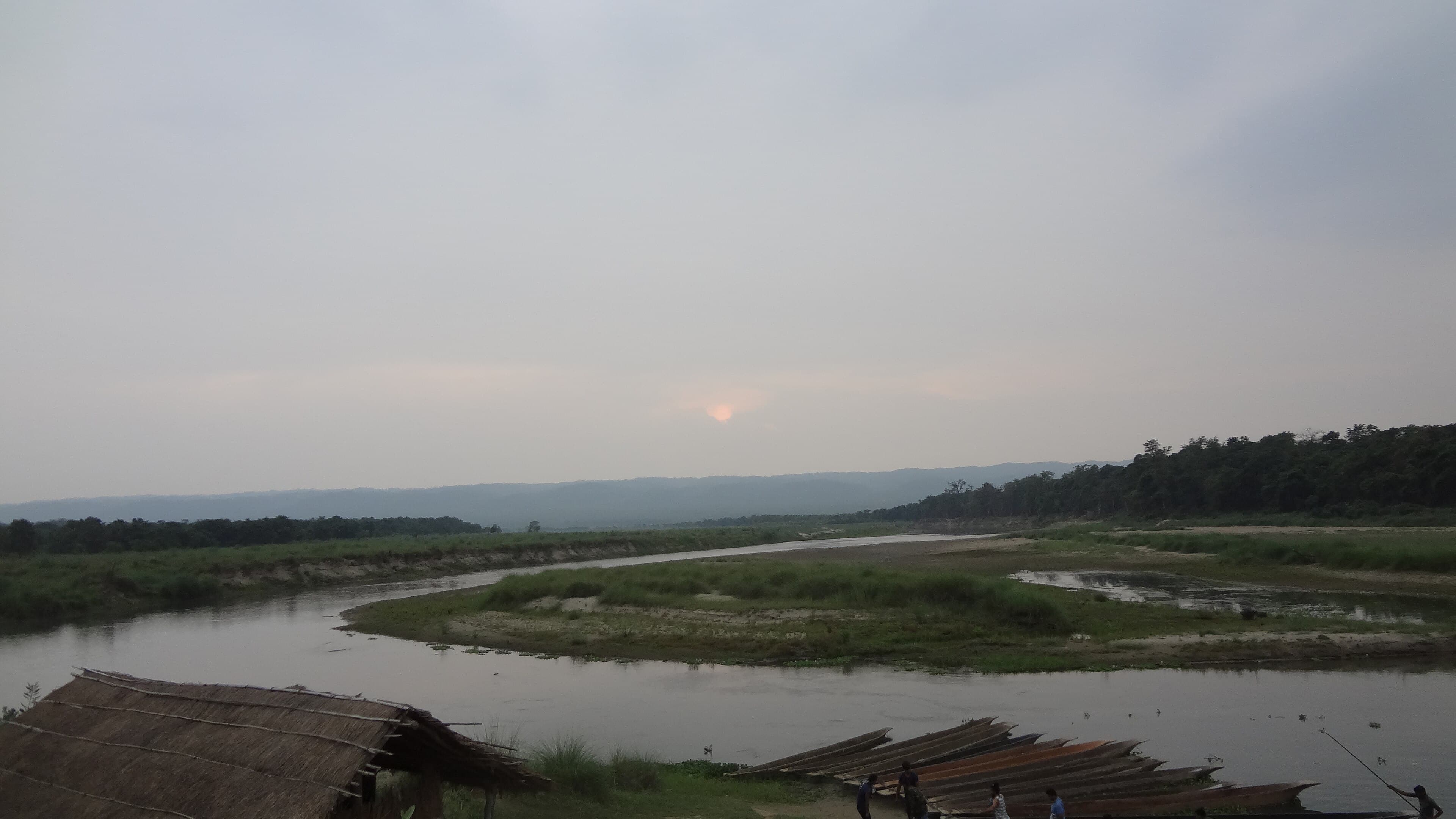
When to visit Nepal's national parks
The short answer: October and November. Autumn brings clear skies, dry air, mild temperatures, the best wildlife visibility in the Terai parks, and the most reliable trekking conditions in the Himalaya. If your dates are flexible and you can only pick one window, pick that one.
The longer answer is that Nepal has five rough seasons rather than four, and each park sits differently within them. Where you're going changes the answer.
Nepal's seasonal rhythm
Nepal's climate runs on the South Asian monsoon. The country has one wet season and one dry season, with two transitional periods between them. The standard breakdown:
- Autumn (October–November) — the peak season. Skies clear after the monsoon, the air is washed of dust and haze, mountain views are at their sharpest, and temperatures are comfortable.
- Winter (December–February) — cold at altitude, mild in the lowlands. High Himalayan passes can close; lower-elevation trekking and Terai wildlife visits continue.
- Spring (March–May) — the second great trekking and visiting window. Rhododendrons bloom across the hills; days lengthen; daytime temperatures climb.
- Pre-monsoon (May) — increasingly hot in the Terai, hazy in the mountains, with afternoon storms beginning to build.
- Monsoon (June–September) — heavy rain, landslides, leeches, closed trails, and reduced wildlife visibility. Travel slows significantly. Some intrepid visitors love the empty trails and lush colour; most do not.
These windows are increasingly approximate. Climate change is making the monsoon arrive later and linger longer, and extending the shoulder seasons unpredictably. The general shape still holds, but the edges are softer than they were.
Best windows by park type
Nepal's national parks fall into three climate zones, and each one has a different "best time."
The Terai parks (Chitwan, Bardiya, Banke, Parsa, Shuklaphanta)
Best: October to March (the dry season).
The lowland subtropical parks become genuinely hot and humid in summer (up to 35°C) and almost unvisitable during monsoon — high water levels, swollen rivers, dense undergrowth that hides wildlife, mud everywhere. The dry season concentrates animals around shrinking water sources, which is exactly what visitors want for sightings. Mornings are cool, sometimes foggy; days warm pleasantly; evenings are comfortable.
Within the dry season, two sub-windows have their own character:
- October–November: Post-monsoon, lush, with the best general wildlife combination. The grass is still tall after the rains, which helps for some species and hides others.
- December–March: The grass is being burnt back by park management (a real, planned process — don't be alarmed by smoke), and visibility improves further. Tiger sightings are slightly more likely in the late dry season as cover thins. Mornings can be properly cold.
Worst: June to September (monsoon). Roads can wash out, rivers run high, mosquitoes are dense, and many lodges close or reduce service. Visit only if you have a specific reason.
The high-Himalayan parks (Sagarmatha, Langtang, Shey Phoksundo, Makalu Barun, Rara, Chhayanath)
Best: late March to late May, and September to late November.
These are the standard Himalayan trekking windows, and they hold for all the high parks. Outside them, conditions become difficult or dangerous for the casual trekker.
- Spring (March–May): Rhododendrons bloom across the mid-hills and foothills, peaking in April. Days are clear and warm; high passes are usually open by April. Late May becomes hot in the foothills and hazy in the mountains as pre-monsoon moisture builds.
- Autumn (September–November): Visibility is at its peak — the monsoon has scrubbed the air, and the mountain panoramas from places like Kala Patthar (Sagarmatha) and the Langtang valley are at their clearest. October and November are the most popular trekking months; teahouses on the Everest Base Camp and Annapurna routes fill up, and booking ahead is essential.
Winter (December–February) in the high parks: clear skies, exceptional views, very cold nights (well below -20°C above 5,000 m), and a real risk of pass closures from snow. Lower-elevation portions of the trekking routes are still doable; high passes generally are not. Fewer trekkers means quieter trails.
Monsoon (June–August) in the high parks: not advised. Trails wash out, leeches arrive, cloud cover obscures the views that are the point of being there, and flight cancellations to Lukla (the gateway to Sagarmatha) become routine. The single exception is the trans-Himalayan rain shadow — Shey Phoksundo, Upper Dolpo, and parts of the Manang valley sit in the rain shadow of the Himalaya and stay relatively dry even during monsoon. These are the few mountain trekking destinations that work in summer.
The hill parks (Khaptad, Shivapuri Nagarjun)
Best: October to May, with monsoon spectacular but harder.
Nepal's mid-hill parks have a much milder climate than either the Terai or the high mountains, and a wider visiting window. Khaptad in particular has unusual climatic gentleness — its plateau temperatures rarely drop below 0°C or exceed 20°C, making it visitable across most of the year. The wildflower displays on Khaptad's meadows are at their most spectacular during and just after the monsoon (July–September) — the one season when visitors who can tolerate the rain and mud see what the locals love most.
Shivapuri Nagarjun, on the northern rim of the Kathmandu valley, is a year-round day-hike option. Autumn and spring are clearest; winter is cold but dry; monsoon is lush.
What month to choose, if you're optimising
If you have a hard window and have to pick:
- October–November. The peak season. If you can only visit Nepal once and want the most reliable conditions across trekking and wildlife, this is the answer. Book accommodation ahead — popular trekking routes and Sauraha lodges fill up.
- March–April. Nearly as good. Rhododendron bloom in the mid-hills makes the trekking visually distinctive; days are getting longer. Slightly fewer tourists than peak autumn.
- December–February. Best for Terai wildlife specifically (cool weather, good visibility, mild conflict with peak-season crowds). High Himalayan trekking limited to lower-altitude routes.
- May. Increasingly hot in the lowlands but workable; mountain views hazy. Acceptable but not optimal.
- June–September. Mostly avoid. Specialist exceptions: rain-shadow treks (Upper Dolpo, parts of Manaslu), Khaptad in wildflower bloom, off-peak cultural exploration in the cities.
Festivals worth knowing about
Nepali festivals follow the lunar calendar, so dates shift each year — confirm against a current calendar before assuming. The two most important to plan around:
- Dashain (September–October). Nepal's biggest festival, lasting roughly two weeks. Many businesses close, transport is busy, and people travel to family homes — flights and bus seats fill up, lodges in tourist areas may have staff shortages, but the cultural atmosphere is extraordinary.
- Tihar (October–November). The festival of lights. Less travel disruption than Dashain, and visually beautiful in the cities and villages.
If your trip overlaps with either, plan transport and lodging further ahead than you might otherwise. They are not reasons to avoid Nepal — most visitors find them a highlight — but they do change the operational reality on the ground.
A handful of smaller park-relevant festivals to know:
- Janai Purnima at Gosainkunda (Langtang) — annual Hindu/Buddhist pilgrimage to the sacred lake, August. Crowded if you visit then.
- Mani Rimdu at Tengboche Monastery (Sagarmatha) — a several-day Sherpa Buddhist festival, typically in October or November depending on the lunar calendar. A rare cultural opening for trekking visitors; confirm current-year dates.
A note on changing patterns
The seasonal windows above are the patterns of the past decade or two. The actual climate is shifting. Monsoon onset is later than it used to be; the dry season is sometimes interrupted by unseasonable rain; high-altitude snowfall is becoming less predictable. Park managers and trekking operators talk about this openly. Build flexibility into your dates if you can; check current conditions in the weeks before you travel; and confirm with your operator (if you're using one) or with the Nepal Tourism Board for the latest on trail conditions.
We don't publish a real-time weather feed because it would age out and become misleading. The honest practice is to plan around the patterns above and verify the specifics close to your travel dates.
Next in /plan:
- Permits and fees — what every park costs and what additional permits you need
- Getting around Nepal — Kathmandu to every park, by flight and road
- Safety and altitude — the serious one for high-Himalayan trekking
Sources & further reading:
- Nepal Tourism Board seasonal guidance.
- Best Time to Visit Nepal — established travel guidebooks and tour-operator guidance (Audley Travel, Responsible Travel, Selective Asia, multiple Nepali operators), all in consistent agreement on the autumn/spring trekking windows and the Terai dry-season pattern.
- Climate Change implications: WMO South Asian Climate Outlook, applied to seasonal predictability.
Patterns described here are based on long-term seasonal data and recent observations. Climate change is making them less reliable at the edges. Verify current conditions before travel.