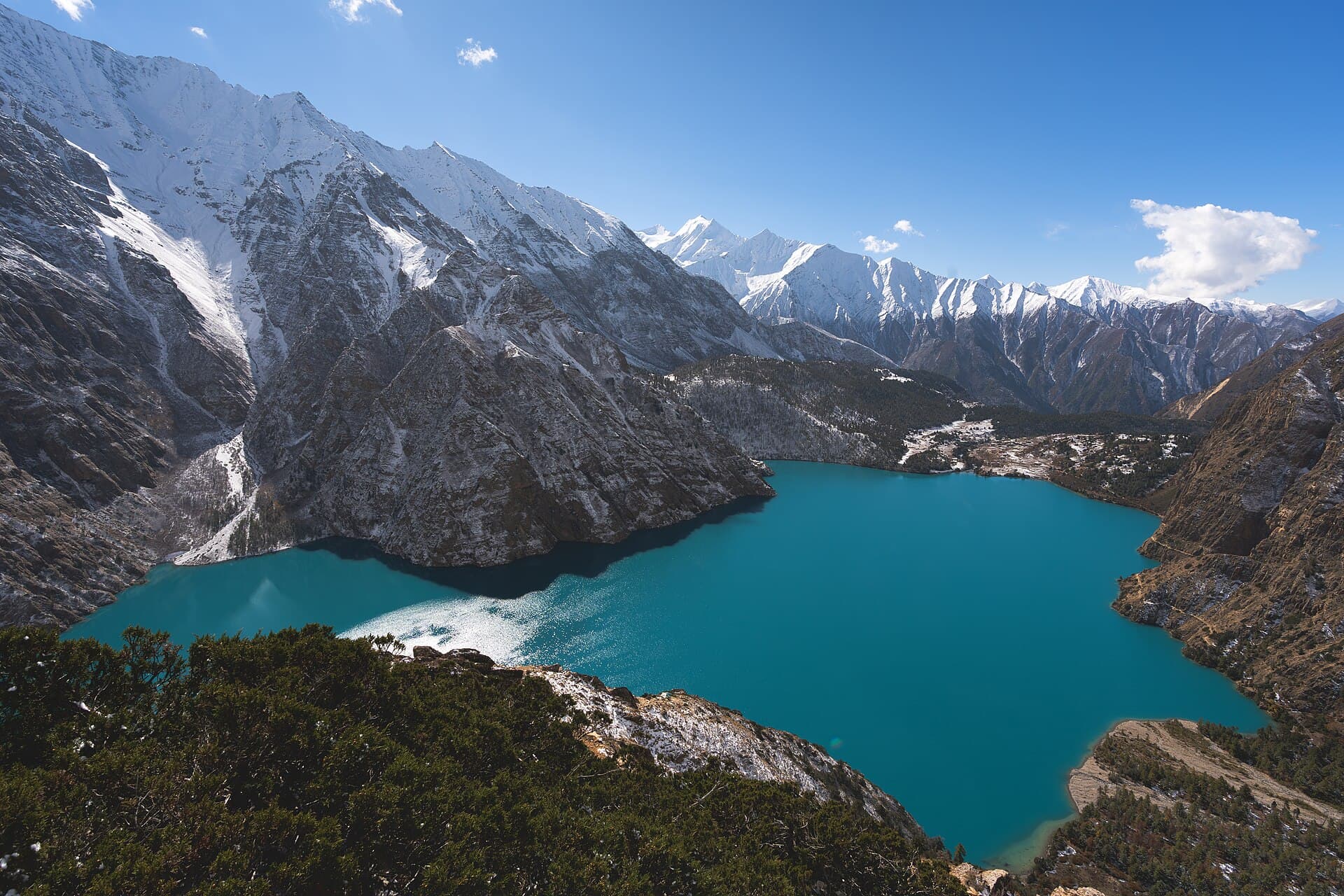
The turquoise waters of Phoksundo LakePhoto: Sunuwargr · CC BY-SA 4.0

National Parks / Mountain / Shey Phoksundo

Est. 1984 · Nepal's largest national park

Shey Phoksundo

Nepal's largest and only trans-Himalayan national park — a remote realm of turquoise lakes, snow leopards and the ancient Buddhist culture of Dolpo.

3,555
km² — largest in Nepal
145
m — lake depth
~90
Snow leopards
1984
Established

Shey Phoksundo is the largest national park in Nepal — and its only trans-Himalayan one — sprawling across 3,555 km² of the remote Dolpa and Mugu districts in the country's north-west.

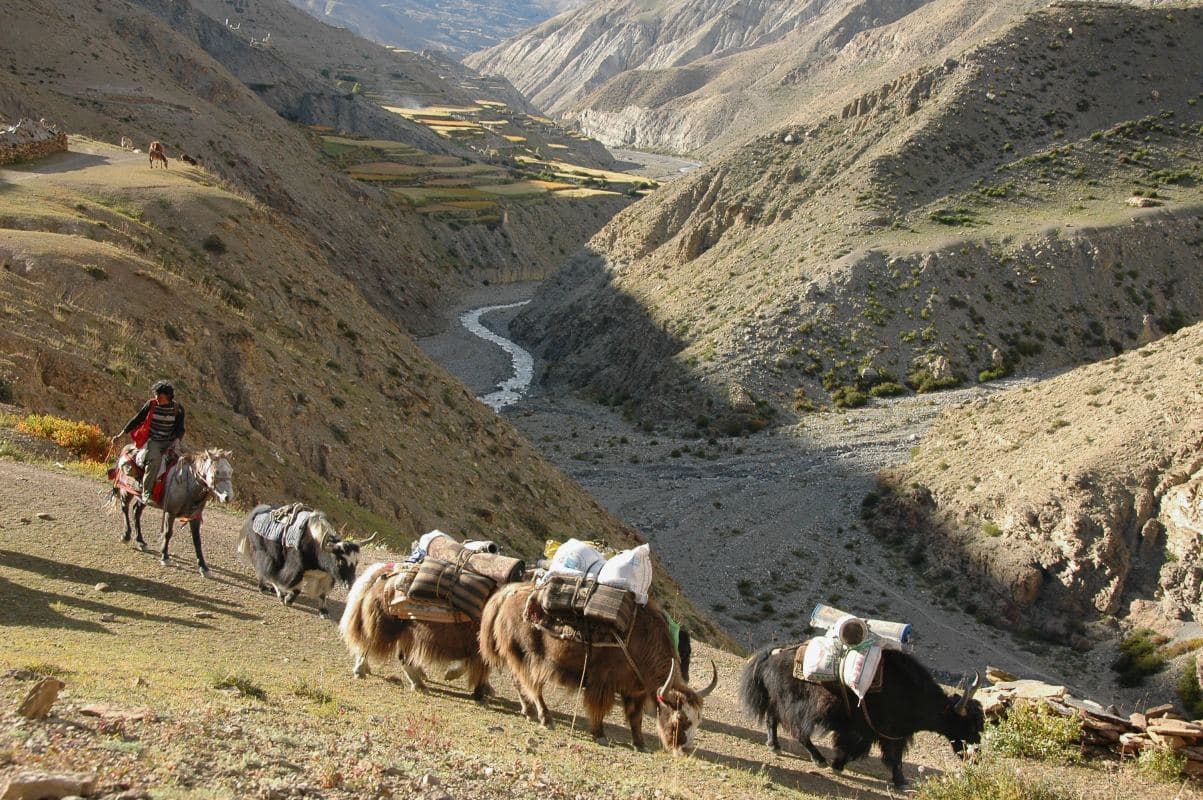
Established in 1984, the park ranges in elevation from about 2,130 m near Ankhe to 6,885 m at the summit of Kanjiroba Himal. Much of it lies in the rain shadow of the main Himalayan range, on the edge of the Tibetan Plateau — a stark, arid trans-Himalayan landscape unlike anywhere else in Nepal's park system. The Langu river drains the high Dolpo plateau to the north-east. The park headquarters are at Palam in Dolpa, and a buffer zone covering 1,349 km² was declared in 1998.

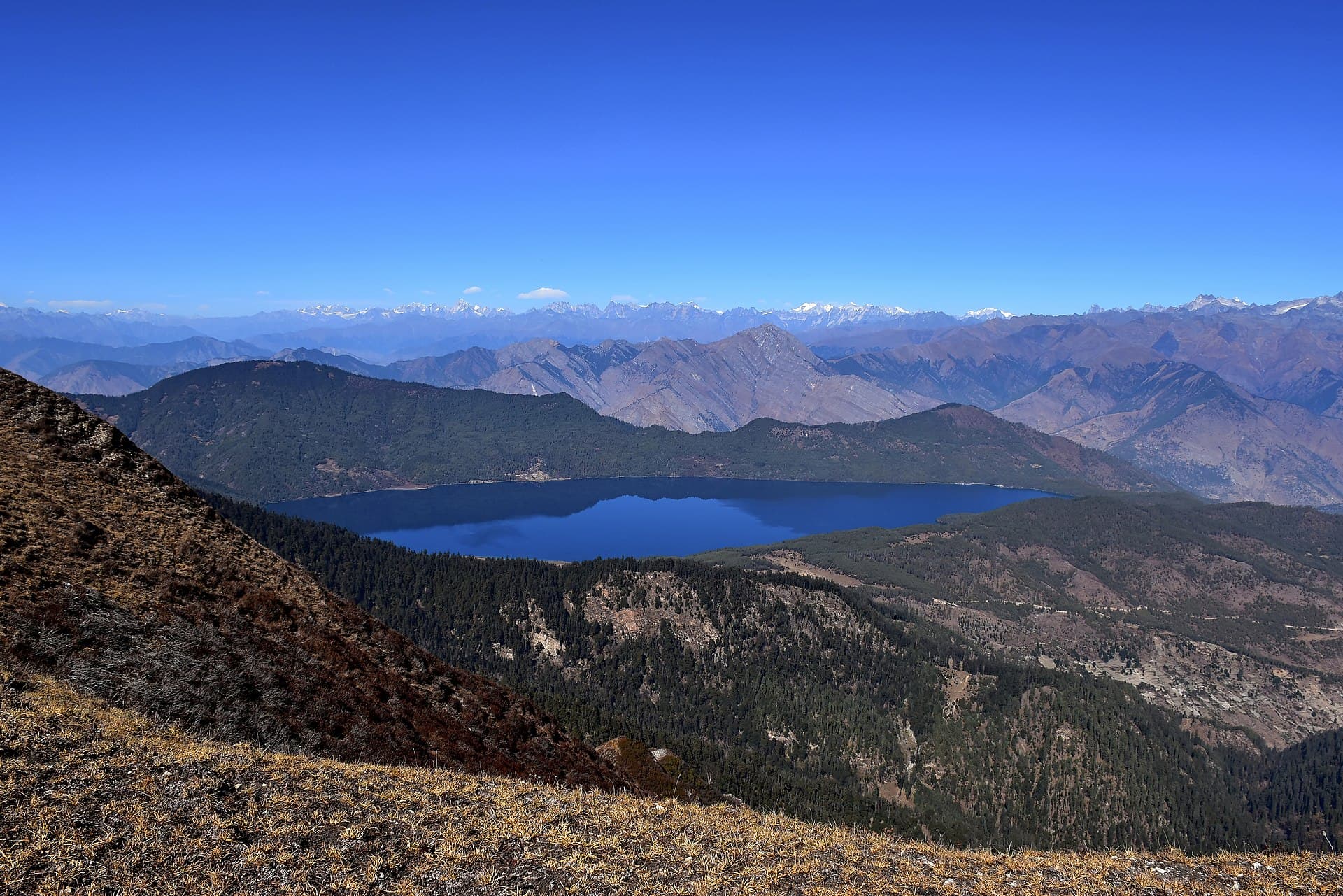
Phoksundo Lake's vivid blue waterPhoto: Sunuwargr · CC BY-SA 4.0

The Jewel of Dolpo

Phoksundo Lake

The park's defining feature is Phoksundo Lake, a pristine alpine lake at 3,612 m, famed for turquoise-blue waters that shift colour through the day. At up to 145 m it is Nepal's deepest lake, and its outlet forms one of Nepal's highest waterfalls at 167 m. The lake was declared a Ramsar wetland of international importance in 2007 and is ringed by Buddhist monasteries.

Wildlife

The realm of the snow leopard

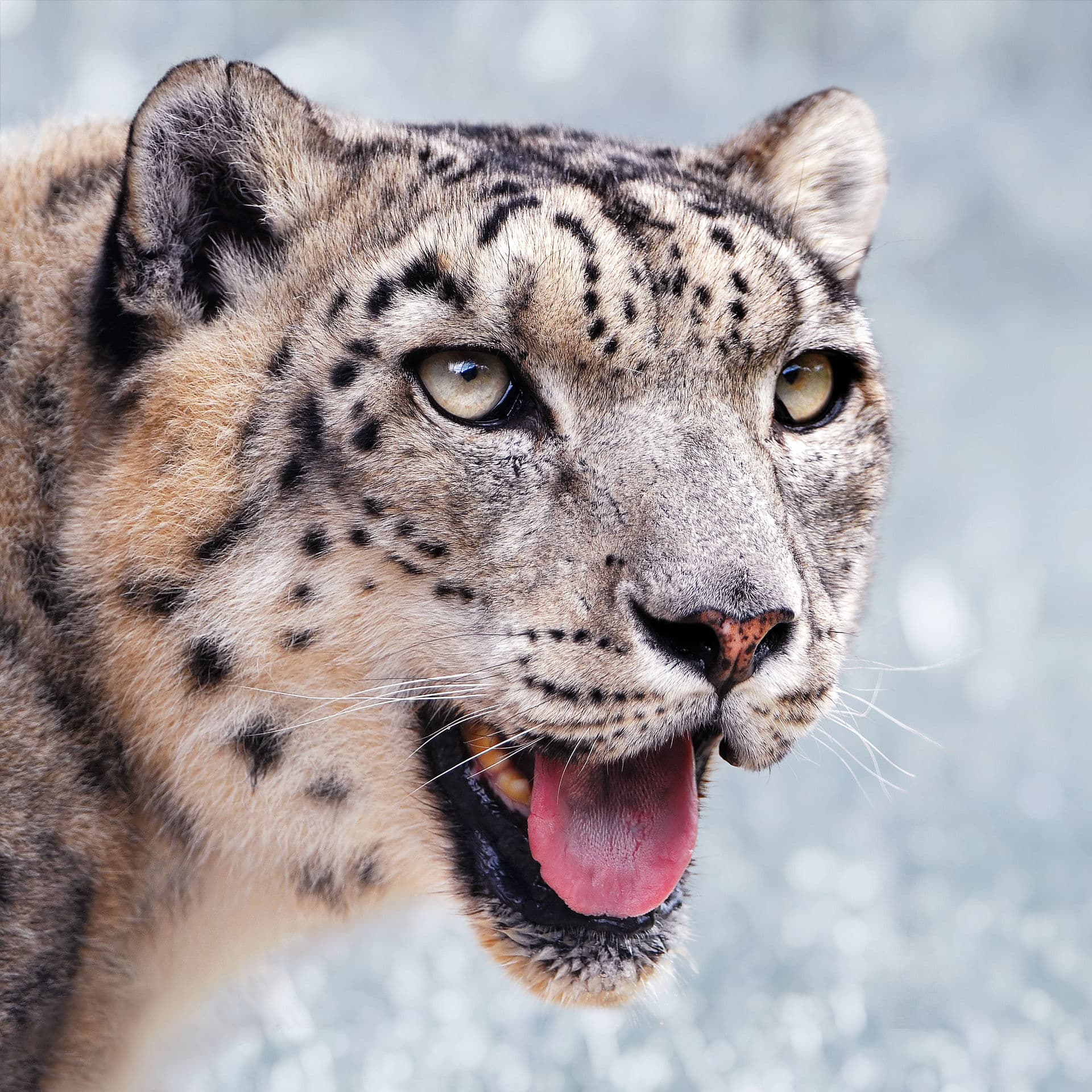
A 2019–2022 study found around 90 snow leopards here — a density of 2.21 per 100 km², among the highest recorded.

A snow leopardPhoto: Tambako The Jaguar (edit by Niabot) · CC BY-SA 2.0

Snow Leopard

Panthera uncia

The park is one of the world's great snow leopard strongholds.

Vulnerable
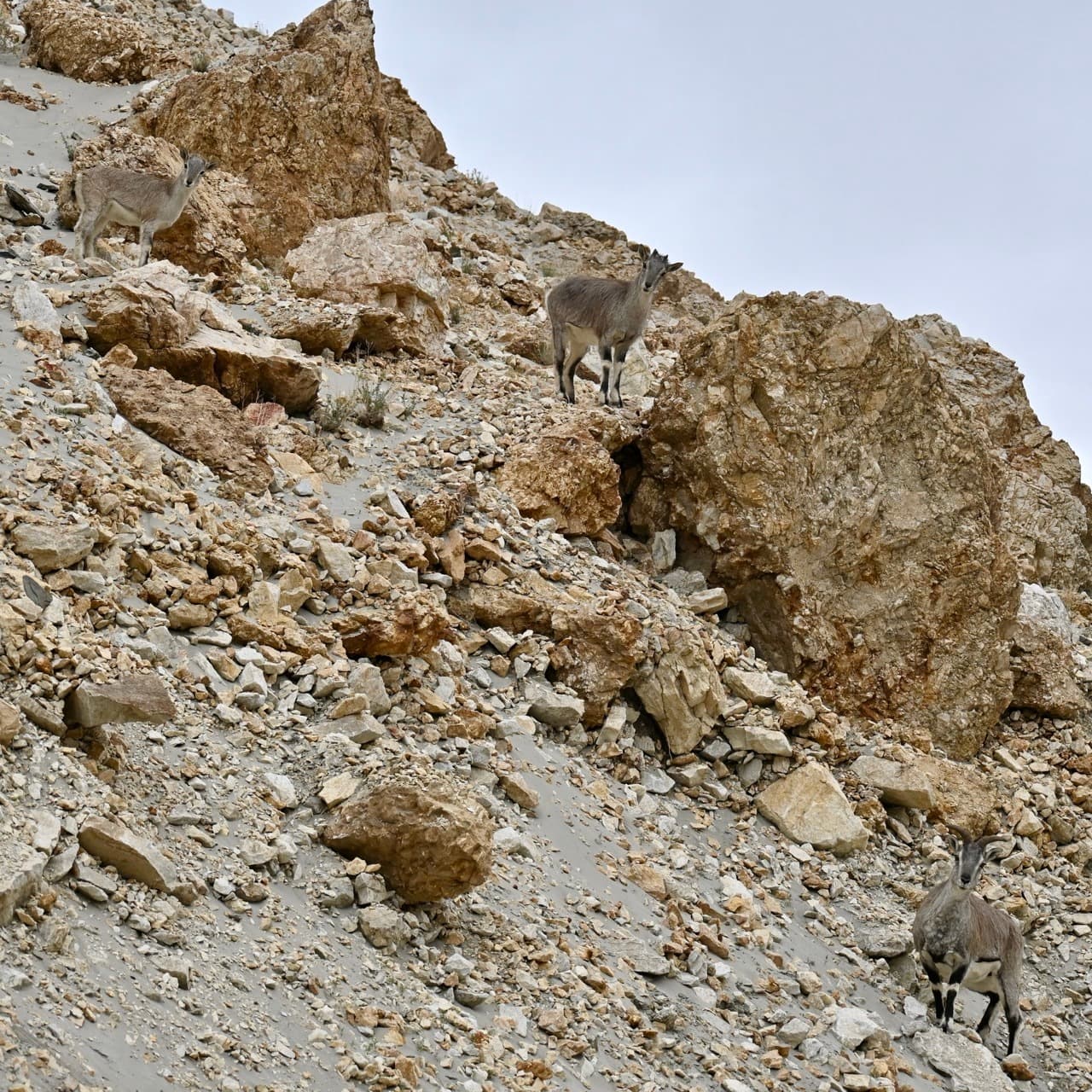
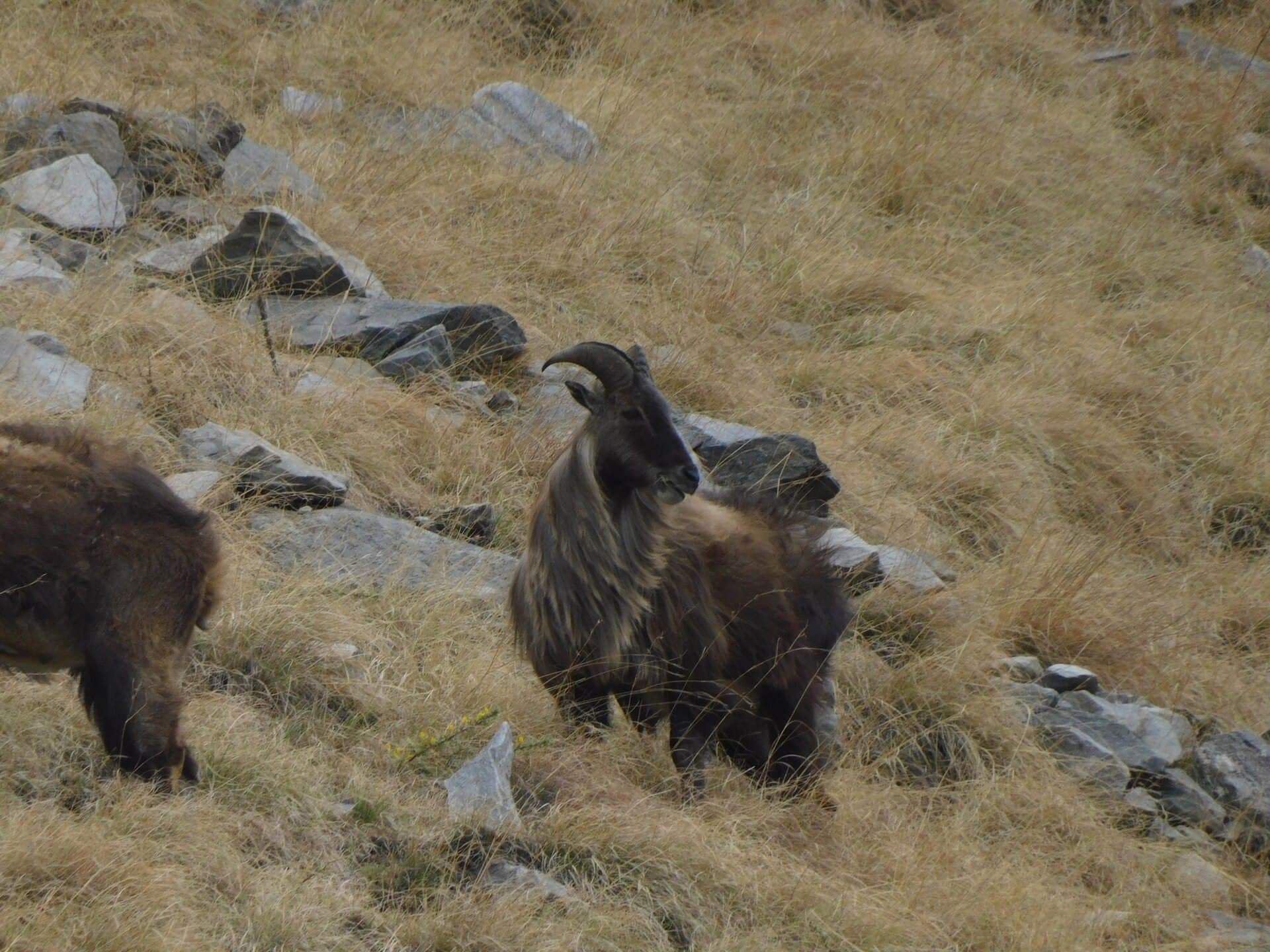
Blue sheep (bharal) on a slopePhoto: stli_ · CC BY 4.0

Blue Sheep

Pseudois nayaur

The bharal, or blue sheep, is the snow leopard's main prey across the high slopes.

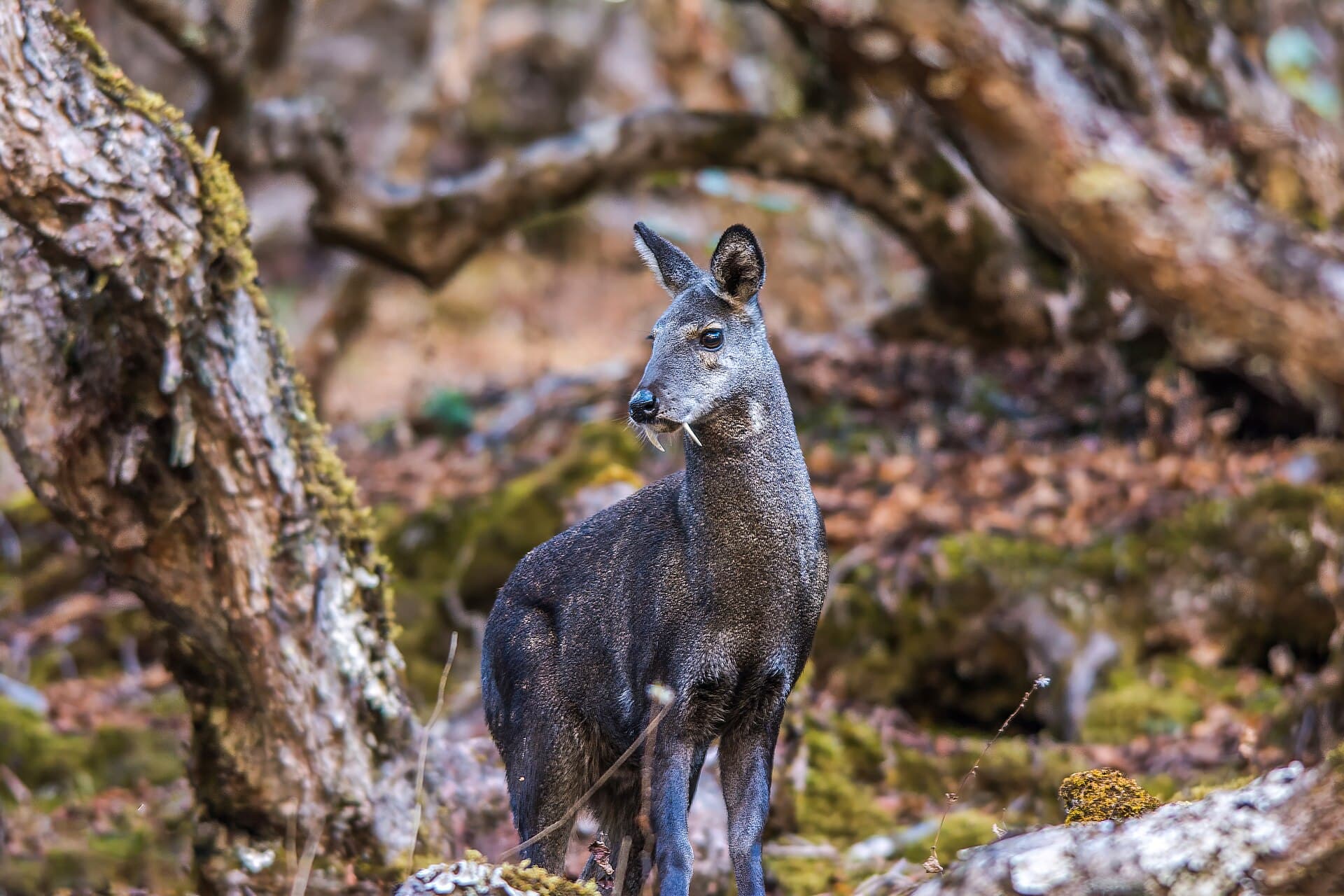
A Himalayan musk deerPhoto: Gurung Pratap · CC BY-SA 4.0

Musk Deer & Himalayan Tahr

Moschus · Hemitragus

Among 32 mammal species, alongside grey wolf, jackal and Himalayan black bear.

Over 200 bird species and 29 butterflies are recorded. The park also shelters a wealth of Himalayan medicinal herbs — including yarshagumba, jatamansi and panchaule — used in traditional medicine for thousands of years.
Arid trans-Himalayan landscape of the Dolpo regionPhoto: Carsten.nebel · CC BY-SA 3.0

Flora & Landscape

A trans-Himalayan desert

The southern slopes carry blue pine, fir, birch and rhododendron forest, but north of the Himalayan crest the land turns arid and Tibetan in character — rhododendron, caragana shrub and willow giving way to bare rock and high desert. It is, in essence, a fragment of the Tibetan Plateau within Nepal's borders.

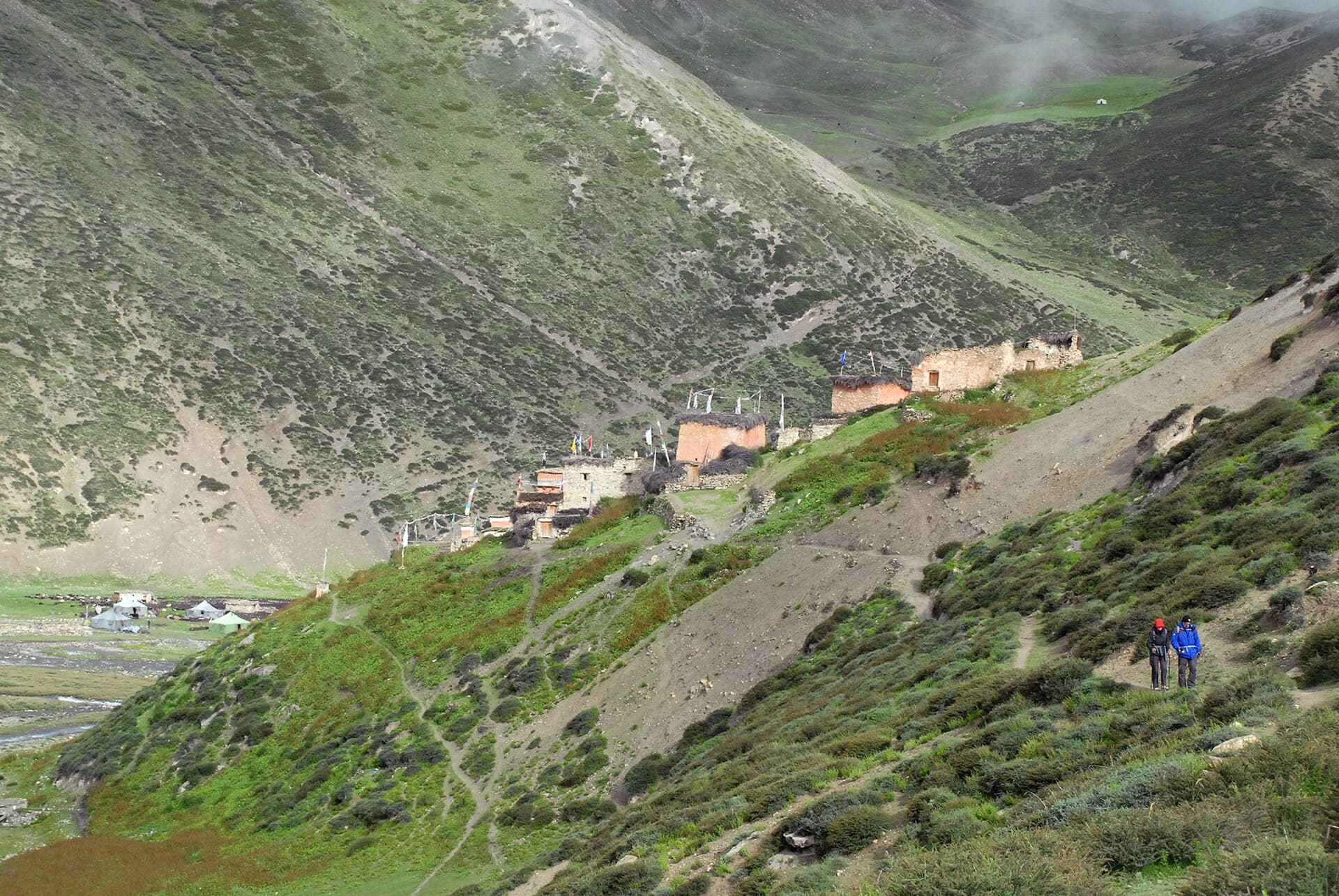
A Buddhist monastery in DolpoPhoto: Sergey Pashko · CC BY 3.0

Culture of Dolpo

Ancient monasteries & Bon

The Dolpo region is one of the most culturally intact Tibetan Buddhist (and Bon) areas in the Himalaya. The 11th-century Shey Gompa and the centuries-old Thasung monastery near Phoksundo Lake remain living centres of faith. Humans have inhabited this region for thousands of years, and the park was established in part to protect its cultural and religious heritage alongside its ecology.

Visiting

Into Upper Dolpo

One of Nepal's most remote and demanding trekking regions — and one of its most rewarding.

Phoksundo Lake

Solo trekking is permitted as far as Ringmo village and the lake.

Upper Dolpo Trek

The inner Dolpo areas are restricted — group trekking with licensed guides and special permits only.

Permits

Requires both a park permit and a Dolpo restricted-area permit.

This is high, remote, demanding country — acclimatise slowly (no more than ~500 m of ascent per day) and carry AMS medication. Trails are narrow, rocky and steep. Confirm current permit rules before travel.

Reference

Facts at a glance

Location
Dolpa & Mugu districts, Karnali Province, north-west Nepal
Area
3,555 km² (largest in Nepal) + 1,349 km² buffer zone
Elevation
2,130 m to 6,885 m (Kanjiroba Himal)
Phoksundo Lake
3,612 m elevation · up to 145 m deep · Ramsar site (2007)
Established
1984
Headquarters
Palam, Dolpa
IUCN category
II (National Park)
Phoksundo Lake

Explore more of Nepal's parks

From the deserts of Dolpo to the grasslands of the Terai.