A greater one-horned rhinoceros grazing in tall grassland at Chitwan National ParkPhoto: Shadow Ayush · CC BY-SA 4.0
UNESCO
World
Heritage
1984

National Parks / Terai / Chitwan

Nepal's First National Park · Est. 1973

Heart of the Terai

At the foot of the Himalayas lies one of the last undisturbed remnants of the Terai — sheltering the Bengal tiger, the one-horned rhinoceros, and the living traditions of the Tharu people.

Area952.63 km²
Established1973
Birds500+
Heritage1984
Connect with the wild heart of Nepal.
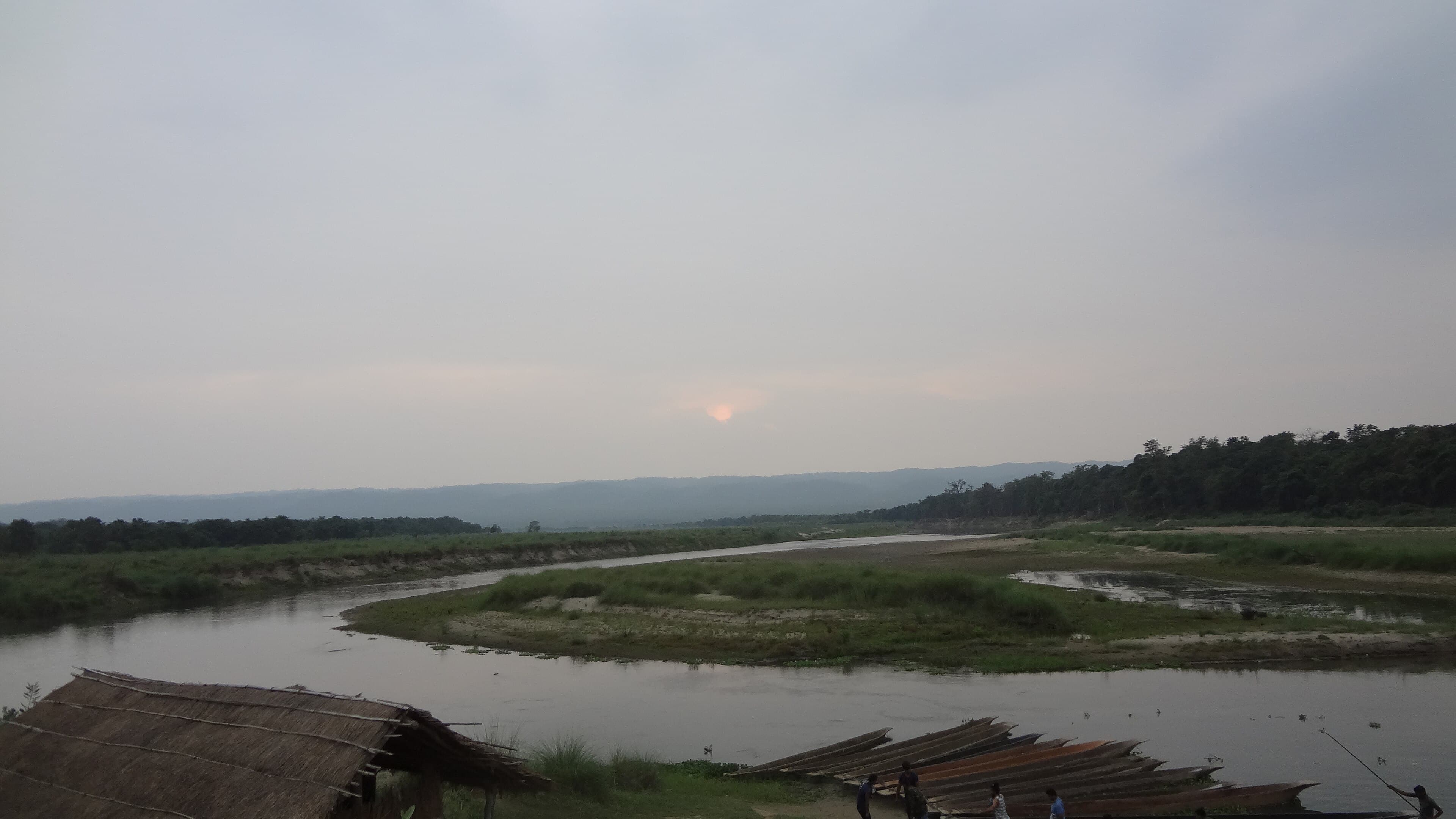
The Terai — where forest, grassland and river meet
68
Mammal species
500+
Bird species
694
One-horned rhinos (2021)
128
Bengal tigers (2022)

Watch

A film from the floodplain

A short introduction to the landscapes and wildlife of Chitwan.

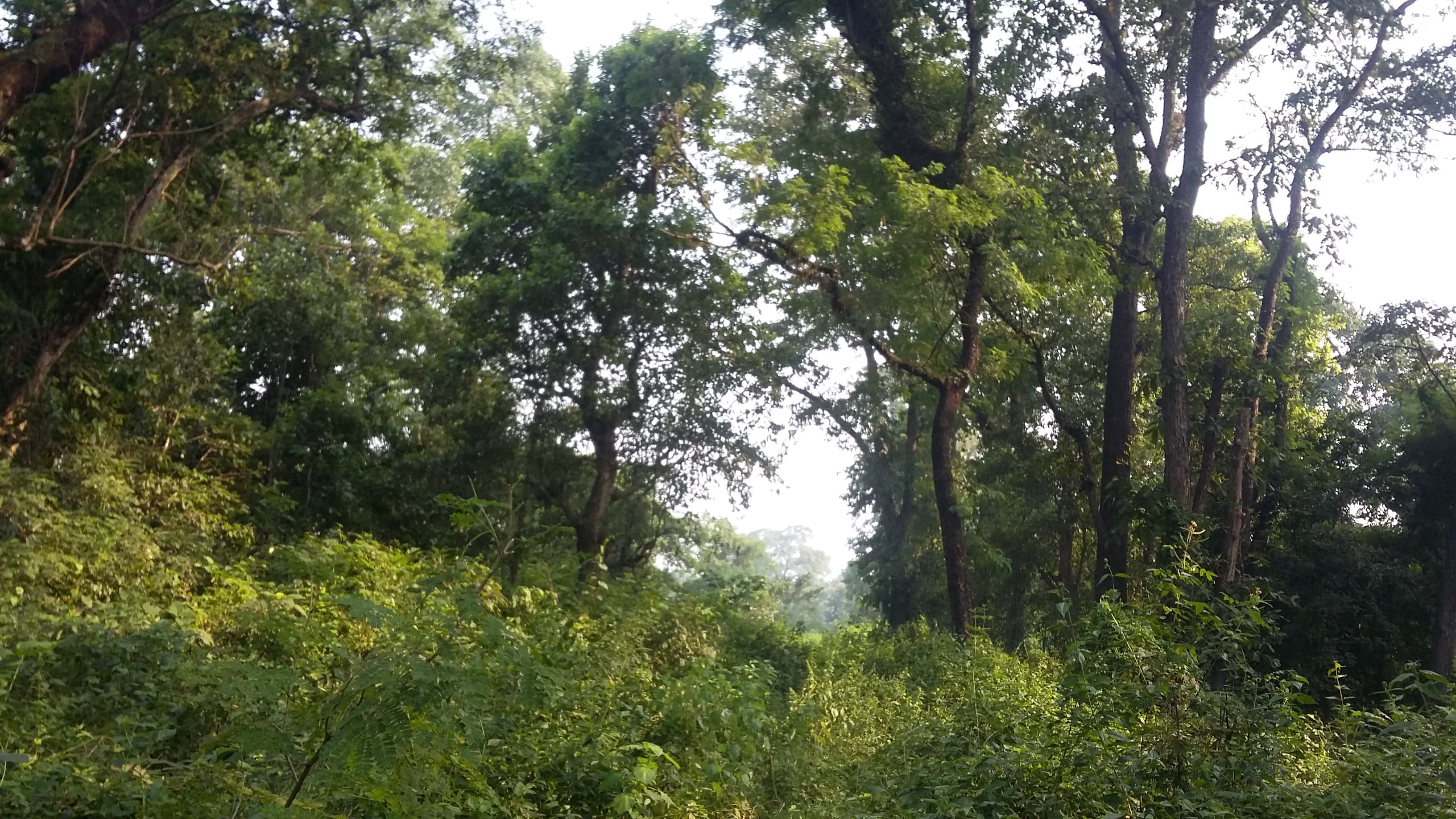
The Chitwan jungle
Introducing Chitwan National Park
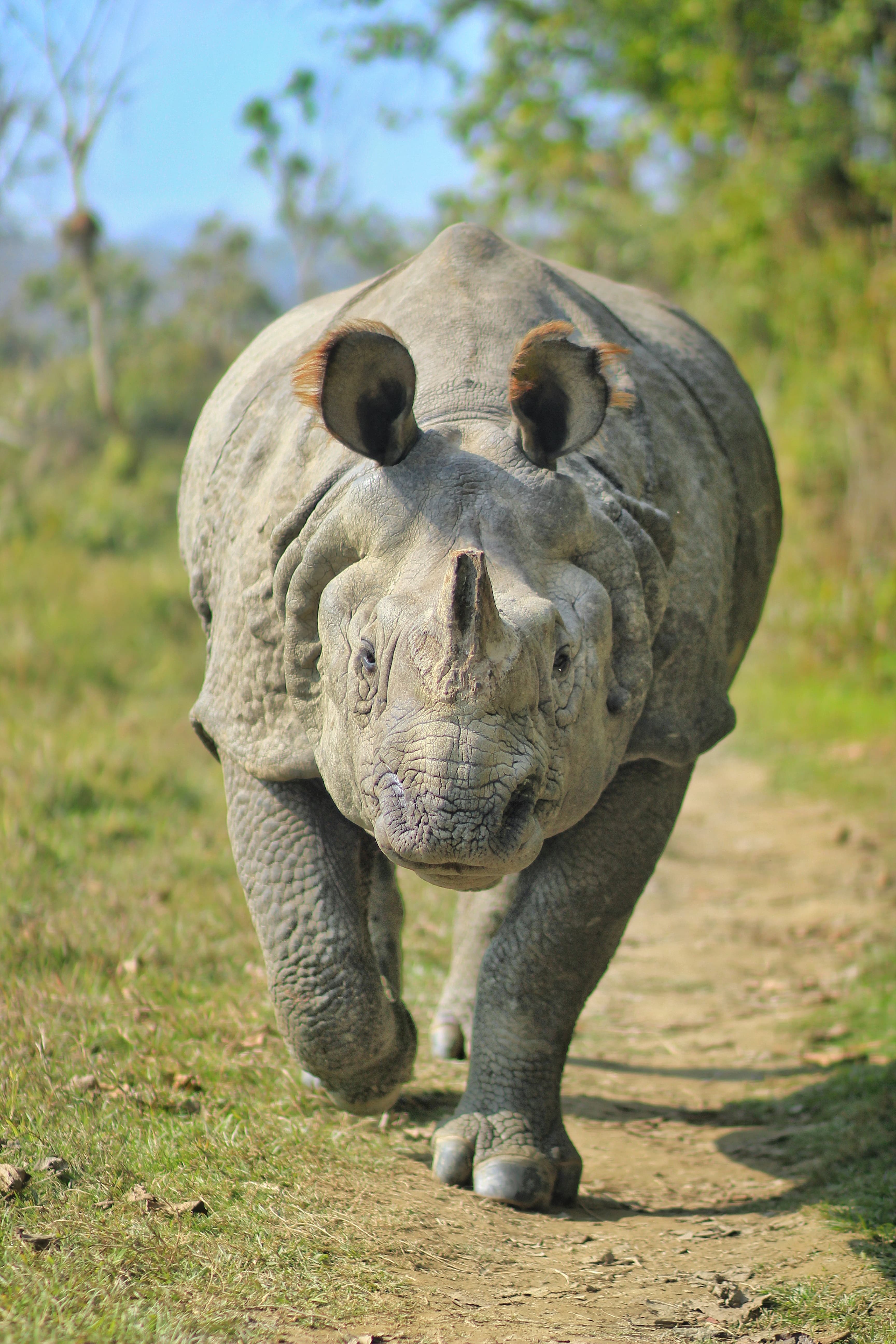
A one-horned rhinoceros at Chitwan National ParkPhoto: Lurey Rohit · CC BY-SA 4.0

The Flagship Species

A stronghold of the one-horned rhino

By the late 1960s only about 95 rhinos remained as forest was cleared and poaching surged. The crisis prompted Nepal to establish the park in 1973. Today the population has recovered to 694 (2021 count) — the largest in Nepal and the world's second-largest population after Kaziranga, India — protected by army patrols and translocated to Bardia and Shuklaphanta as insurance.

IUCN · Vulnerable

Administration

Park leadership

Each park is managed on the ground by a chief warden who reports into Nepal's Department of National Parks and Wildlife Conservation (DNPWC).

Chief warden
Pending DNPWC verification
Headquarters
Kasara
Reports to
DNPWC, Ministry of Forests and Environment
Office-holders rotate regularly and are administered separately, so we do not publish unverified names. For how Nepal’s protected areas are governed, see DNPWC and protected-area administration.

Wildlife & Ecology

The flagship species of Chitwan

Chitwan's floodplain is one of the most species-rich protected landscapes in Asia. These are the animals the park is famous for — what they eat, where they live, and the conservation stories behind their numbers.

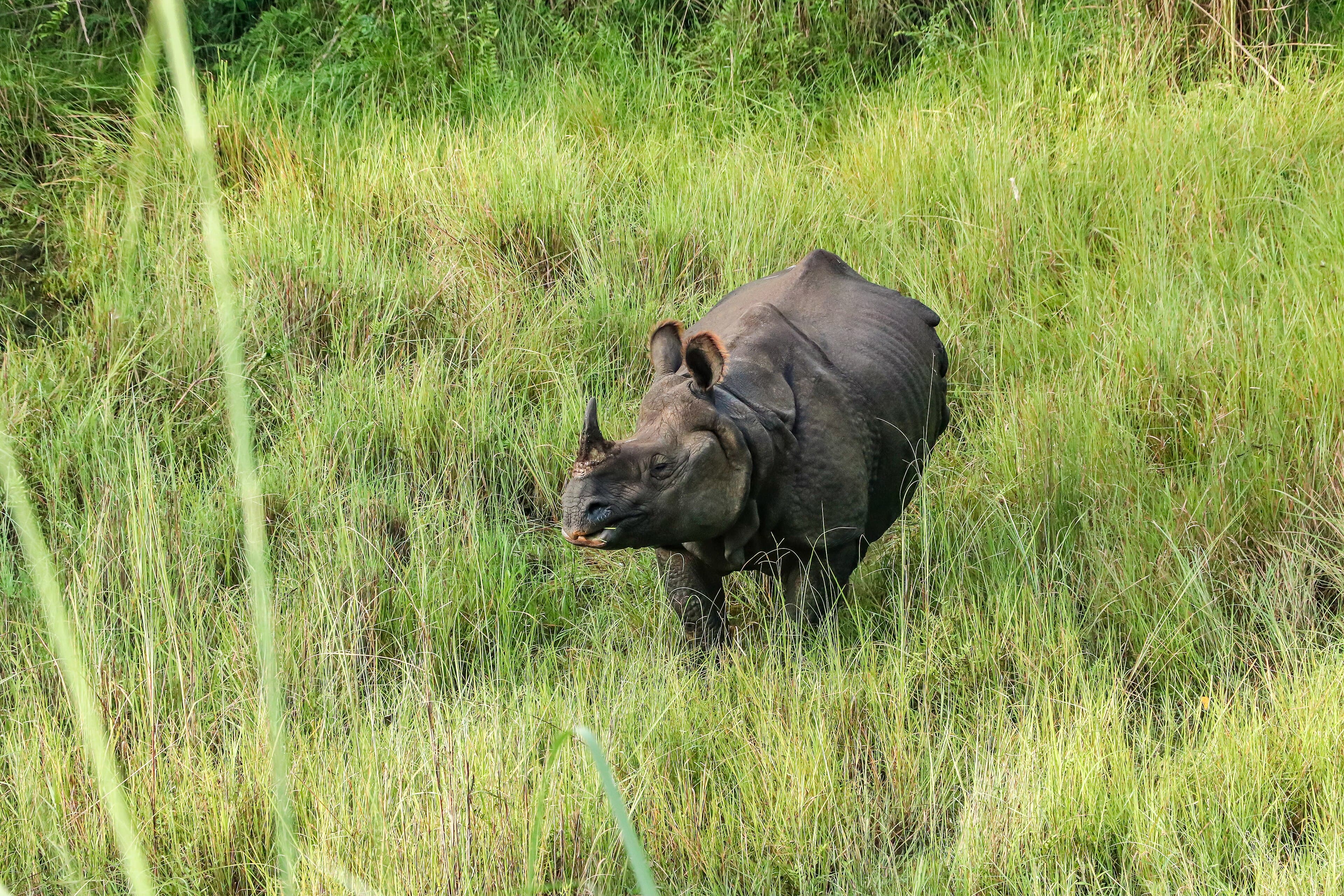
Greater one-horned rhinocerosVulnerableRhinoceros unicornis · Gaida (गैंडा)Asia's second-largest land mammal — Chitwan holds the world's second-largest population (694, 2021).

The largest of the three Asian rhino species and the second-largest land mammal in Asia after the elephant. Distinguished by a single black horn (20–60 cm) and thick, silver-brown skin folded into plates that give it an armoured, almost prehistoric look. Bulls can exceed 2,000 kg.

Behaviour

Largely solitary except for females with calves; bulls hold loose, overlapping home ranges. Strong swimmers, they wallow in water and mud through the heat of the day to cool down and shed parasites. Generally placid but can charge with surprising speed when surprised or when a calf is near — a key visitor-safety point.

Diet

A mega-herbivore: grasses (especially tall floodplain grasses), plus fruits, leaves, branches, sedges, ferns and aquatic plants. Will raid adjacent farmland for rice, wheat, maize and lentils — a major source of human-wildlife conflict around the park.

Habitat in this park

The alluvial floodplain grasslands and riverine forest along the Rapti and Narayani rivers — the wet, productive grassland is prime habitat. The Sauraha sector and riverbanks are strongholds.

Status & numbers

Chitwan holds 694 rhinos as of the 2021 national count, out of 752 nationally and roughly 4,014 globally — the world's second-largest population of the species after Kaziranga, India.

Conservation story

One of Asia's great conservation recoveries. Once widespread across the Indo-Gangetic plain, hunting and farmland conversion crashed Nepal's rhinos to roughly 100 by the 1950s. Park protection from 1973 with Nepal Army support reversed this — but poaching surged again during the 1996–2006 political insurgency when patrols thinned. Numbers have since climbed back from 605 (2015) to 694 (2021). Ongoing threats include the invasive vine Mikania micrantha smothering grassland, drying wetlands, and the persistent horn trade. Chitwan now exports surplus rhinos to Bardia and Shuklaphanta as insurance populations.

Where to see it

One of the more reliable big-mammal sightings in the park — often seen grazing grassland or wallowing at the water's edge on jeep safaris and canoe trips, especially around dawn.

References (3)
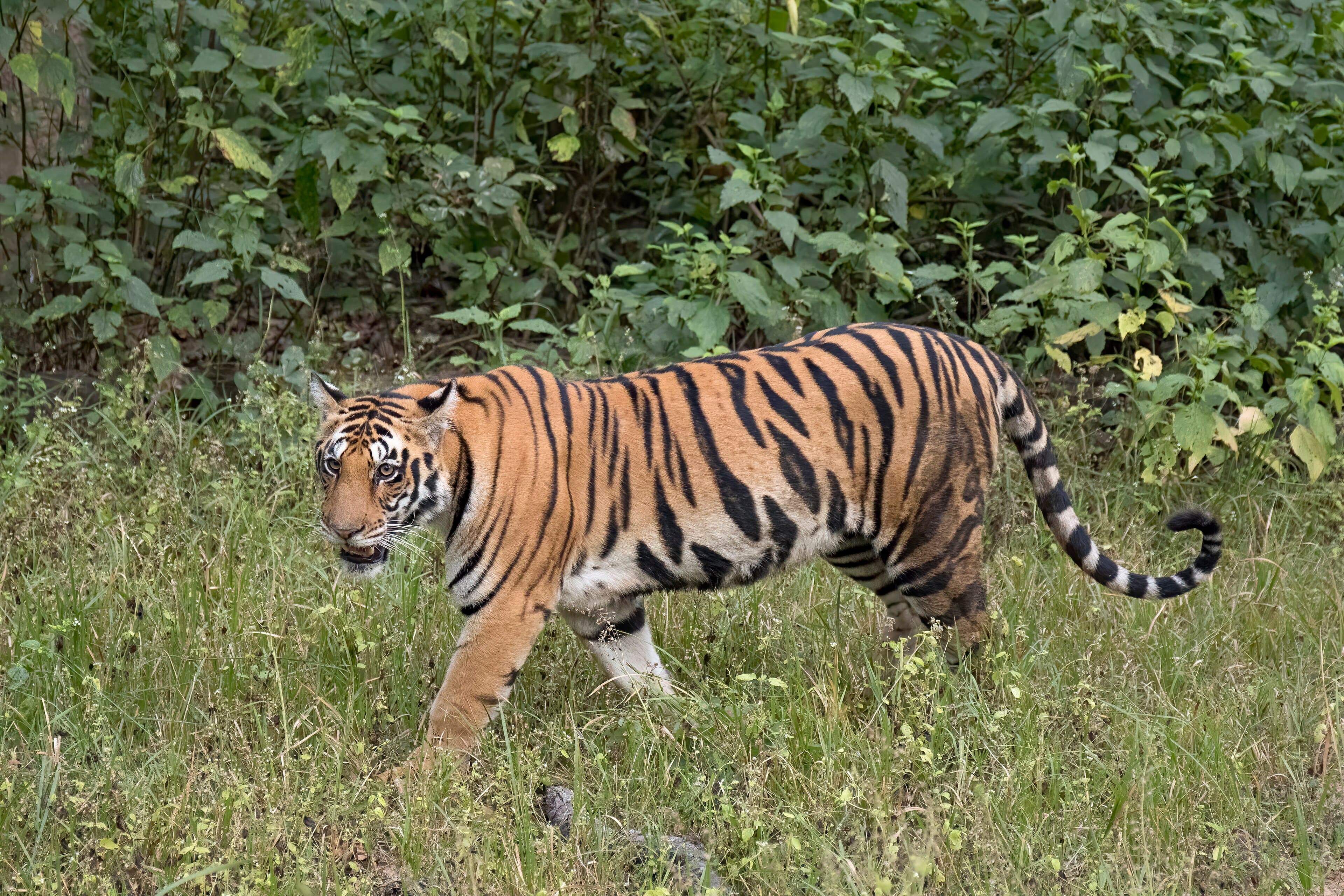
Bengal tigerEndangeredPanthera tigris tigris · Bagh (बाघ)The park's apex predator — Chitwan holds Nepal's largest national share (128, 2022 census).

The park's apex predator and the largest cat in Asia. Solitary, territorial and superbly camouflaged in the tall grass and dappled forest.

Behaviour

Mostly nocturnal and crepuscular; deliberately avoids the times and places people are active, which is why daytime sightings are rare. Males hold large territories overlapping several females' ranges; tigers depend heavily on prey density rather than vegetation — where deer are abundant, tigers follow.

Diet

Primarily deer (chital, sambar, hog deer) and wild boar; abundant prey in Chitwan means tigers rarely turn to unusual food. In a documented July 2022 incident a tiger entered the Kasara gharial enclosure and killed three gharials, but specialists noted this was opportunistic rather than driven by prey scarcity.

Habitat in this park

The grassland–forest mosaic of the floodplain, especially the Chitwan–Parsa complex; occupancy is highest where prey is dense and human presence low.

Status & numbers

Nepal counted 355 tigers in the 2022 national survey, up from 121 in 2010 — making Nepal the only country to meet the global 'double the tigers by 2022' goal set at the 2010 St Petersburg summit. Chitwan holds the country's single largest share at 128 tigers; Bardia is close behind at 125, with Parsa 41, Shuklaphanta 36 and Banke 25.

Conservation story

Tiger recovery tracks prey recovery and anti-poaching enforcement. As numbers rise, the frontier challenge has shifted to human-tiger conflict in buffer zones and dispersal into neighbouring Parsa — which is why the Chitwan–Parsa–Valmiki transboundary unit matters.

Where to see it

Genuinely rare and a matter of luck — most visitors hear about tigers rather than see them. Best odds at dawn in quieter sectors; signs (pugmarks, scrapes, alarm calls of deer and langur) are the realistic 'sighting'.

References (3)
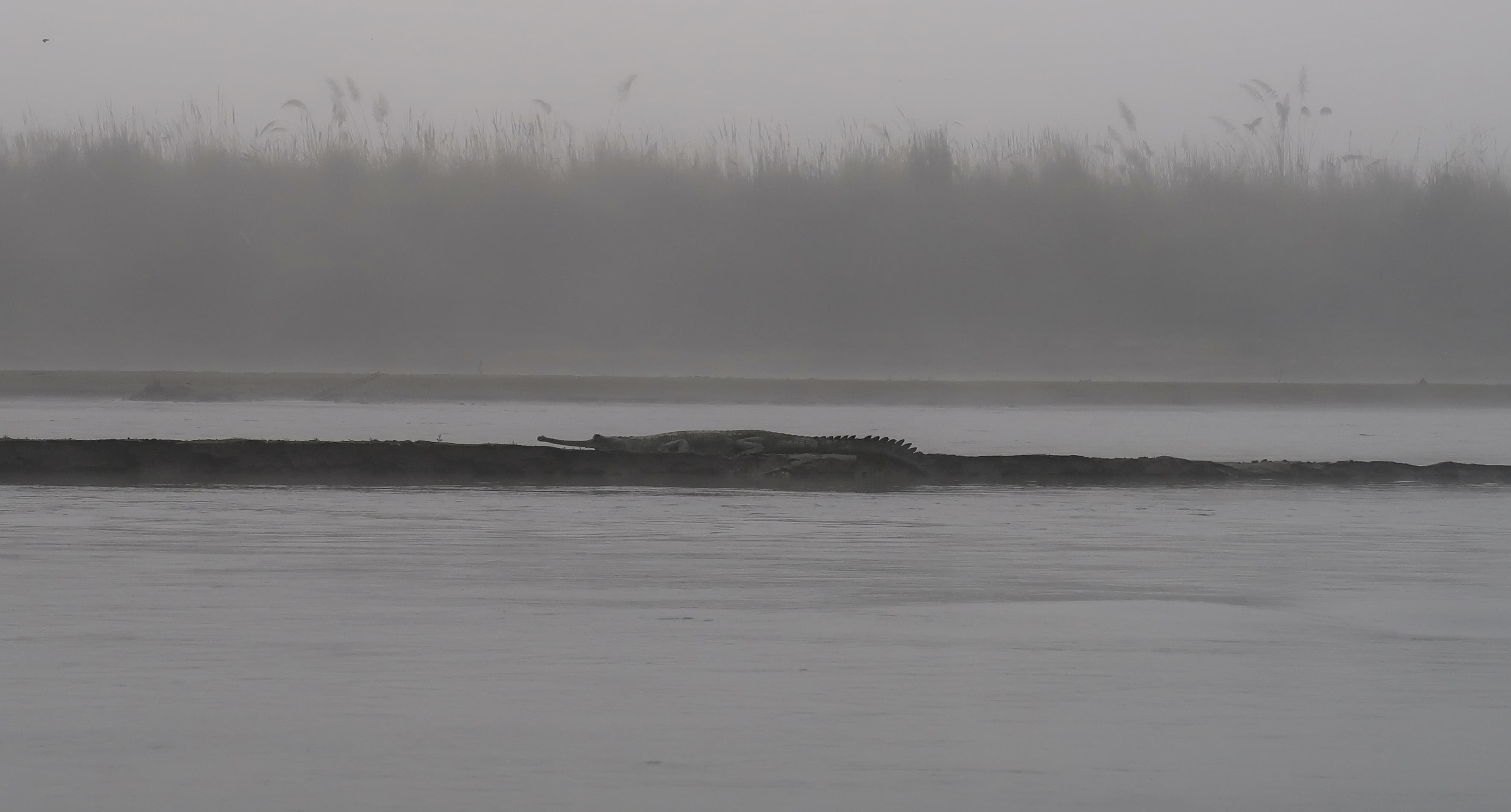
GharialCritically EndangeredGavialis gangeticus · Gharial (घडियाल)An unmistakable fish-eating river crocodilian — Chitwan runs Nepal's gharial breeding programme.

An unmistakable, fish-eating river crocodilian with an extremely long, slender snout lined with ~110 interlocking needle-like teeth; mature males develop a bulbous growth ('ghara') on the snout tip. Among the most evolutionarily distinct of all living crocodilians.

Behaviour

Highly aquatic — far more so than the mugger — hauling out onto sandbanks to bask. The slender snout is adapted for fast sideways snaps to catch fish; harmless to people.

Diet

Almost exclusively fish as adults; juveniles also take insects and crustaceans.

Habitat in this park

Deep, clear, fast stretches of the Narayani and Rapti rivers with sandbanks for basking and nesting.

Status & numbers

Critically endangered globally; by the mid-1970s the wild population had collapsed to roughly 300. Chitwan is one of its most important remaining strongholds, with the wild population rising from 239 (2023) to 265 (early 2024).

Conservation story

Nepal's gharial conservation programme runs from the Kasara breeding centre, established 1978 with Frankfurt Zoological Society support. Eggs are collected from riverbanks (wild hatch-and-survival is under 2%, partly because eggs are taken by mongoose and people), hatched and reared in captivity (~50% survival), and released at about five years old and ~150 cm length. The centre currently holds 782 gharials and has released 2,090 individuals across Nepal's rivers since 1981. Despite decades of effort, wild recruitment remains fragile — dams, fishing nets, sand mining and altered river flows are persistent threats.

Where to see it

Often seen basking on sandbanks during dawn canoe trips on the Rapti; the Kasara breeding centre lets you see all ages up close.

References (2)
Mugger / marsh crocodileVulnerableCrocodylus palustris · Gohi (गोही)The gharial's stockier neighbour and the croc most visitors actually see basking.

A broad-snouted, powerfully built crocodile — the gharial's stockier neighbour, and the one more likely to be a hazard to people and livestock.

Behaviour

A generalist ambush predator; basks on banks and in shallows, more terrestrial-tolerant than the gharial and able to move overland between water bodies in the dry season.

Diet

Opportunistic — fish, amphibians, reptiles, birds and mammals up to deer size.

Habitat in this park

Slower rivers, oxbow lakes and marshes, including the Bis Hajar Tal wetland complex.

Status & numbers

Vulnerable globally; present across Chitwan's wetlands and rivers (an exact park figure is not reliably published).

Where to see it

Commonly seen basking on the Rapti's banks on canoe trips — the crocodile most visitors actually photograph.

References (1)
Asian elephantEndangeredElephas maximus · Hatti (हात्ती)Wild herds move between Chitwan, Parsa and India; the Sauraha breeding centre is the dependable view.

The largest land animal in Asia; wild herds move through Chitwan and its corridors, distinct from the domesticated elephants kept around Sauraha.

Behaviour

Matriarchal herds of females and young; bulls more solitary. Wide-ranging, following seasonal food and water, and known to cross between Chitwan, Parsa and India.

Diet

Bulk grazer and browser — grasses, bark, leaves, fruit; raids crops, a conflict flashpoint in buffer zones.

Habitat in this park

Grassland, riverine forest and forest corridors; movements are transboundary.

Status & numbers

Endangered globally; wild numbers in Nepal are small and concentrated in the Terai (no reliable park-specific count published for Chitwan).

Where to see it

Wild herds are seen irregularly; the Sauraha elephant breeding centre is the dependable place to see elephants respectfully (no riding).

References (1)
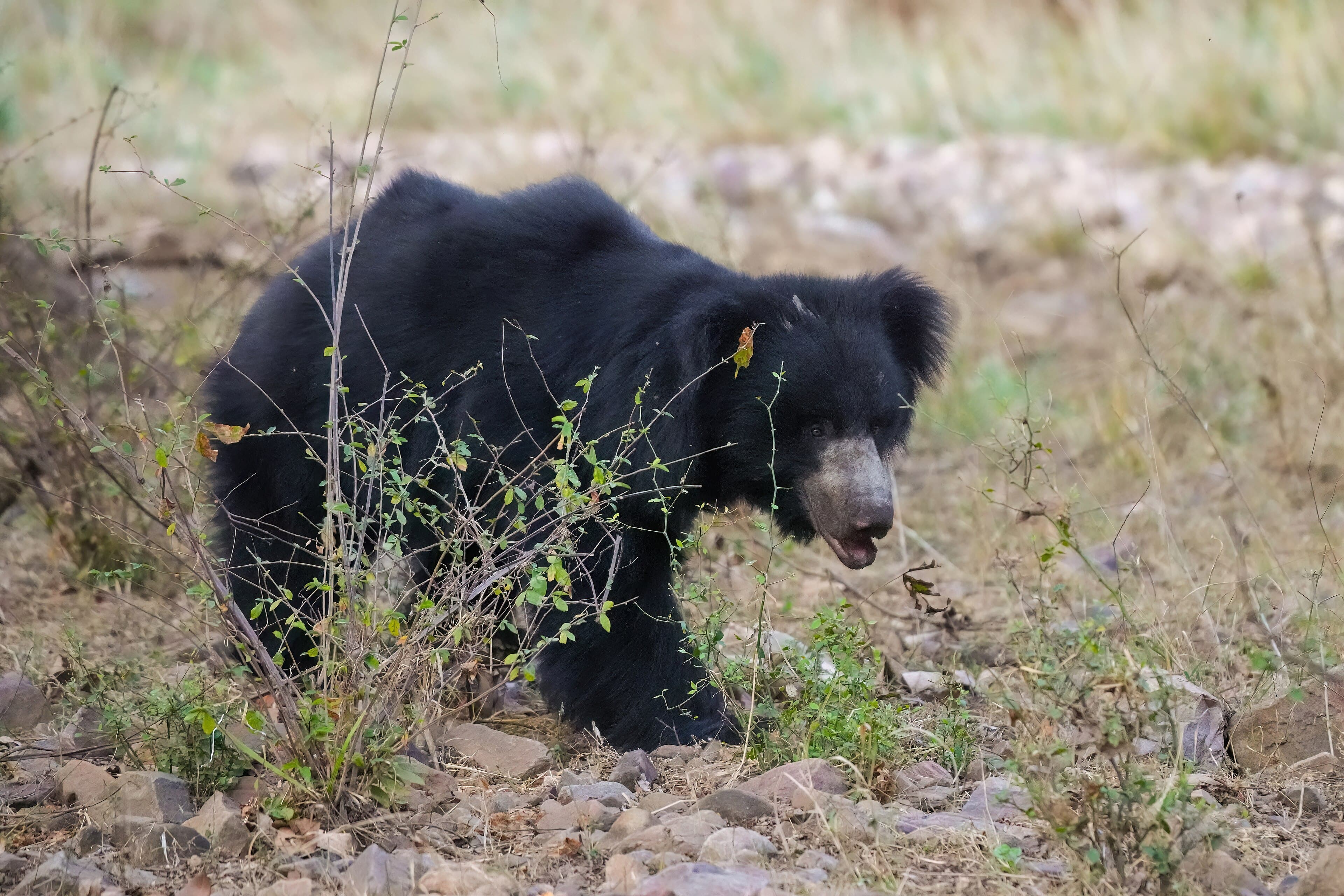
Sloth bearVulnerableMelursus ursinus · Bhalu (भालु)Shaggy, ant-vacuuming bear — one of the more dangerous animals to surprise on foot.

A shaggy, long-clawed bear with a pale chest patch and a mobile snout adapted for feeding on insects. Chitwan has one of the higher densities of this species.

Behaviour

Mainly nocturnal; can be aggressive and unpredictable if surprised, making it one of the more dangerous animals to encounter on foot.

Diet

Termites and ants (vacuumed up with the lips), plus fruit and honey — a true insectivore-omnivore.

Habitat in this park

Sal forest and scrub with termite mounds.

Status & numbers

Vulnerable globally; present throughout the forested park.

Where to see it

Uncommon and shy — occasional dawn sightings on forest tracks.

References (1)
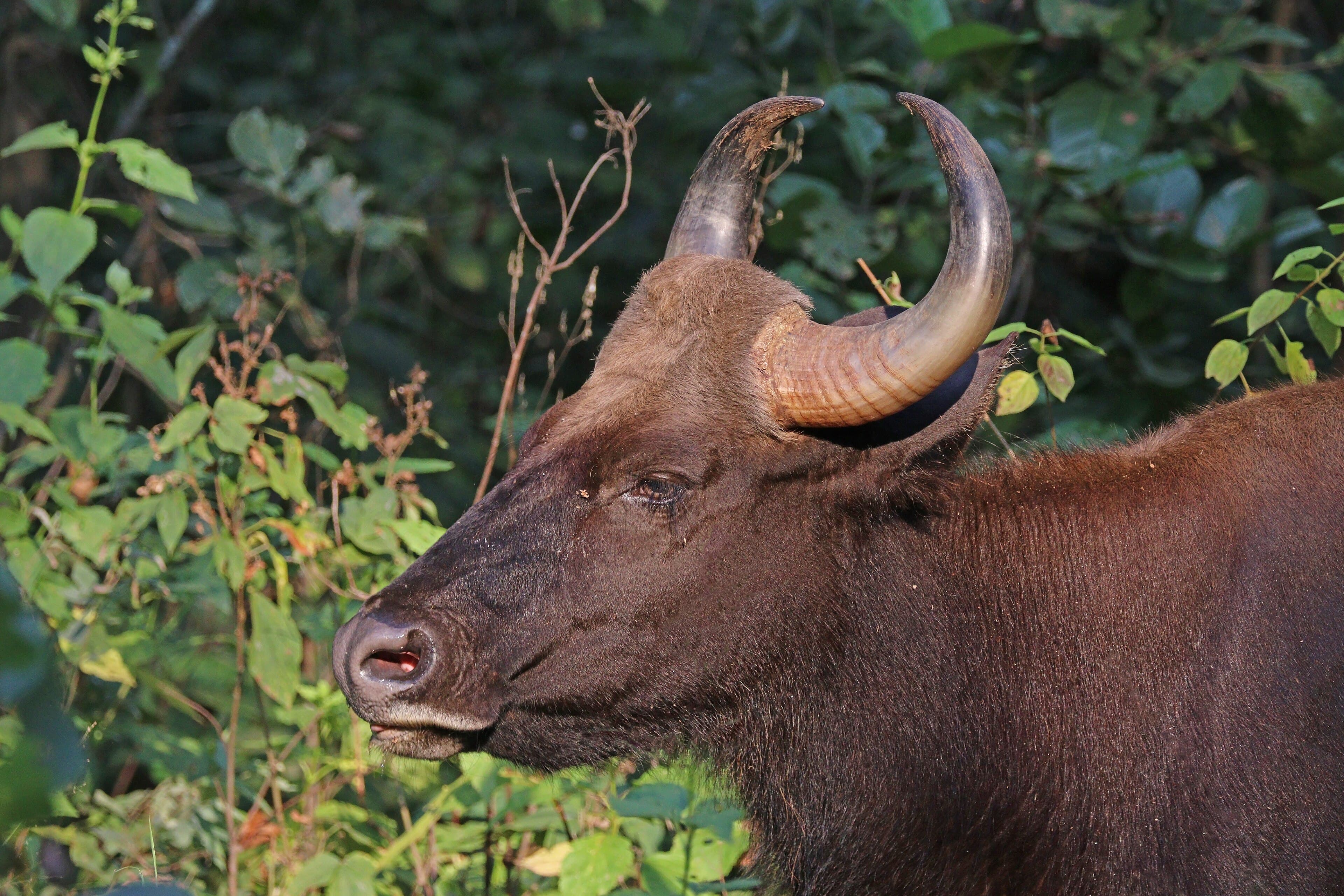
GaurVulnerableBos gaurus · Gauri gaiThe world's largest wild cattle — quietly uses the Churia hill forests of the park.

The world's largest wild cattle — massive, dark, with a distinctive dorsal ridge; uses the Churia hill forests of the park's southern edge.

Behaviour

Herd-living grazer-browser, generally shy of people; descends to lower grassland seasonally.

Diet

Grasses, herbs and browse.

Habitat in this park

Hill sal forest of the Churia/Siwalik zone and adjacent grassland.

Status & numbers

Vulnerable globally; a smaller, less-visible component of the park's large-mammal community.

Where to see it

Less commonly seen than deer or rhino; more likely in the forested southern sectors.

References (1)

Deer of the park

  • Chital / spotted deer · Axis axisThe park's most abundant deer and the tiger's and leopard's main prey; herds graze the grassland edges — the deer you're almost certain to see.
  • Sambar · Rusa unicolorNepal's largest deer; forest-dweller, often near water.
  • Hog deer · Axis porcinusSmall, solitary grassland deer that runs head-low like a hog.
  • Barking deer / muntjac · Muntiacus muntjakShy forest deer named for its dog-like alarm call.

Birds

Over 500 bird species recorded — the richest of any protected area in Nepal — across grassland, forest, river and wetland. Chitwan is an Important Bird Area. Roughly 160 species are winter migrants arriving from the north. Dawn in the grasslands and along the Rapti is prime time; October–March is best.

  • Bengal florican · Houbaropsis bengalensisCritically EndangeredA grassland bustard and one of the rarest birds in Asia; the park's tall-grassland is critical habitat. A flagship for grassland conservation.
  • Lesser adjutant · Leptoptilos javanicusVulnerableA large wetland stork seen around marshes and rivers.
  • Great hornbill · Buceros bicornisVulnerableA spectacular casque-billed forest bird.
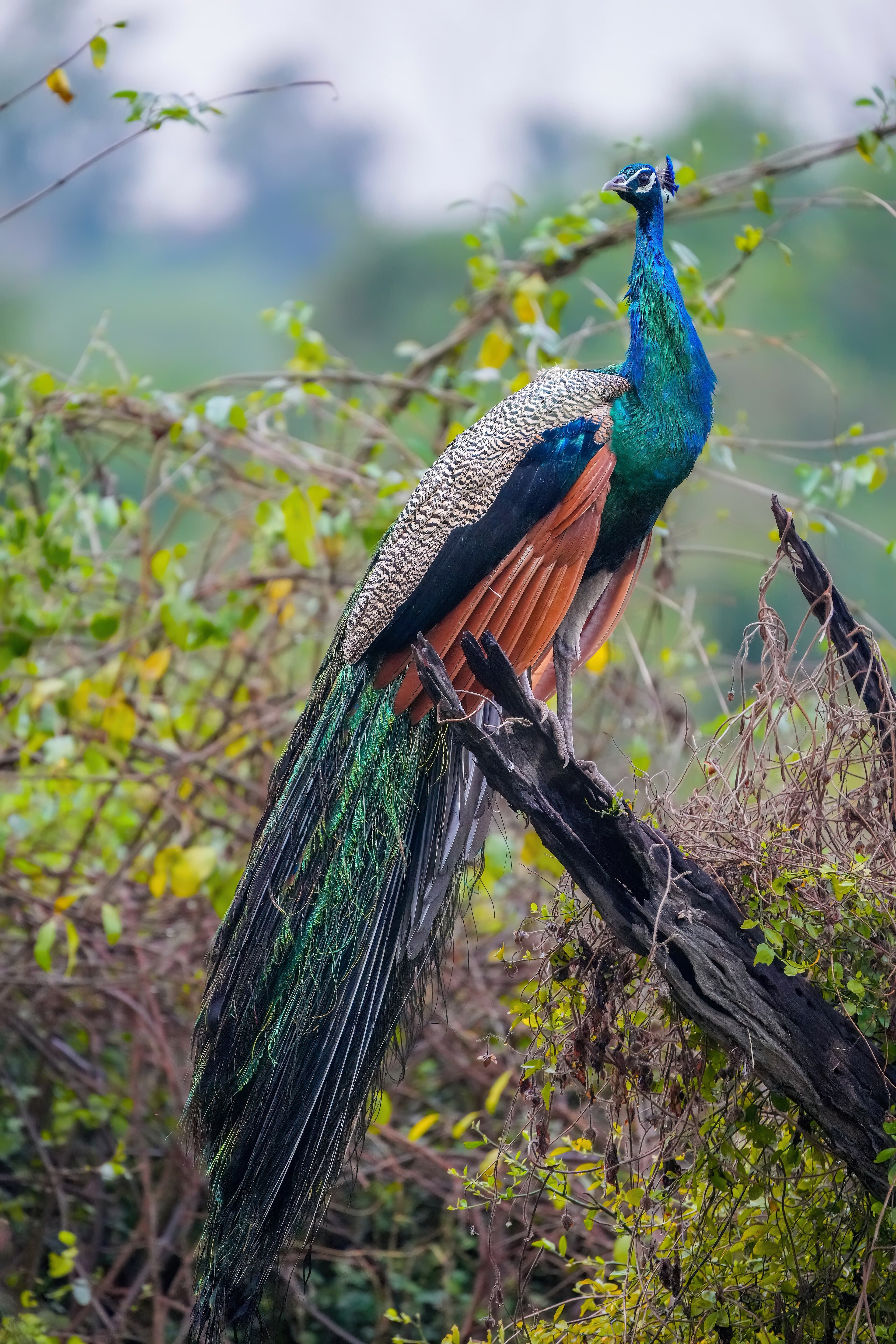
  • Indian peafowl · Pavo cristatusCommon in forest clearings; the displaying male is a highlight.
  • Bar-headed goose (winter) · Anser indicusAmong the roughly 160 migrants; flocks rest on the rivers in winter on their trans-Himalayan migration.
  • Kingfishers, egrets, storks & eaglesRiverine and wetland species along the Rapti and Narayani; raptors hunt the grassland edges.

Resident breeding peaks with the monsoon; winter (October–March) brings migrants and the best visibility.

References (1)

Reptiles & fish

Beyond the two crocodilians, Chitwan holds notable reptiles and a rich fish fauna that underpins the river food web.

  • King cobra · Ophiophagus hannahThe world's longest venomous snake.
  • Indian rock python · Python molurusA large constrictor of forest and wetland.
  • Softshell turtlesSeveral turtle species inhabit the rivers and oxbow lakes.
  • Freshwater fishMore than 113 fish species recorded in the Rapti–Narayani system — the prey base for gharial, mugger, otters and fish-eating birds.
References (1)

Flora & vegetation zones

Chitwan is a mosaic of four broad vegetation types shaped by the floodplain and the Churia hills. About 70% is sal forest; roughly 20% is grassland; the rest is riverine forest and other types.

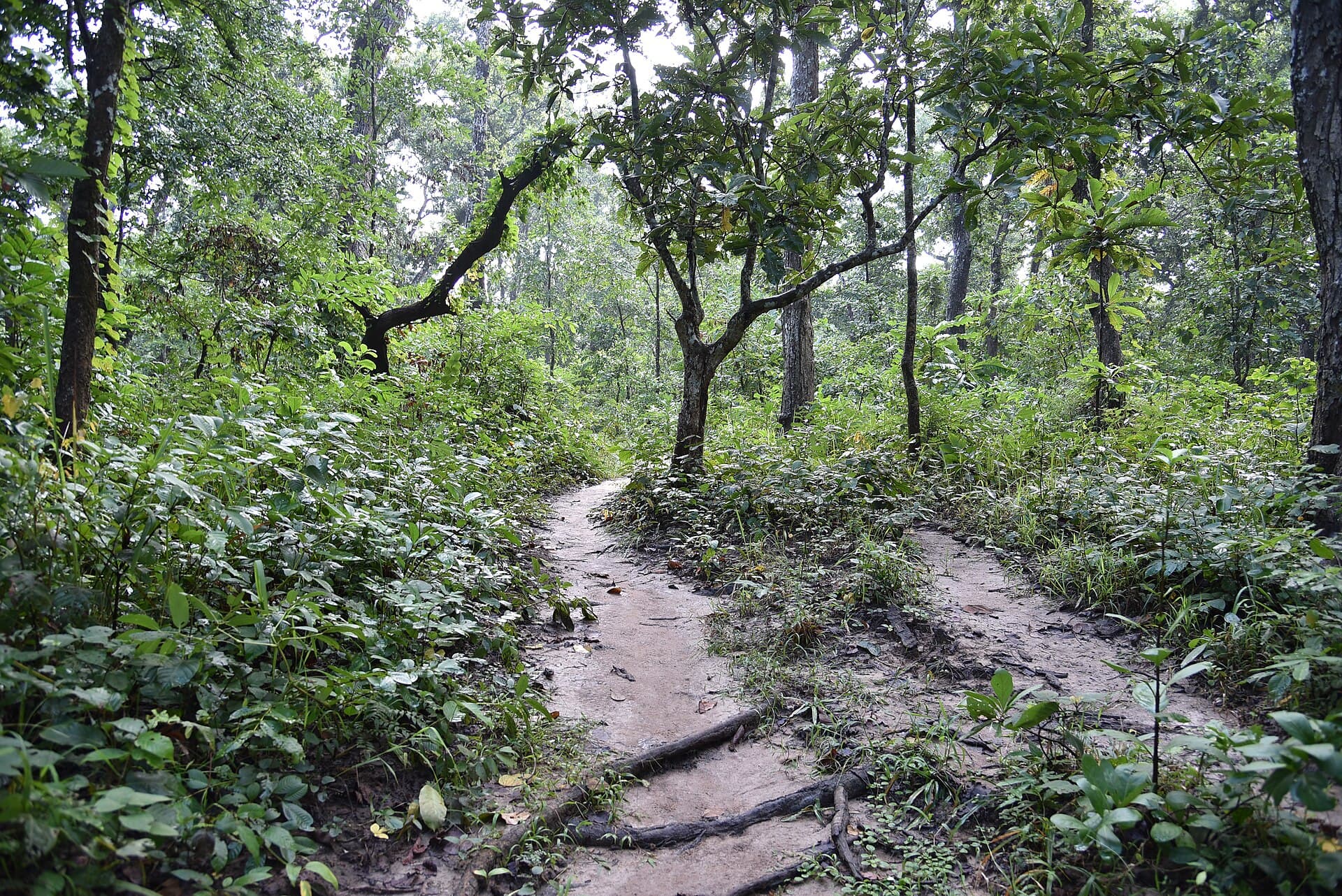
Sal forest
Shorea robustaCovers the bulk of the park on well-drained ground and the Churia slopes. Sal is a tall, valuable hardwood; the understorey shifts with moisture and fire history.
Riverine (gallery) forest
Trewia nudiflora (rhino apple), khair (Acacia catechu), sissoo (Dalbergia sissoo)Lines the Rapti and Narayani; the fruit of Trewia is an important rhino food, and these strips are among the richest wildlife habitats.
Tall grasslands ('phantas' / elephant grass)
Saccharum spp. (to 8 m), ImperataThe iconic Terai grassland — cover and food for rhino, deer and the Bengal florican. Maintained by flooding and fire; threatened by the invasive vine Mikania micrantha.
Wetlands & oxbow lakes
Aquatic vegetationBis Hajar Tal ('Twenty Thousand Lakes') is a Ramsar-listed wetland complex in the buffer zone — key for birds, crocodiles and turtles.

The alien invasive vine Mikania micrantha smothers grassland and riverine habitat and is a documented threat to rhino forage; Chromolaena odorata and Lantana also invade.

References (2)

Places of interest

  • Kasara (park headquarters)The administrative heart of the park, home to the gharial breeding centre and the Bikram Baba shrine; reachable by road.
  • Gharial Breeding Centre, KasaraEstablished 1978 with Frankfurt Zoological Society support; rears gharial from collected eggs to about 5 years before release.
  • Elephant Breeding Centre, SaurahaNear the main tourist hub; lets visitors see elephants and calves respectfully, without riding.
  • Bis Hajar Tal (Twenty Thousand Lakes)A Ramsar-listed oxbow-lake and wetland complex in the buffer zone — outstanding for birds and a peaceful contrast to the safari sectors.
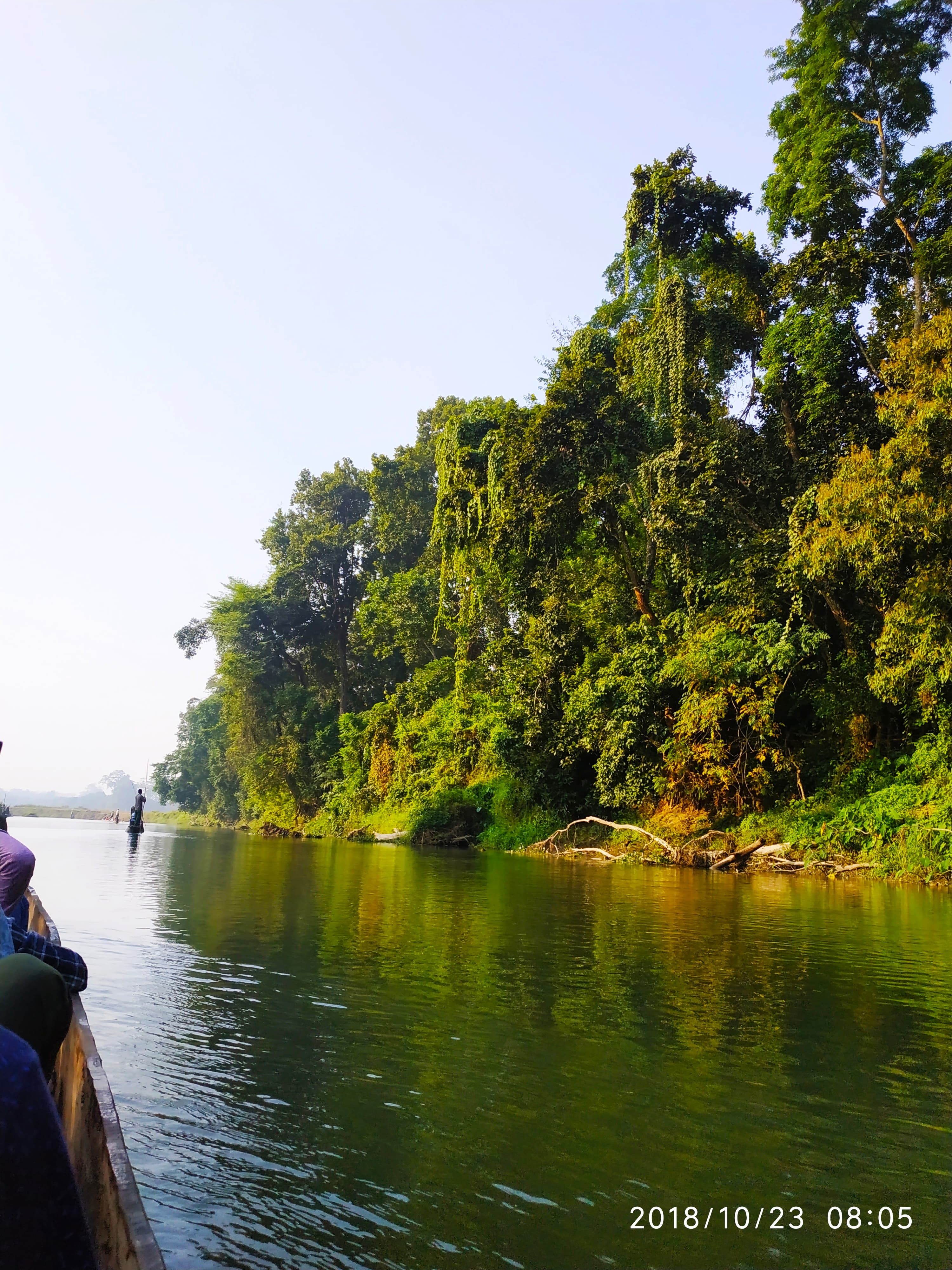
  • Rapti & Narayani riversThe park's lifelines — dawn canoe trips here are the classic way to see crocodiles, gharial and waterbirds.
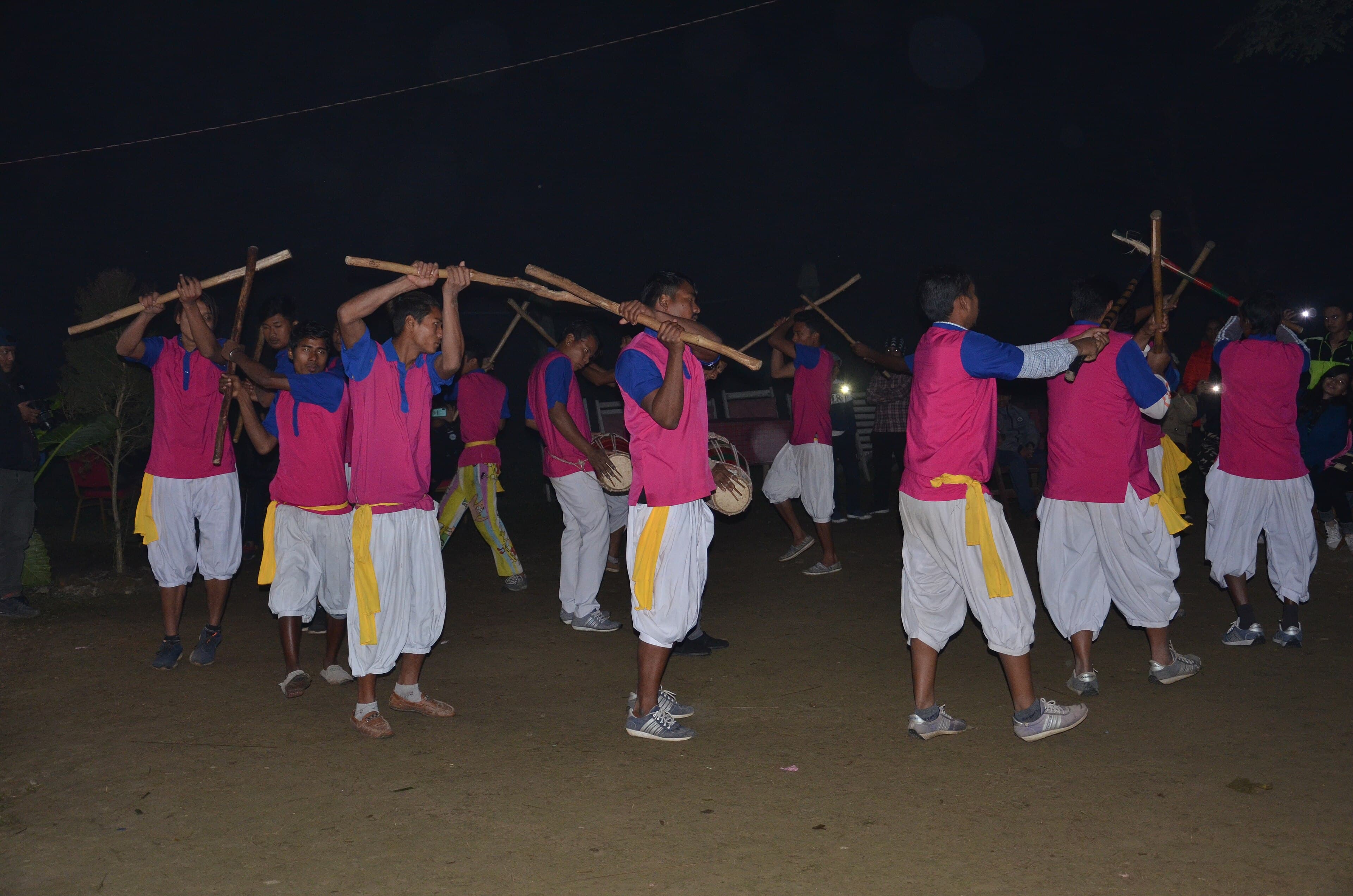
  • Sauraha riverfrontThe main eastern gateway; sunset over the Rapti, the launch point for most safaris and the centre of Tharu cultural life for visitors.

Species pages

Read the full conservation stories

Long-form, sourced editorial on the species this park protects — their populations, their recoveries, the policy and the science behind them.

Plan Your Visit

For international visitors

Practical context for visitors arriving from another country — how to get here, how long to stay, what you'll actually see, and whether this park fits the trip you have in mind.

From Kathmandu

Chitwan is the most accessible of Nepal's great wildlife parks — 150 km south of Kathmandu by road, or a 25-minute domestic flight to Bharatpur. Most international visitors come here as part of a longer Nepal trip rather than for Chitwan alone.

Why this park

It's the country's first national park (1973), a UNESCO World Heritage Site, and the place you have the best practical chance of seeing greater one-horned rhino, gharial, sloth bear and — if you're patient and lucky — a Bengal tiger. The visitor infrastructure around Sauraha is the most developed of any Nepali park: licensed guides, English-speaking operators and a clear, well-trodden way in.

When to come

October to March is the standard season — cool, dry, low grass and the best wildlife visibility. April and May are hot but still rewarding for birding. Late May through September the monsoon makes the floodplain hard to access; tall grass also obscures sightings. The park is busiest in the Christmas–New Year and February windows.

How long to stay

Minimum useful visit
2 nights / 3 days. Anything less and you've come a long way for a single jeep safari. Two nights lets you do a dawn canoe on the Rapti, a half-day jungle walk or jeep safari, an evening at the Tharu cultural show, and a dawn second safari before checking out.
Ideal length
3 nights / 4 days. Three nights gives you a fuller mix — both sectors of the park (Sauraha and Kasara), the Gharial Breeding Centre at Kasara, the Bis Hajar Tal Ramsar wetland and a slower pace overall. Past four nights, diminishing returns set in unless you're a serious birder.

What you'll actually see

Chitwan delivers what brochures promise — but visitors who arrive expecting a guaranteed tiger leave disappointed. Tigers are real here (around 128 in the 2022 census, Nepal's largest population) but genuinely rare to see; rhinos, by contrast, are close to a sure thing.

Realistically expect

  • Greater one-horned rhinoceros (close to reliable, especially on canoe trips)
  • Spotted deer (chital) — herds of them
  • Gharial and mugger crocodile basking on river sandbanks
  • Asian elephants at the Sauraha breeding centre (wild herds are seen irregularly)
  • 300+ bird species — kingfishers, egrets, hornbills, peafowl

Possible but not reliable

  • Bengal tiger (most visitors don't see one; pugmarks and alarm calls are the realistic 'sighting')
  • Sloth bear (uncommon, dawn forest tracks)
  • Bengal florican — a critically endangered grassland bustard
  • Gaur (Asia's largest wild cattle, in the Churia hills of the park's south)

Season note. October–March: best mammal visibility (low grass, animals concentrate at water). November–February: peak migrant birds. Monsoon: dramatic landscape but limited safari access.

Practical realities

From Kathmandu
Road: about 150 km, 5–6 hours by tourist coach or private vehicle via the Prithvi Highway and Mugling. Air: 25-minute flight to Bharatpur, then about 30 minutes by road to Sauraha. The road trip is part of most itineraries; the flight makes more sense if you have limited days.
When it's open
Open year-round, but practical access is heavily seasonal. Operators sometimes pause walking safaris during the monsoon (Jun–Sep) when grass is tall and floods raise both safety and visibility issues; jeep tracks can wash out. Confirm with whoever you book through.
Accommodation
Sauraha (the eastern gateway) has the densest cluster of options — community homestays, mid-range lodges and a small number of high-end jungle resorts. Meghauli, on the western side, is quieter with a smaller selection. Budget rooms exist in the buffer zone village; high-end lodges sit inside or beside the park. We don't recommend specific properties.

Fees and permits

Foreigner
NPR 2,000 per person per day
SAARC nationals
NPR 1,000 per person per day
Nepali
NPR 150 per person per day

Source: Nepal Tourism Board — Chitwan National Park · verified 29 May 2026 · charged per day

A separate small guide / safari fee applies per activity; pay through your operator.

Other permits

  • No additional national permits required. Chitwan has no TIMS or restricted-area permit requirement beyond the park entry fee.

Re-confirm rates with your operator — fees are updated periodically.

Visit if…

  • You want a realistic chance of seeing a greater one-horned rhino in the wild
  • It's your first Nepal trip and you want one wildlife park alongside a trek or city stay
  • You prefer well-developed visitor infrastructure (English-speaking guides, comfortable lodging, a clear gateway town)
  • You're a birder — the 500+ species checklist is one of Nepal's strongest
  • You're combining wildlife with a UNESCO World Heritage tick

Skip if…

  • You're hoping a Bengal tiger sighting is reliable (it isn't — Bardiya gives slightly better odds)
  • You want quiet, low-tourist-density wildlife — Sauraha sees real visitor numbers in season
  • You're travelling in the height of monsoon (Jul–Aug) and don't have flexibility on dates
  • You're after high-altitude or mountain landscapes — Chitwan is hot lowland jungle
Canoeing on the Rapti River at dawn

Step into the jungle

Explore the wildlife, the rivers and the living culture of Nepal's first national park.