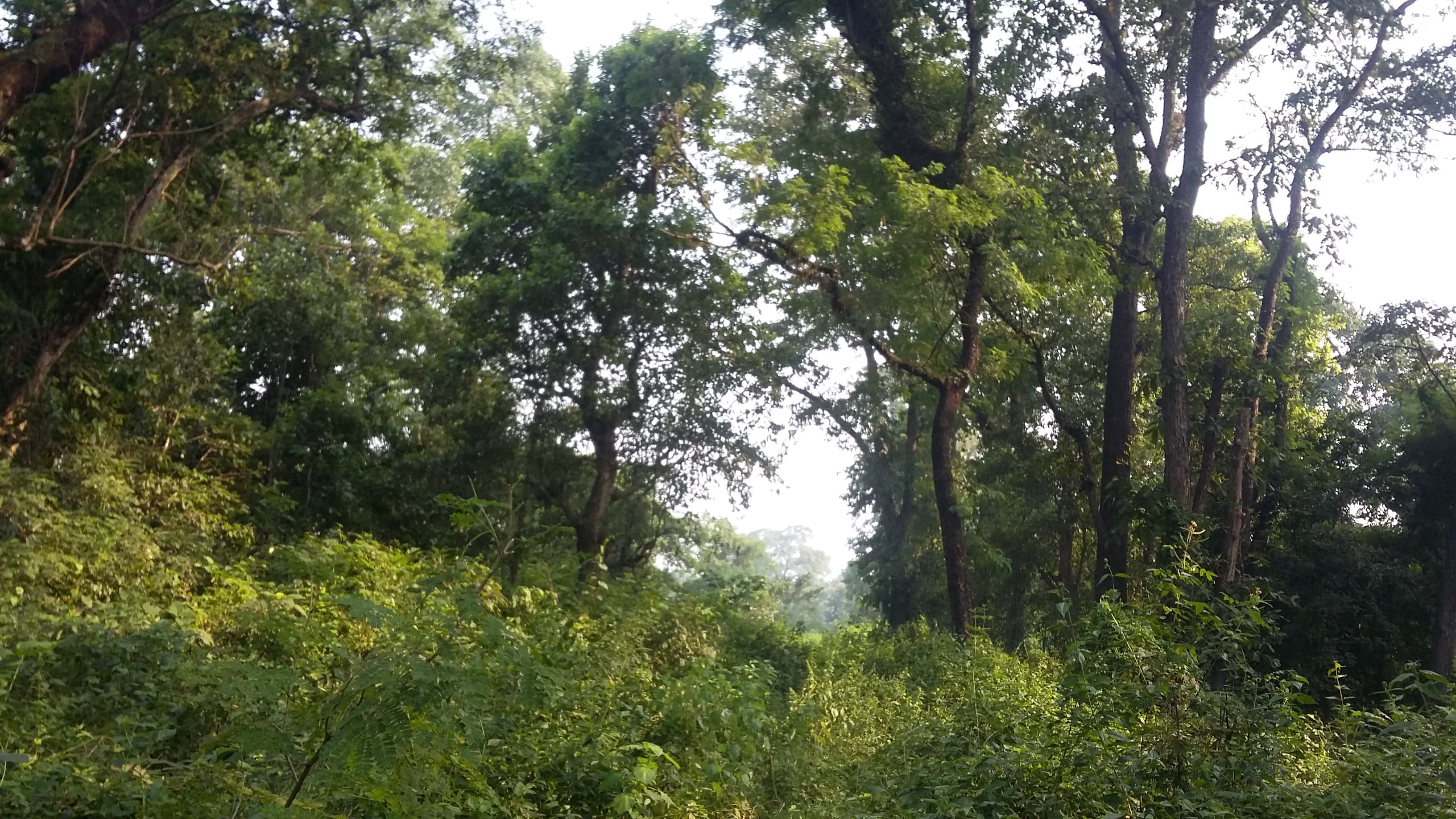
Permits and fees for Nepal's national parks
Nepal's permit system is more complicated than most countries'. Visiting a national park can require one permit, two, or three depending on the park, and the system has changed in real ways over the past three years — including in 2026. Old guidebooks and even some blog posts written eighteen months ago describe rules that no longer apply.
This page explains the structure rather than trying to be a complete fee database. Current 2026 figures are included where multiple recent sources agree, with the date each was verified. For anything that matters financially or legally, confirm with the official source linked at the bottom before you travel.
The structure: how permits stack
Nepal's parks and trekking areas can require up to three layers of paperwork, depending on where you're going:
Layer 1 — Park entry fee. Almost every national park charges a per-person entry fee, payable at the park gate or in advance through the Department of National Parks and Wildlife Conservation (DNPWC) in Kathmandu. This is the basic admission to the protected area.
Layer 2 — TIMS card or local municipality fee. The Trekkers' Information Management System (TIMS) card was historically required for almost all trekking areas — a safety and identification system run by the Nepal Tourism Board. As of 2026, TIMS enforcement has shifted significantly:
- In the Everest region (Sagarmatha), TIMS is no longer required. It has been replaced by a separate Khumbu Pasang Lhamu Rural Municipality permit, introduced in 2023 and checked at Monjo just below Namche Bazaar.
- In the Annapurna region, TIMS is also no longer actively enforced as of 2026 — checkpoints verify only the ACAP conservation-area permit.
- In Langtang, Manaslu, far-western Nepal (including the Rara area), and other regions, TIMS remains required.
This is the change most likely to catch a first-time visitor working from older information.
Layer 3 — Restricted Area Permit (RAP). Some areas of Nepal are designated "restricted" for security, cultural-preservation, or border reasons. These require a special permit obtained through a registered trekking agency — they cannot be applied for independently. Restricted areas include Upper Mustang, Upper Dolpo, Kanchenjunga, Manaslu, Nar Phu, parts of Humla, and several others. These permits are substantially more expensive and come with rules: a licensed guide is mandatory, and historically two trekkers were required (this changed on 22 March 2026, when solo restricted-area trekking became possible again, though the guide requirement remains).
Current 2026 figures — by region
The figures below were verified against multiple consistent 2026 sources. Confirm directly before travel — fees adjust annually, sometimes mid-year, and VAT is sometimes included and sometimes added separately depending on where you pay.
Chitwan National Park
- Entry fee (foreigners): Confirm with DNPWC or NTB. The general structure follows the national pattern but the published figure should be checked at source.
- Buffer-zone fees may apply for specific activities.
Sagarmatha National Park (Everest region)
- National Park entry permit: NPR 3,000 + 13% VAT (approximately NPR 3,390, ~USD 28)
- Khumbu Pasang Lhamu Rural Municipality permit: NPR 3,000 for the first four weeks (~USD 23)
- TIMS card: NOT required for Everest as of 2026
- Total typical cost: ~USD 50 in permits for the standard EBC trek (plus mandatory guide)
Langtang National Park
- National Park entry permit: NPR 3,000 (~USD 22)
- TIMS card: Required, NPR 2,000 (~USD 15)
- Total typical cost: ~USD 37 in permits
Shey Phoksundo National Park (lower Dolpo trekking)
- National Park entry permit: NPR 3,000 (~USD 22)
- For Upper Dolpo (a restricted area): an additional Restricted Area Permit applies — historically USD 500 for the first ten days plus USD 50/day beyond. Confirm current figures with a registered agency.
Annapurna Conservation Area (the most-trekked region; not a national park strictly, but it borders one)
- ACAP permit: NPR 3,000 (~USD 22)
- TIMS card: Not actively enforced as of 2026, but still officially "recommended"
- Most-trekked region in Nepal (Annapurna Circuit, ABC, Poon Hill).
Bardiya, Banke, Shuklaphanta, Parsa (Terai parks)
- Entry fees: Lower than the high-Himalayan parks; confirm with DNPWC.
Khaptad, Shivapuri Nagarjun, Rara, Makalu Barun, Chhayanath
- Entry fees: Apply per the standard DNPWC structure. Confirm current figures at source.
The mandatory-guide rule
Since April 2023, a licensed guide is required on all major trekking routes in Nepal, including independent visits to the high-Himalayan parks. This is not a tradition or a strong recommendation; it is the current legal requirement, and it is enforced at checkpoints. The rationale was a combination of safety (independent trekker deaths and rescues had risen) and employment (guides are an essential rural-mountain livelihood).
Independent trekking on the major routes — the kind that used to define a Nepal trekking trip for solo travellers in the 2010s — is no longer possible without arranging a guide. Guides cost roughly USD 30–40 per day and are arranged through registered trekking agencies in Kathmandu or Pokhara.
This applies to the high-Himalayan parks. Wildlife safaris in the Terai parks (Chitwan, Bardiya, etc.) have always required licensed guides for walking activities; this hasn't changed.
What's exempt or reduced
- Children under 10 are generally exempt from national park and conservation area permit fees.
- SAARC nationals (Bangladesh, Bhutan, India, Maldives, Pakistan, Sri Lanka) pay reduced fees across most categories — typically about a third of the foreign-tourist rate.
- Nepali citizens pay nominal fees (often NPR 25–100) — a different regime entirely.
How to actually obtain permits
There are three practical routes:
-
Through your trekking agency. If you've booked a guided trek, your agency will handle all permits before you leave Kathmandu. This is the default for most international visitors and is required for restricted-area trekking. It's by far the simplest route.
-
At the Nepal Tourism Board (NTB) office in Kathmandu or Pokhara. TIMS cards (where still applicable) and most park/conservation-area permits can be obtained directly here. Bring your passport, a passport photo (or have one taken on site), and cash in NPR. The Kathmandu office is at Bhrikutimandap; the Pokhara office at the Damside.
-
At the park entrance gate for some lowland parks (Chitwan, Bardiya, etc.). This is often the simplest for non-trekking park visits. Bring NPR cash; foreign currency or cards may not be accepted reliably.
The e-TIMS digital permit system was introduced in 2026 — QR-coded permits that checkpoints can scan against a central database. This makes verification quicker but doesn't change the underlying fees or requirements.
Common mistakes to avoid
A few errors international visitors regularly make:
- Trusting old information. The Nepal permit system changed in 2023, 2024, and again in 2026. A blog post from 2022 may describe rules that no longer apply. Any source older than ~12 months on this topic is worth treating with caution.
- Skipping the Khumbu municipality permit on EBC. It was introduced in 2023 and is checked at Monjo. Multiple international visitors get caught out at the checkpoint and have to pay on the spot, sometimes with no card facilities.
- Trying to trek restricted areas without an agency. Restricted Area Permits cannot be self-applied; you cannot legally enter Upper Mustang or Upper Dolpo without a registered agency and a licensed guide. Enforcement is real.
- Carrying only digital copies. Some checkpoint personnel ask for physical copies of permits. Print them.
- Assuming USD is universally accepted. Most permit offices want NPR. Have enough Nepali cash before you start.
Where to verify
These are the only authoritative sources we link to. Confirm any specific figure here before you commit to it:
- Department of National Parks and Wildlife Conservation (DNPWC): dnpwc.gov.np — for national park entry fees and policies.
- Nepal Tourism Board (NTB): ntb.gov.np — for TIMS cards and conservation-area permits.
- Department of Immigration: immigration.gov.np — for visa rules (separate from park permits but often confused).
- A registered Nepali trekking agency — the practical authority for any trip-specific permit question.
We don't sell or arrange permits; we describe the system as it is and point you to those who do. That's deliberate.
Next in /plan:
- Getting around Nepal — from Kathmandu to every park
- Safety and altitude — the serious one
- Visiting respectfully — community context for the parks
Sources verified June 2026:
- DNPWC official permit pages and fee schedules.
- Nepal Tourism Board permit information.
- Nepal Trekking Permits 2026 — multiple Nepali tour operators (Mountain Kick, Hiking Nepal, The Everest Holiday, Himalayan Recreation, Nepal Trekking Company) all in agreement on the 2026 figures cited.
- Verified solo-trekking rule change of 22 March 2026 from multiple Nepali operator sources.
- Verified mandatory-guide rule introduction (April 2023) from multiple Nepali government and operator sources.
Permit fees change annually and sometimes mid-year. Treat figures here as a planning guide, not a final price. Verify directly with DNPWC, the Nepal Tourism Board, or a registered trekking agency before travel.