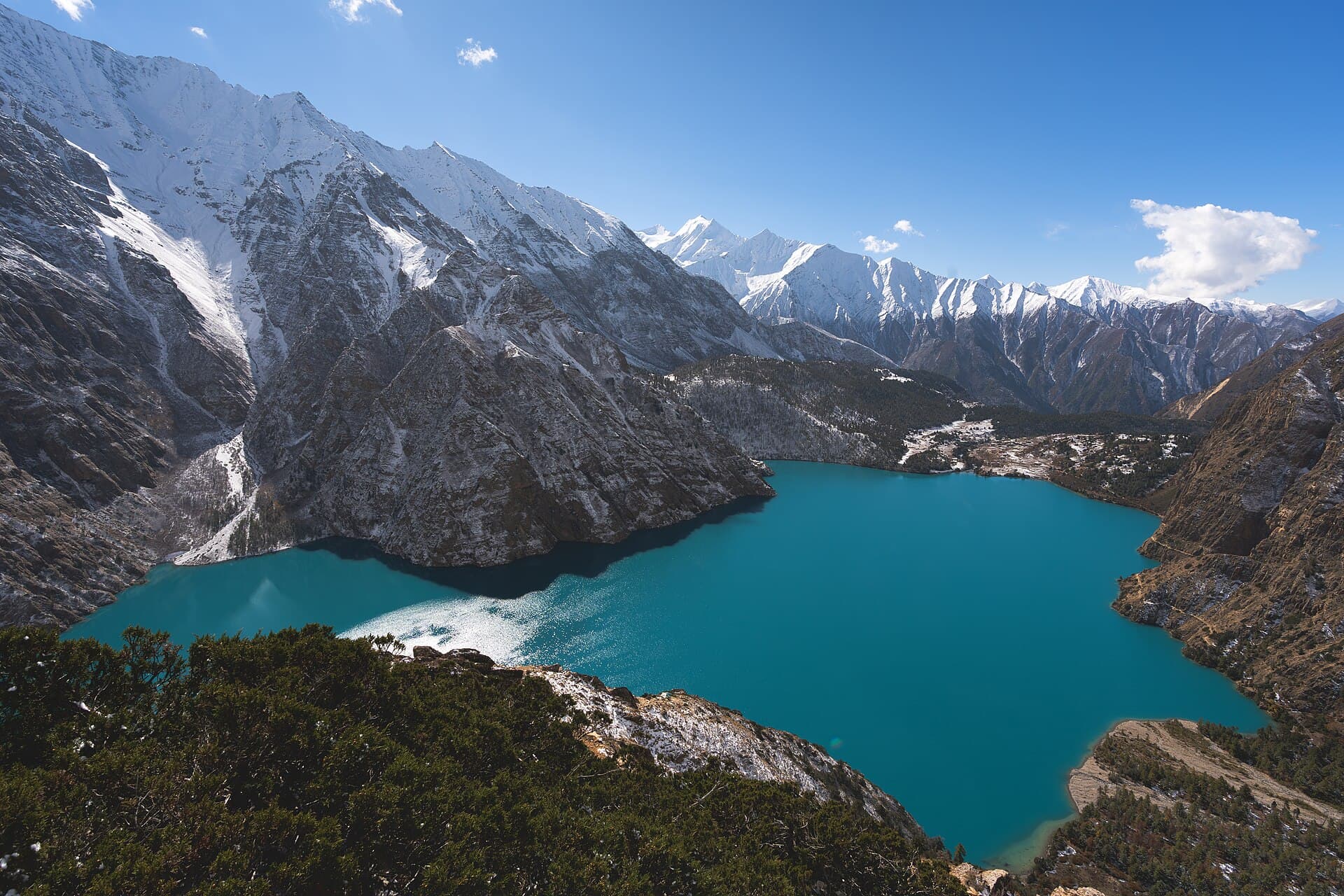
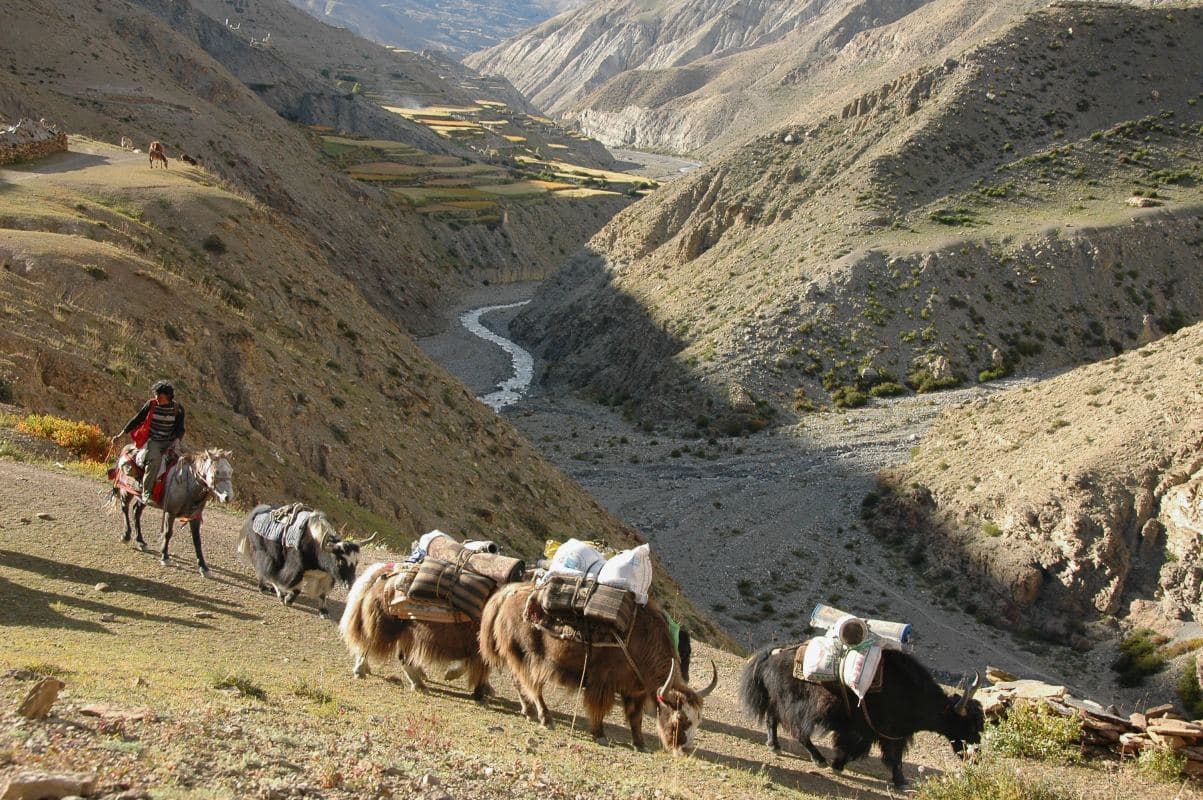
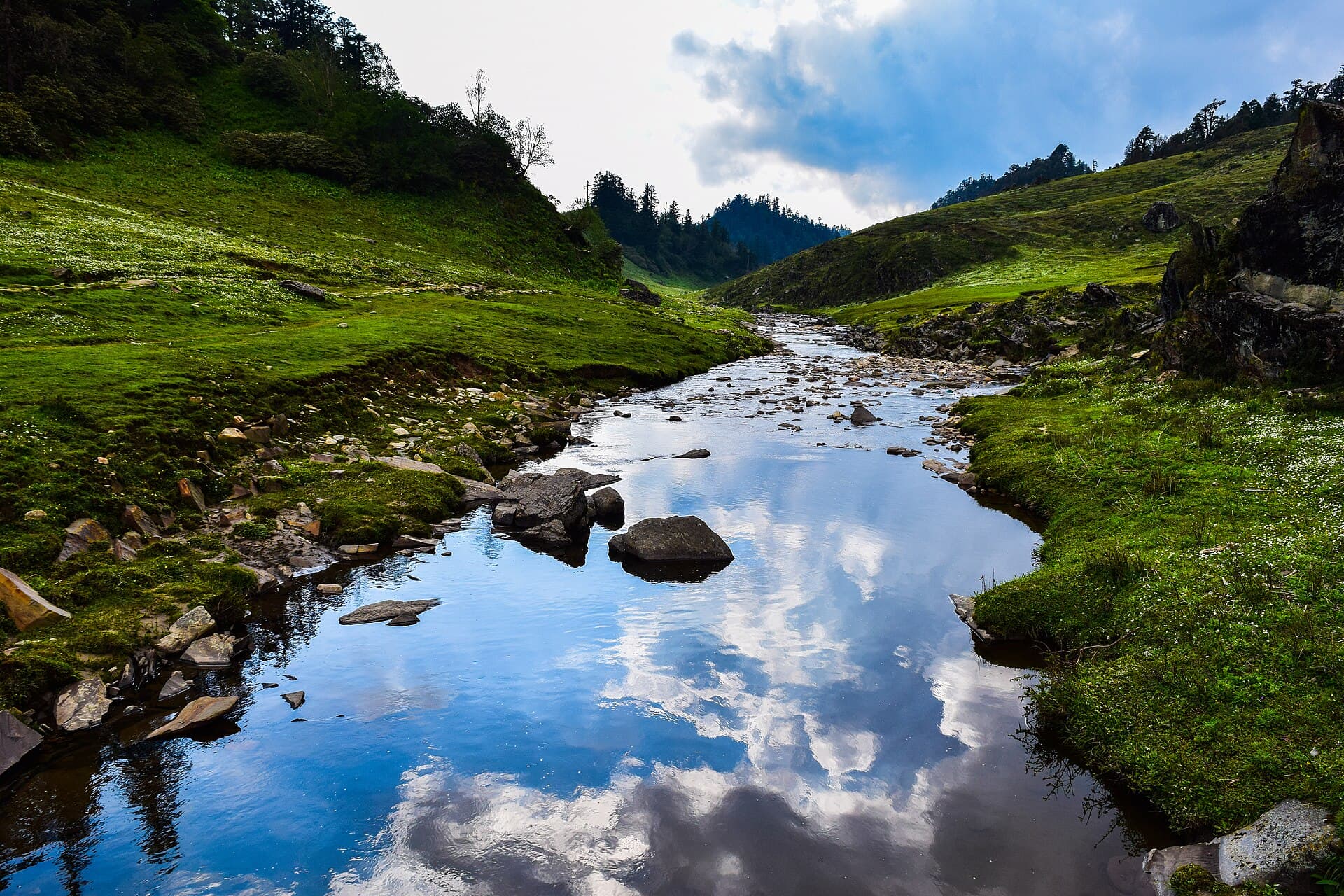
The deep blue waters of Rara LakePhoto: Prabeshsdev (edit by Cart) · CC BY-SA 4.0

National Parks / Mountain / Rara

Est. 1976 · Nepal's smallest park, largest lake

Rara

Nepal's smallest national park guards its largest lake — the deep blue Rara, ringed by conifer forest and Himalayan peaks in the remote far west.

106
km² — smallest park
10.8
km² — Rara Lake
167
m lake depth
1976
Established

At just 106 km², Rara is the smallest of Nepal's national parks — but it holds the country's largest lake, the jewel from which it takes its name.

Established in 1976, the park protects the unique flora and fauna of the remote Humla–Jumla region of north-western Nepal, spanning the Mugu and Jumla districts. It ranges in elevation from about 2,800 m to 4,039 m at Chuchemara Peak on the lake's southern side, with the peaks of Ruma Kand and Malika Kand framing the water to the north.

The park is managed by the Department of National Parks and Wildlife Conservation with the assistance of the Nepal Army.

Rara Lake ringed by forest and peaksPhoto: Prabeshsdev (edit by Cart) · CC BY-SA 4.0

The Lake

Rara Lake

Rara Lake is the largest in Nepal, covering 10.8 km² with a maximum depth of 167 m at an elevation of around 2,990 m. Oval-shaped on an east–west axis, roughly 5 km long and 3 km wide, its clear blue water shifts colour through the day and drains into the Mugu-Karnali River via the Nijar Khola. It is the serene centrepiece of the entire park.

Wildlife

Life around the lake

The park's coniferous forests and alpine meadows shelter a range of Himalayan species.

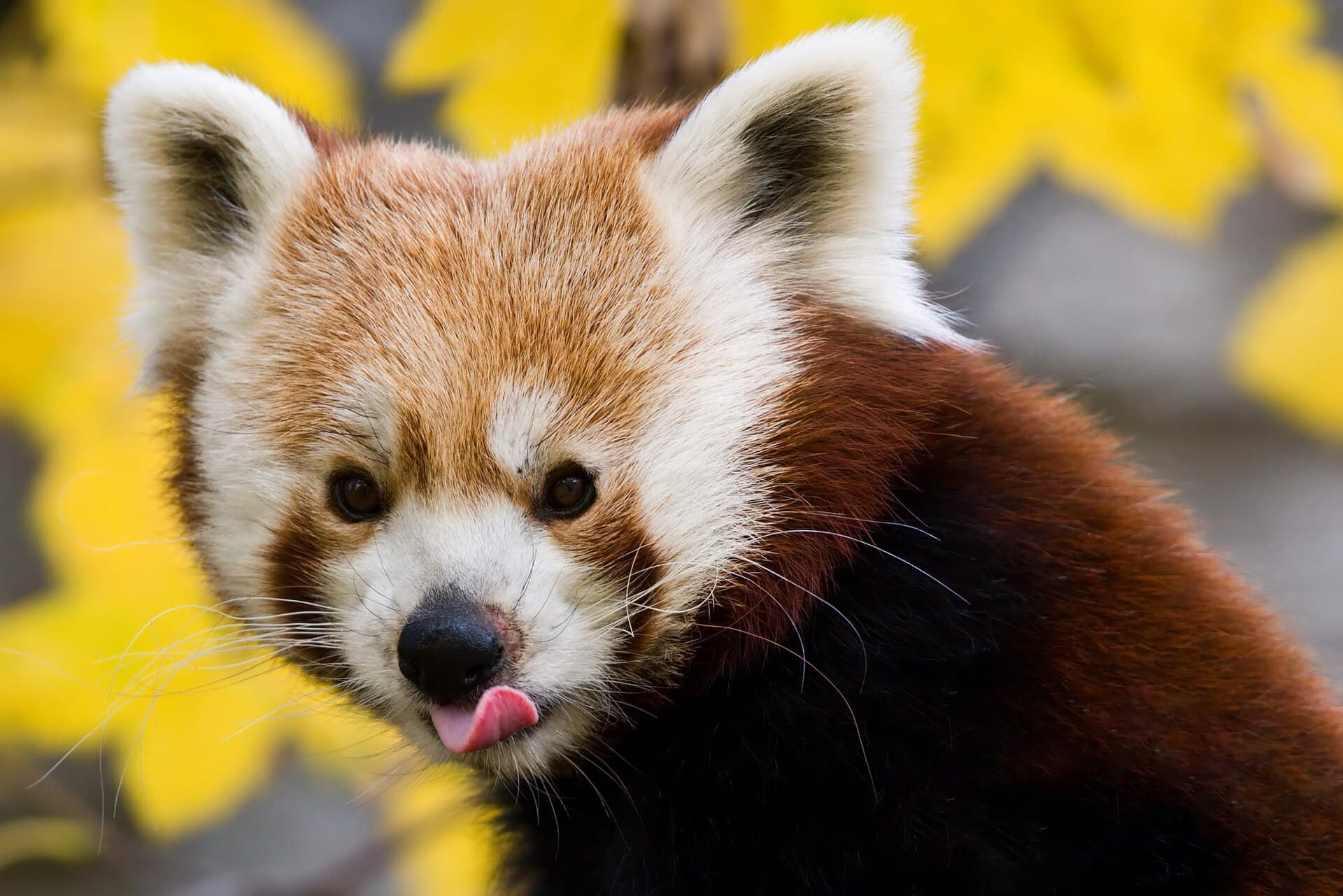
A red pandaPhoto: Christian Mehlführer (edit by Böhringer) · CC BY 2.5

Red Panda

Ailurus fulgens

Found in the park's forested zones.

Endangered
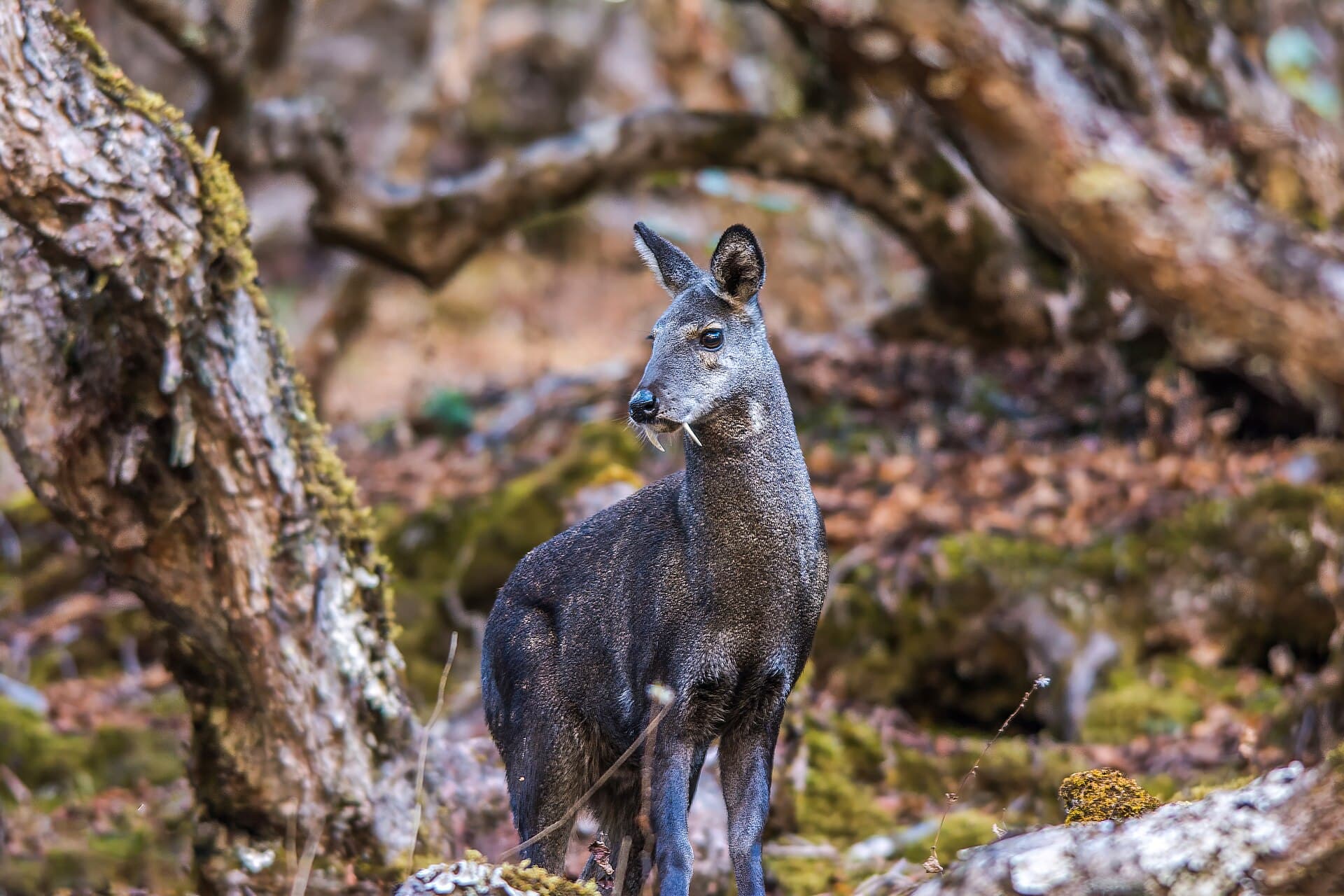
A Himalayan musk deerPhoto: Gurung Pratap · CC BY-SA 4.0

Musk Deer

Moschus

Among the park's notable high-forest mammals.

Endangered
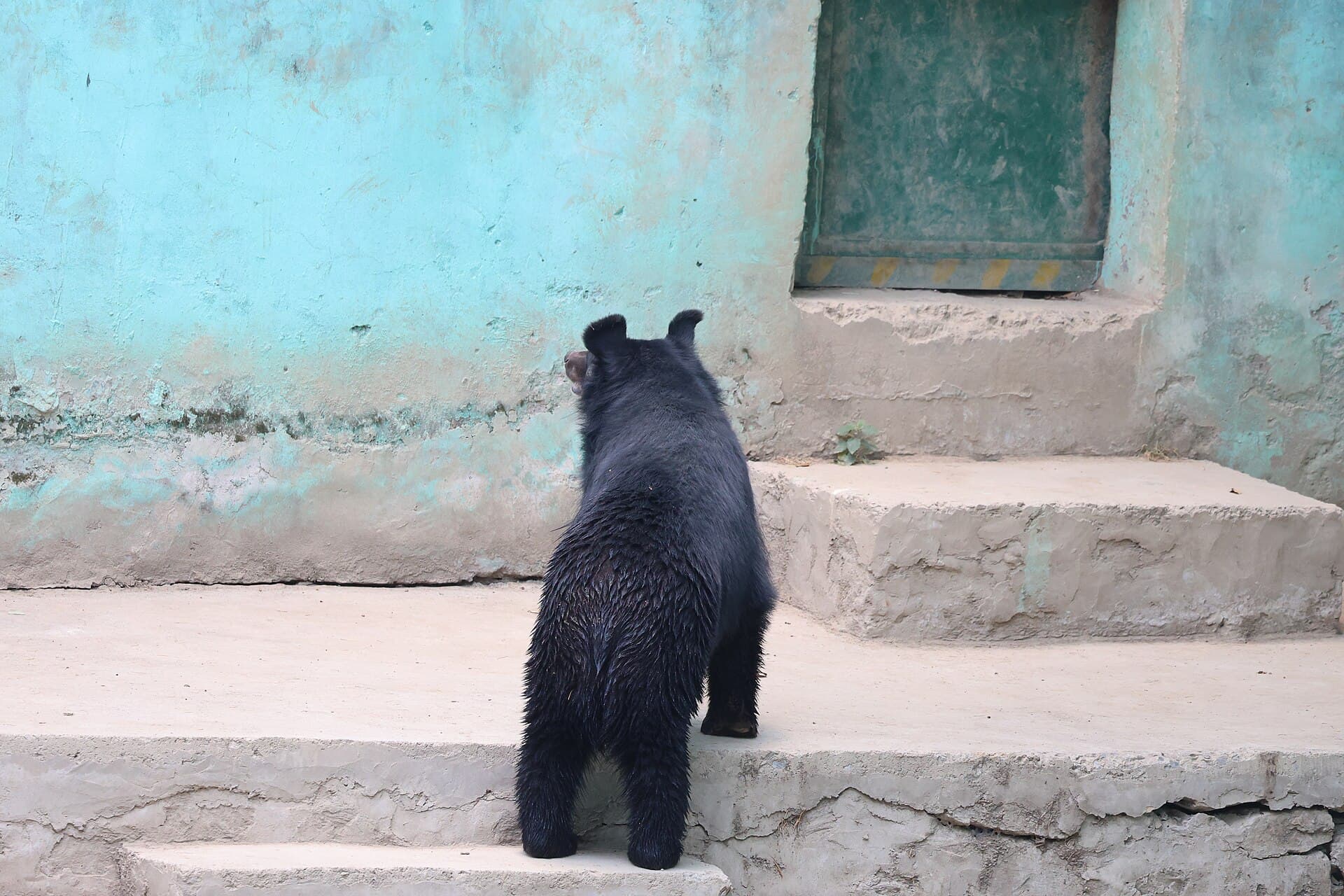
A Himalayan black bearPhoto: Ganesh Mohan T · CC BY-SA 4.0

Himalayan Wildlife

Panthera · Ursus

Leopard, Himalayan black bear, ghoral and Himalayan tahr also range here.

The lake and forests attract many resident and migratory birds, including coots, grebes and other waterfowl in winter, set among forests of blue pine, spruce, fir and juniper.
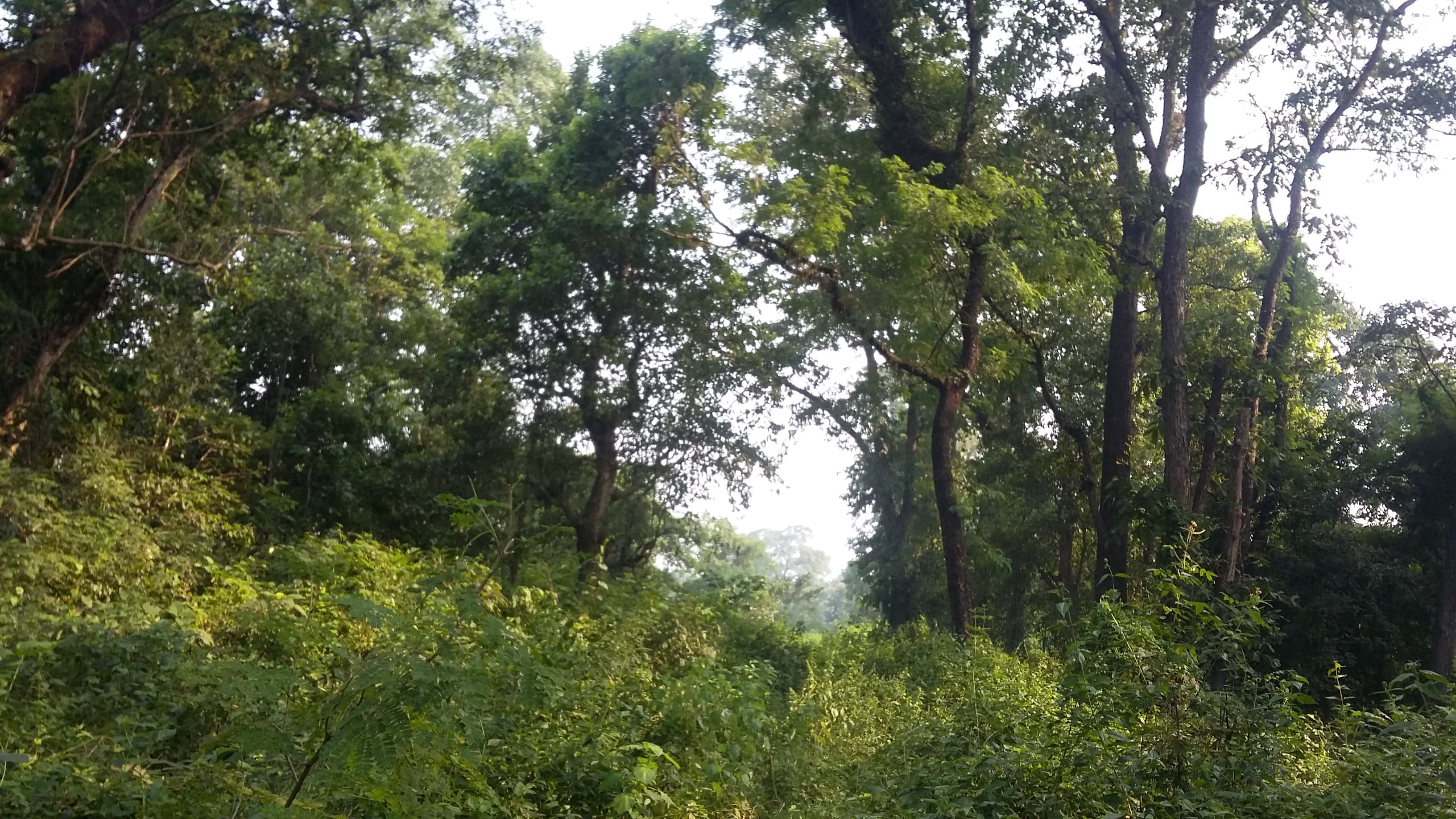
Conifer and rhododendron forest above Rara LakePhoto: Bharatadhikarimb · CC BY-SA 4.0

Flora & Landscape

Blue pine and rhododendron

Above the lake, forests of blue pine, rhododendron, spruce, fir, oak and juniper cloak the slopes, giving way to alpine meadow at the highest elevations. In spring the rhododendrons bloom; in autumn the air is crisp and the lake mirror-still — the classic seasons to visit.

Visiting

A remote western jewel

Rara rewards the effort of reaching one of Nepal's most isolated and beautiful corners.

Rara Lake Trek

Trails circle the lake and climb to viewpoints like Chuchemara for the full panorama.

Getting there

Remote — typically reached via flights to Jumla or Talcha airstrip, then a trek.

Best seasons

Spring (Mar–May) and autumn (Sep–Nov) for clear skies and blooms.

Facilities are limited and the region is remote; plan logistics carefully and confirm current access and permits.

Reference

Facts at a glance

Location
Mugu & Jumla districts, Karnali Province, north-west Nepal
Area
106 km² — smallest national park in Nepal
Elevation
~2,800 m to 4,039 m (Chuchemara Peak)
Rara Lake
10.8 km² · up to 167 m deep · ~2,990 m elevation
Established
1976
IUCN category
II (National Park)

Administration

Park leadership

Each park is managed on the ground by a chief warden who reports into Nepal's Department of National Parks and Wildlife Conservation (DNPWC).

Chief warden
Pending DNPWC verification
Headquarters
Verify with DNPWC
Reports to
DNPWC, Ministry of Forests and Environment
Office-holders rotate regularly and are administered separately, so we do not publish unverified names. For how Nepal’s protected areas are governed, see DNPWC and protected-area administration.

Wildlife & Ecology

Nepal's smallest park, its largest lake

Rara is the smallest of Nepal's national parks at 106 km², but it holds the country's largest lake — Rara Lake at 10.8 km², up to 167 m deep and 2,990 m above sea level. The forest belt around the lake is good red panda and musk deer habitat; in winter the lake fills with migrant waterfowl. The park's most singular biological story is its three endemic snowtrout, found in the lake and described in 1979.

Red pandaEndangeredAilurus fulgens · HabreResident in the conifer–rhododendron forest around the lake — one of the more accessible Nepali sites for the species.

A small arboreal mammal with rich reddish-brown fur and a long ringed bushy tail; in Rara, the temperate forest of blue pine, fir and rhododendron is its core habitat.

Behaviour

Solitary, arboreal, crepuscular; spends much of the day resting in trees.

Diet

Chiefly bamboo, supplemented with fruit, acorns, eggs and small prey.

Habitat in this park

The forested belt above 2,800 m around the lake and on the Chuchemara ridge.

Status & numbers

Endangered globally; the park's lower-disturbance forest provides one of the more secure habitats in mid-western Nepal, though a reliable Rara-specific count has not been published.

Conservation story

Rara's small area and managed access (Nepal Army-supported) make it one of the better-protected red-panda forests in the country; livestock grazing pressure is the main local threat.

Where to see it

Patient trekkers walking the lake circuit through bamboo–rhododendron forest occasionally see one — sightings are rare and brief.

References (1)
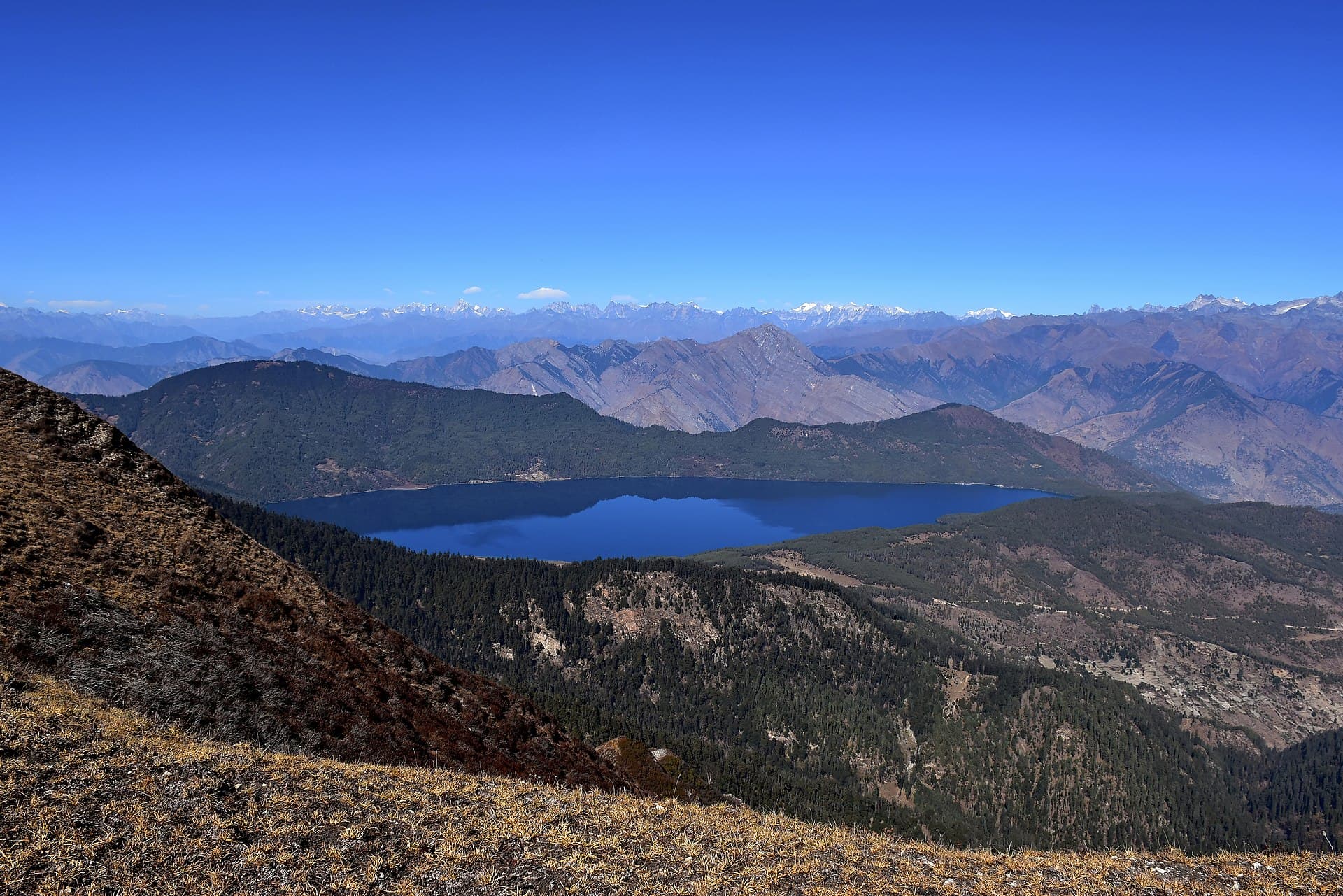
Himalayan musk deerEndangeredMoschus chrysogaster · Kasturi mrigaAntler-less, tusk-bearing deer; the forested ridges around Rara are core habitat.

Small, primitive deer without antlers; males bear protruding tusk-like canines and a musk gland prized in perfume and traditional medicine.

Behaviour

Shy, solitary, mostly nocturnal/crepuscular; sticks to dense understorey.

Diet

Grasses, mosses, lichens, leaves and shoots.

Habitat in this park

Forested slopes around Chuchemara Peak and the eastern lake shore.

Status & numbers

Endangered globally; documented in the park, no Rara-specific count published.

Where to see it

Difficult — secretive and forest-bound; patient trekkers occasionally encounter one.

References (1)
Rara snowtrout (three endemic species)EndangeredSchizothorax raraensis · Schizothorax nepalensis · Schizothorax macrophthalmusThree species of snowtrout endemic to Rara Lake — described in 1979 and found nowhere else on Earth.

Three closely related snowtrout (subfamily Schizothoracinae) that evolved in the isolation of Rara Lake. All three were described in 1979 by Terashima.

Behaviour

Cold-water schooling fish; spawn in inflowing streams.

Diet

Aquatic invertebrates and small fish.

Habitat in this park

Rara Lake itself — they exist nowhere else in the world.

Status & numbers

All three species are restricted to Rara Lake. Water-quality decline and any future introduction of non-native fish would be catastrophic; this is the park's most globally significant biodiversity story.

Conservation story

The three endemic snowtrout make Rara not just Nepal's largest lake but one of the country's most globally significant freshwater systems.

Where to see it

Almost never visibly — the species are seen mainly by researchers; what visitors see on the lake is the boats and the migrant ducks.

References (1)
Himalayan black bearVulnerableUrsus thibetanusResident in the forested ridges above the lake.

A medium-sized bear with a distinctive white V on the chest; the dominant large carnivore of the park.

Behaviour

Mostly crepuscular; ranges widely; can be aggressive if surprised, particularly females with cubs.

Diet

Fruit, nuts, insects, small mammals; occasionally livestock.

Habitat in this park

Forested slopes around Chuchemara.

Status & numbers

Vulnerable globally; park-specific count not published.

Where to see it

Uncommon and shy; signs (scat, claw marks) are the realistic encounter.

References (1)

Other notable mammals

  • Leopard · Panthera pardusVulnerableResident — the only big cat in the park.
  • Himalayan tahr, ghoral, serowWild caprids and goat-antelopes of the steep slopes.
  • Yellow-throated marten, jackal, fox, weaselMid-sized carnivores of the forest belt.
  • OtterLives along the inflows of the lake.

Birds

241 bird species recorded, of which 49 are wetland species using the lake. The dual habitat — forested ridges plus a 10 km² alpine lake — makes Rara a strong birding park for its size.

  • Coots, grebes & migratory waterfowl (winter)Winter brings dense waterfowl flocks onto the lake — the park's best bird spectacle.
  • Himalayan monal · Lophophorus impejanusNepal's national bird; present in the upper forest belt.
  • Blood pheasant · Ithaginis cruentusHigh-forest pheasant of the treeline.
  • Yellow-billed and red-billed choughAlpine corvids over the lake and Chuchemara.
References (1)

Flora & vegetation zones

Around 1,070 plant species recorded across temperate and subalpine zones — a strikingly high count for a 106 km² park, reflecting Rara's position in the biologically rich Humla–Jumla flora region.

Conifer–rhododendron forest (around the lake)
Blue pine, fir, spruce, oak, juniper, rhododendronSurrounds the lake; spring rhododendron bloom is a signature.
Subalpine meadow
Grasses, herbs, dwarf shrubsAbove the forest belt — the snow trout's spawning streams flow through this zone.
Lake ecosystem
Aquatic vegetation; oligotrophic alpine lakeRara Lake is naturally low in nutrients — clarity and the endemic snowtrout depend on that staying so.
References (1)

Places of interest

  • Rara Lake (2,990 m)Nepal's largest lake — 10.8 km² across, up to 167 m deep, at 2,990 m elevation. The defining feature of the park.
  • Chuchemara Peak (4,039 m)The classic viewpoint above the southern shore — the postcard view of the lake is from up here.
  • Murma & Malika Kand ridgesForested ridges above the lake; the realistic red-panda habitat.
  • Nijar KholaThe lake's outflow, draining south to the Mugu-Karnali river system.
References (1)

Plan Your Visit

For international visitors

Practical context for visitors arriving from another country — how to get here, how long to stay, what you'll actually see, and whether this park fits the trip you have in mind.

From Kathmandu

Rara protects Nepal's largest lake — a deep, oligotrophic blue body of water at 2,990 m in the far-western Karnali region. Most visitors fly Kathmandu → Nepalgunj (about an hour), then Nepalgunj → Talcha (a small STOL flight), and trek about three hours to the lake. A longer road option exists from Surkhet via Jumla but adds several days.

Why this park

For visitors who want a Himalayan lake destination without the multi-week trekking commitment of Dolpo or Manaslu, Rara is the practical answer. The lake itself is the headline experience — circumambulating it on foot takes a long day. The setting is high subalpine forest, with views back to the snow ranges and very few other visitors on the trail.

When to come

September–November and March–May are the practical windows. Autumn gives the cleanest skies and the lake at its bluest; spring brings rhododendron bloom in the lower forest belt. Winter is cold and snow blocks the upper viewpoints; summer monsoon is less wet here than in the central Himalaya but Talcha flights cancel readily in cloud.

How long to stay

Minimum useful visit
4 days on the ground. Fly Kathmandu → Nepalgunj → Talcha, trek to the lake, spend one full day around it, and trek back to Talcha. Tight but doable in four days door-to-door with luck on the flights.
Ideal length
6–8 days. An extra two or three days lets you circumambulate the lake at pace, climb one of the surrounding viewpoints (Murma Top is the standard choice) and absorb a flight delay or two without losing the trip.

What you'll actually see

Rara is a lake park first, a wildlife park second. The visit is mostly about the setting and the walk around the water — wildlife is present but quiet.

Realistically expect

  • Rara Lake itself — about 10.8 km² of deep blue water at 2,990 m, with a 13 km perimeter trail
  • Subalpine conifer and rhododendron forest around the lake margins
  • Yak and dzo grazing on the surrounding meadows
  • Migratory waterfowl on the lake in season (the park is on a flyway and birding records list 200+ species)
  • Sparsely populated trails — Rara sees a small fraction of Annapurna's visitor numbers

Possible but not reliable

  • Red panda — the surrounding forest is suitable habitat but sightings are uncommon
  • Himalayan black bear (forest belt)
  • Musk deer (steep, dense forest)
  • Snow leopard (effectively never seen at trail elevation)

Season note. September–October for the clearest lake colour and views back to the snow ranges. April–May for the rhododendron belt. Winter snow can be deep enough to make the lake circumambulation impractical.

Practical realities

From Kathmandu
Air, in two legs: Kathmandu → Nepalgunj (about 1 hour), then Nepalgunj → Talcha (a small STOL aircraft, weather-dependent). From Talcha it's about a 3-hour walk to the lake. The road option from Surkhet via Jumla is rough, slow and adds days; most visitors fly.
When it's open
The park is open year-round, but the practical visitor window is March–May and September–November. Winter snow blocks higher viewpoints and the lake-side path; summer flights into Talcha cancel readily in cloud.
Accommodation
A small cluster of basic guesthouses near the lake and at Talcha. The park's relative isolation means choice is limited and standards are simpler than at Pokhara or Lukla. Camping is also possible. We don't recommend specific properties.

Fees and permits

Foreigner
NPR 3,000 per person per entry
SAARC nationals
NPR 1,500 per person per entry
Nepali
NPR 25 per person per entry

Source: Nepal Tourism Board — Rara National Park · verified 28 May 2026 · charged per entry

Charged once per entry, not per day.

Other permits

  • TIMS card. TIMS is generally required for trekking in Nepal; check the latest rules with your operator before flying west.

No restricted-area permit is required for Rara itself, but flight scheduling into Talcha is the main planning constraint.

Visit if…

  • A high-altitude lake destination with light trekking appeals more than a serious mountain trek
  • You want crowd-free wilderness and don't mind small-plane flights in mountainous weather
  • Autumn-clear lake views or spring rhododendron forest fit your travel window
  • You're already exploring the western Karnali region and Rara is on the way
  • You can spare 5–7 days with flight buffer built in

Skip if…

  • Multiple small-plane flights make you anxious — Talcha cancels readily
  • You only have a long weekend in Nepal — the round-trip eats most of it
  • You're set on a serious 5,000+ m trek and a lake walk won't satisfy
  • You're travelling in deep winter and the lake circumambulation matters to you
  • You're hoping for reliable wildlife sightings — Rara is a quiet park

Suggested itineraries

Day-by-day plans for the most common ways to visit. Realistic timings, honest pacing.

Visitor Guide

Plan your visit

Nepal's smallest national park, wrapped around its largest and most beautiful lake in the remote far west.

Places of Interest
  • Rara Lake (largest in Nepal, 10.8 km², up to 167 m deep, ~2,990 m)
  • Chuchemara Peak (4,039 m)
  • Ruma Kand & Malika Kand peaks
  • Nijar Khola (outlet to the Mugu-Karnali)
Things to Do
  • Trekking (Rara Lake circuit)
  • Lake viewpoints (Chuchemara)
  • Birdwatching
  • Photography
Trails & Tracks

Trails circle the lake and climb to viewpoints, in the remote far west.

Main routes

  • Rara Lake trek / circuit (moderate)
  • Chuchemara viewpoint climb (moderate)
Difficulty
Moderate
Access
Remote; flights to Talcha/Jumla, then trek
Wildlife & Biodiversity

Flagship species

  • Red panda
  • Musk deer
  • Himalayan black bear
  • Leopard
  • Ghoral
  • Himalayan tahr

Resident and migratory waterfowl — coots and grebes gather on the lake in winter. The park protects the flora and fauna of the Humla–Jumla region.

Endangered species

  • Red panda (Endangered)
  • Musk deer (Endangered)
Flora & Plant Life

Vegetation

  • Blue pine, spruce, fir, oak, juniper and rhododendron around the lake
  • Alpine meadow at the highest elevations

A high-altitude lake and conifer-forest ecosystem, with spring rhododendron blooms.

Accommodation & Camping

Access via

  • Near the lake / Mugu

Types

  • Limited; camping and basic stays

Specific lodge names and availability. Fees, hours and operators change — confirm current details with the DNPWC and Nepal Tourism Board before travelling.

Visitor Information
Best time
Spring (Mar–May) & autumn (Sep–Nov)
Weather
High-altitude; cold winters
Entry fee
Foreigners NPR 3,000 · SAARC NPR 1,500 · Nepali NPR 25, per person per entry. Verify current rates before travel. Nepal Tourism Board

Opening arrangements and any boating availability on the lake. Fees, hours and operators change — confirm current details with the DNPWC and Nepal Tourism Board before travelling.

Regulations

  • Park permit required — confirm current rules

Safety

  • Remote; limited facilities
Maps & Navigation
Approx. location
29.52°N, 82.08°E
Gateway
Talcha airstrip / Jumla
Nearest access
Gamgadhi (Mugu); access via Jumla/Talcha — flights via Nepalgunj

Visitor-centre information. Fees, hours and operators change — confirm current details with the DNPWC and Nepal Tourism Board before travelling.

Cultural & Historical

Communities of the Mugu and Jumla districts.

Established in 1976; the smallest national park in Nepal (106 km²), protecting the Humla–Jumla region and managed with Nepal Army support.

Events & Experiences

Guided experiences

  • Guided Rara Lake treks

Specific tour operators. Fees, hours and operators change — confirm current details with the DNPWC and Nepal Tourism Board before travelling.

Rara Lake

Explore more of Nepal's parks

Thirteen parks, one extraordinary country.