If a first-time visitor to Nepal asks experienced trekkers where to go, two answers come back more often than any others: Everest or Annapurna. They are the country's most famous trekking destinations, the two regions most international visitors have actually heard of, and the two areas with the most developed trekking infrastructure.
But there is a real difference between them that visitors arriving from abroad rarely understand at the start: Sagarmatha is a national park; the Annapurna region is not. The legal status changes the visitor experience in ways that matter.
This is the comparison from the parks-focused side.
They're not the same kind of protected area
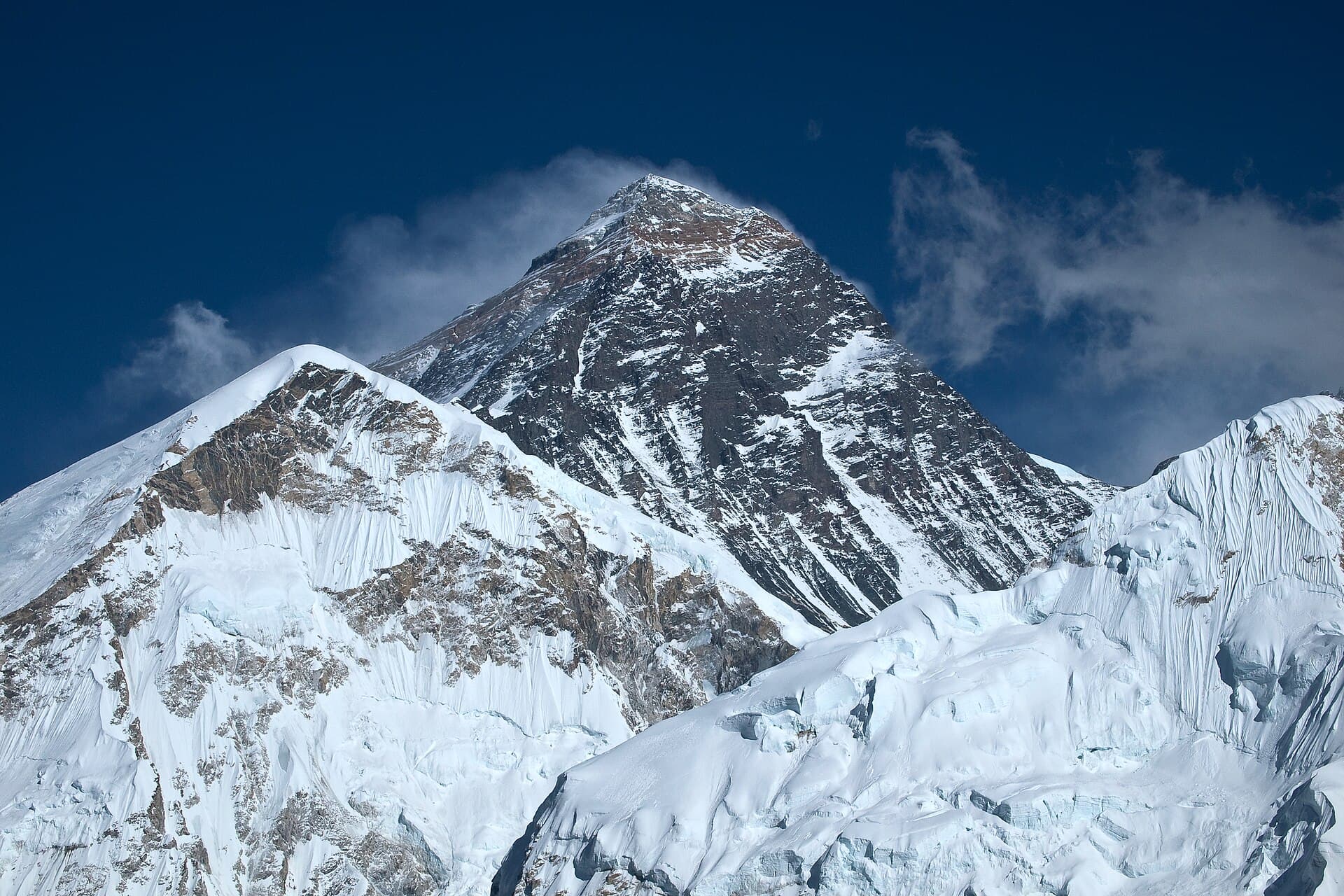
Sagarmatha National Park was gazetted in 1976 as Nepal's third national park, with a UNESCO World Heritage listing added in 1979. It covers 1,148 km² in the Khumbu region of the Solukhumbu district, and it protects the southern slopes of Mount Everest (8,849 m) along with the Sherpa villages, monasteries and glacial valleys of the surrounding area. Like every Nepali national park, it sits inside the IUCN Category II management framework — a "national park" in the strict international sense, with park entry fees, an army-supported anti-poaching presence and visitor regulations published by the Department of National Parks and Wildlife Conservation.
The Annapurna Conservation Area (ACA) is something different. It was gazetted in 1992 and covers 7,629 km² across the Annapurna massif — far larger than Sagarmatha. But it is not a national park. It is a Conservation Area, managed by a non-governmental organisation called the National Trust for Nature Conservation (NTNC), with the explicit goal of integrating wildlife protection with the livelihoods of around 100,000 people who live inside the area's boundaries.
This is not a footnote. The implications for the visitor are real:
- Permits differ. Sagarmatha charges a national park entry fee (NPR 3,000 per person per entry for foreigners, verified May 2026), plus a Khumbu Pasang Lhamu Rural Municipality fee. ACA charges the Annapurna Conservation Area Permit (ACAP), administered by NTNC, plus TIMS.
- The visitor regulations differ. National park rules in Nepal restrict certain activities (firewood collection, off-trail walking in places) that are permitted within an Annapurna village under conservation-area rules.
- The villages have different relationships with the protected area. In a Conservation Area, villagers are stakeholders by design — they have legal rights and a share of the permit revenue. In a national park, they are residents of a buffer zone.
For most visitors this is invisible. For some — visitors who care about how protected areas work and the difference between top-down and community-based conservation models — it's central.
This site covers Nepal's 13 national parks. The Annapurna Conservation Area is outside our scope, which is one reason there is no /parks/annapurna page on this site. But for a visitor weighing where to trek, the comparison is still useful.
Sagarmatha — Everest and the high country
Sagarmatha is the obvious choice for visitors who want to stand below Everest. It is also the choice with the highest barrier to entry — the Lukla flight, the altitude, the famously fickle weather above 4,000 m, the 12-day minimum for the headline Everest Base Camp trek.
The Khumbu region's trekking infrastructure is excellent by trans-Himalayan standards. Teahouses along the EBC route are the country's most developed; lodge owners speak English; Sherpa guiding is a fully professionalised industry with multi-generational expertise. The trail is busy — EBC sees more trekkers per year than any other Himalayan route — but the trail is also wide and well-maintained.
The headline objective is the base camp itself at 5,364 m and the Kala Patthar viewpoint at 5,545 m. The supporting cast includes Tengboche monastery, Sherpa villages from Namche to Pangboche, and views of Lhotse, Ama Dablam, Cho Oyu and Nuptse — peaks that anywhere else in the world would be the headline.
The alternative trek in the same park, Gokyo Lakes, is quieter, gives you the lake landscape and the panoramic Gokyo Ri viewpoint at 5,357 m, and is widely considered to offer the better mountain panorama. The standard 11-day itinerary is comparable in altitude to EBC but in noticeably less crowded terrain.
For visitors who want the Khumbu's higher and harder alternatives — Three Passes, Cho La crossing, Ama Dablam Base Camp — Sagarmatha keeps giving for as long as a trekker has time and altitude experience.
The Annapurna Conservation Area — variety
The ACA covers the western flank of the Annapurna massif, the Manang and Mustang districts, and the deep Kali Gandaki gorge (the world's deepest river canyon between Annapurna and Dhaulagiri). Its three headline treks have legitimate global reputation:
- Annapurna Base Camp (ABC) — about 9 days door-to-door from Pokhara to ABC at 4,130 m. Lower altitude than EBC; arguably more diverse landscape; subtropical-forest base, rhododendron-belt middle, glacial sanctuary top.
- Annapurna Circuit — 10–18 days depending on starting point, crossing the Thorung La pass at 5,416 m. Considered by many experienced trekkers as the most varied multi-day trek in the world.
- Mustang and upper Mustang (restricted-area extension) — trans-Himalayan trekking in the rain shadow, ethnically and culturally closer to Tibet than to lowland Nepal.
The ACA is reached from Pokhara, not Kathmandu — most ACA trekking trips start with a Kathmandu→Pokhara connection (a 25-minute flight or a 7–8 hour drive). The trekking infrastructure is comparable to Sagarmatha's; trails are well-developed, teahouse networks are reliable, English-speaking guiding is mature.
The crowds question
This is the question most experienced trekkers ask first. The honest answer: both regions are busier than they were in 2010, and both still have quiet alternatives.
- EBC is the single busiest Himalayan trek; the standard route in October–November feels crowded in places. Gokyo Lakes is meaningfully quieter.
- Annapurna Circuit has lost trekkers since the road construction up the Kali Gandaki valley shortened the lower section, but the upper sections and Thorung La crossing remain busy.
- ABC sees consistent traffic but rarely feels crowded outside the peak weeks.
- Manaslu Circuit (also ACA-adjacent, restricted-area trek) is the quieter cousin of the Annapurna Circuit for visitors who want the same experience with fewer trekkers.
For visitors who prioritise crowd-free trekking inside Nepal's national park network, Langtang (closer to Kathmandu, drive-in), Makalu Barun (eastern Himalaya, structurally three-week-plus) and Shey Phoksundo (Dolpo, remote) are all genuinely quieter than EBC.
The altitude question
Sagarmatha tops higher than Annapurna's standard treks.
- EBC trek: high point 5,545 m (Kala Patthar)
- Gokyo Lakes trek: high point 5,357 m (Gokyo Ri)
- Annapurna Base Camp trek: high point 4,130 m
- Annapurna Circuit: high point 5,416 m (Thorung La)
- Langtang Valley: high point 5,033 m (Tserko Ri, optional)
For first-time altitude trekkers, ABC's lower ceiling matters — the trek is genuinely more forgiving than EBC, and AMS risk is correspondingly lower. The Annapurna Circuit's Thorung La crossing is comparable to EBC in altitude terms and demands the same acclimatisation discipline.
If altitude is the constraint, ABC or Langtang Valley are the conventional answers. If altitude is the goal, EBC is the obvious choice.
How to choose
Three editorial calls based on common visitor profiles.
For the visitor whose Nepal trip is mostly about standing below Everest: Sagarmatha, EBC trek, with at least 14 days budget for the round-trip from Kathmandu including Lukla buffer. The trek deserves its reputation.
For the visitor whose Nepal trip is about a serious Himalayan trek but Everest isn't specifically required: the Annapurna Circuit is probably the most varied trekking experience in Nepal — and outside our national-park scope, but worth considering honestly. If you specifically want a national park, Langtang Valley gives you a real Himalayan trek without flying to Lukla, in a fraction of the time. Shey Phoksundo for visitors with three weeks and a strong appetite for remoteness.
For the visitor whose Nepal trip is about quiet trekking: avoid both the standard EBC and the standard Annapurna Circuit. Gokyo Lakes (inside Sagarmatha) or the Manaslu Circuit (outside our scope) are noticeably quieter. Langtang and the Khumbu's Three Passes for the experienced trekker who wants challenge and solitude.
If you want a structured recommendation for your specific situation, run the four-question park finder or compare any two or three parks side by side. Both are limited to Nepal's national parks — which means the Annapurna Conservation Area doesn't appear in them.
That is the honest constraint of a national-park-focused site. Sagarmatha is in scope. Annapurna isn't. For visitors weighing the two, that is itself useful information: if you want a national park trek, Sagarmatha is the answer. If you want a Himalayan trek, the choice is wider — and worth considering Annapurna alongside.