Visiting Nepal's national parks respectfully
Nepal's national parks were not empty spaces that became protected areas. They were — and in many places still are — the homelands of communities who had lived on that land for centuries or millennia before park gazettement. The Tharu of the central Terai; the Sherpa of the Khumbu; the Tamang of the Langtang region; the Dolpo-pa of the Trans-Himalaya; the Magar, Gurung, Limbu, Rai, and many other communities whose lives intersect with the parks today.
When you visit, you are entering places shaped by their long presence and, in many cases, their displacement. How you visit matters — to them, to the land, and to whether the cultural fabric that makes these places more than wildlife reserves survives the wave of tourism that has reached them.
This page is a starting orientation rather than a comprehensive guide. The communities and contexts described here deserve depth that we will continue building — particularly with input from naturalists and conservation partners closer to the ground than the site author can be alone.
A history named, not glossed
Nepal's protected-area system was built quickly between 1973 (Chitwan, the first national park) and the early 2000s. Most of the parks involved the displacement of resident communities — either physical removal from the new park boundaries or restriction of customary use of forest, grassland, and river resources within them.
The Tharu of the central Terai had lived in the malaria-rich lowlands of Chitwan, Bardiya, and the surrounding districts for generations, with cultural and ecological practices adapted to the floodplain ecosystem. When Chitwan was gazetted in 1973, Tharu villages within the new park boundaries were relocated, and access to forest products, fishing, and grazing within the park was sharply curtailed. The story is documented in Nepali and international academic literature; it is not contested. The Tharu are still the dominant local community around Chitwan and Bardiya today, and many work in the tourism economy that the parks support, but the relationship between Tharu communities and park authorities carries a complicated history that is not yet fully resolved.
The Sherpa of the Khumbu had a different but related experience around Sagarmatha National Park's 1976 gazettement. The historical Sherpa relationship to the high mountains — built around yak herding, trade across the Tibet passes, and Buddhist monasticism — preceded the park and the modern climbing economy that has grown around it. Sherpa cultural protections of sacred peaks, valleys, and animals were in many ways the conservation system that preceded the formal park. Today, Sherpa communities have substantially better integration with park management than the Tharu around Chitwan have had — partly the result of cultural advocacy by figures like Tenzing Norgay's family, partly the economic weight of the climbing and trekking economy.
The Tamang around Langtang, the Dolpo-pa in Shey Phoksundo, the Magar, Gurung, Rai, and Limbu in various other parks, all have variations of this same story — pre-existing communities whose lives and livelihoods sit in different and not always easy relationship to the parks.
Visiting a park without knowing this history is not a moral failure; almost no international visitor arrives knowing it. But carrying some awareness of it changes how you read the landscape, the lodges, the people who serve your meals, and the village you walk through on the way to a viewpoint.
What respectful visiting looks like, in practice
The principles below come from established responsible-tourism frameworks (Tourism Concern, Responsible Travel, the Nepal Tourism Board's own guidance) adapted to the specific context of Nepal's parks.
Hire local
Buy services — guides, porters, lodging, meals — from local operators wherever possible. The economic argument is simple: a dollar spent at a Tharu-owned lodge in Sauraha keeps a far higher percentage of its value in the local community than the same dollar paid to an internationally-headquartered tour package. Ask your operator who owns the lodges, who employs the guides, and where the money goes. If they can't answer, that's information.
Many Nepali trekking agencies are excellent and locally owned; the larger international tour operators are not the only or even best option for a Nepal trip.
Pay porters fairly and treat them well
A porter on a Nepal trek typically carries 20–30 kg of your equipment for daily wages that may seem modest by visitor standards but that represent essential rural income. The International Porter Protection Group has documented historical cases of porter mistreatment — inadequate clothing for altitude, weight overload, poor lodging — that have caused deaths.
The current standards are clear and not negotiable:
- Maximum recommended porter load is 25 kg including their own kit.
- Porters need the same protective clothing you do: warm layers, waterproofs, sunglasses, sleeping accommodations.
- Porters get the same food and shelter standard as the trekking group, not lesser.
- Wages should meet or exceed the rates set by recognised guide associations.
A reputable trekking agency observes these standards by default. If you have any doubt about how porters on your trip are being treated, ask, and don't tolerate evasive answers.
Dress modestly, especially in villages and monasteries
Nepal is culturally diverse — Hindu-majority in much of the country, Tibetan Buddhist in the high Himalaya, and many other traditions. The shared expectation across most communities is modest dress in villages and at religious sites. Practically:
- Shoulders covered. Avoid sleeveless or tank tops in villages and at temples or monasteries.
- Long trousers or skirts below the knee at religious sites.
- Remove shoes when entering homes, temples, monasteries, and many shops.
- At Buddhist sites (very common in the high parks), walk clockwise around stupas, chortens, and mani walls — keeping them on your right.
- Hats off when entering temples or speaking with monks or elders.
These are low-cost adjustments that signal respect. They matter more than you might expect.
Photography, with explicit permission
Take photographs of people only with their clear permission — asked for, granted, and renewed if you take more than one shot. A nod or shrug is not informed consent. If a child is involved, ask the parent or guardian, not the child.
Specific places where photography is unwelcome or restricted:
- Inside temples and monasteries, unless explicitly permitted (often signs in English and Nepali clarify).
- Sacred sites and rituals. If you don't know whether something is sacred, treat it as if it is.
- Funerals, cremation grounds, and any ceremony you don't understand the context of. These are not photo opportunities.
- Tibetan Buddhist religious objects like ritual masks and statues during ceremonies.
- Military and security installations (this is a legal issue, not a cultural one — Nepal Army presence in the parks is real and they are not to be photographed).
A general principle: would you be comfortable with this photo being taken of you in your home country, by a visitor you'd never see again? If not, don't take it here.
Leave-no-trace, scaled up
Nepal's mountain regions have a serious and visible waste problem — particularly along the Everest and Annapurna trekking routes. The reasons are structural (no functional waste collection at altitude, increasing visitor numbers, single-use plastic from bottled water), but visitor behaviour compounds them.
Practical measures:
- Carry out all your own waste. This includes wrappers, batteries, hygiene products, anything you brought in. The chocolate-bar wrapper you drop on a trail will not biodegrade at altitude for many years.
- Avoid bottled water at altitude. Use a filter or purifier; refill from boiled or filtered water available at most teahouses for a small fee.
- Use established toilets and waste-disposal facilities where they exist. Where they don't, follow standard backcountry practice (200 m from water, buried, paper packed out).
- Buy refilled fuel canisters at trailheads and return them properly if you're using stoves.
- Do not light fires in the high parks. Firewood collection for cooking and tourist comfort is a real driver of deforestation in some regions; teahouse meals are cooked on kerosene, gas, or limited wood under regulation.
Wildlife behaviour
Almost all wildlife viewing in Nepal happens with a guide whose instructions are the practical authority. A few principles that apply across the board:
- Distance. Do not approach wildlife. The standard guidance for tigers, rhinos, elephants, and large carnivores is a minimum of 25–50 metres; for primates and smaller animals, give them space to retreat.
- No feeding, ever. Feeding wild animals (monkeys are the common case) habituates them to humans, leads to aggressive behaviour, and ends with animals being killed for "becoming a nuisance."
- Quiet. Voices carry; predators flee long before you see them. The price of conversation is reduced wildlife sightings.
- Lights and flash. Avoid using flash photography for wildlife. It distresses them and ruins the photo for everyone else watching.
- Follow your guide's directions exactly during walking safaris — particularly around rhinos and tigers in the Terai. The rules exist because people who didn't follow them have been killed.
Money and bargaining
In tourist markets, modest bargaining is expected and accepted; in established lodges, restaurants, and ticketed services, prices are set. A reasonable principle: bargain firmly enough that you're not paying tourist-tax prices, but not so hard that you're saving the equivalent of a coffee back home at the cost of a vendor's daily income. A few hundred rupees difference may matter little to you and a great deal to them.
Tip generously where service is genuinely good. For trekking guides and porters, the standard is roughly USD 10–15 per day for guides and USD 8–10 per day for porters as a tip, divided among the group. These figures vary; ask your agency for current guidance.
Children, gifts, and begging
The case against giving sweets, money, or pens to children on trekking trails: it encourages begging behaviour, undermines parental authority and school attendance, and can be a step toward more problematic exchanges. Even when given with the best intentions, the cumulative effect on a heavily-trekked trail is corrosive.
If you want to contribute to children's welfare, give to recognised local schools, NGOs, or community organisations — your lodge owner or guide can suggest specific ones. Direct giving to children on trails is a kindness that, repeated across thousands of trekkers, hurts the people it's meant to help.
Specific to specific parks
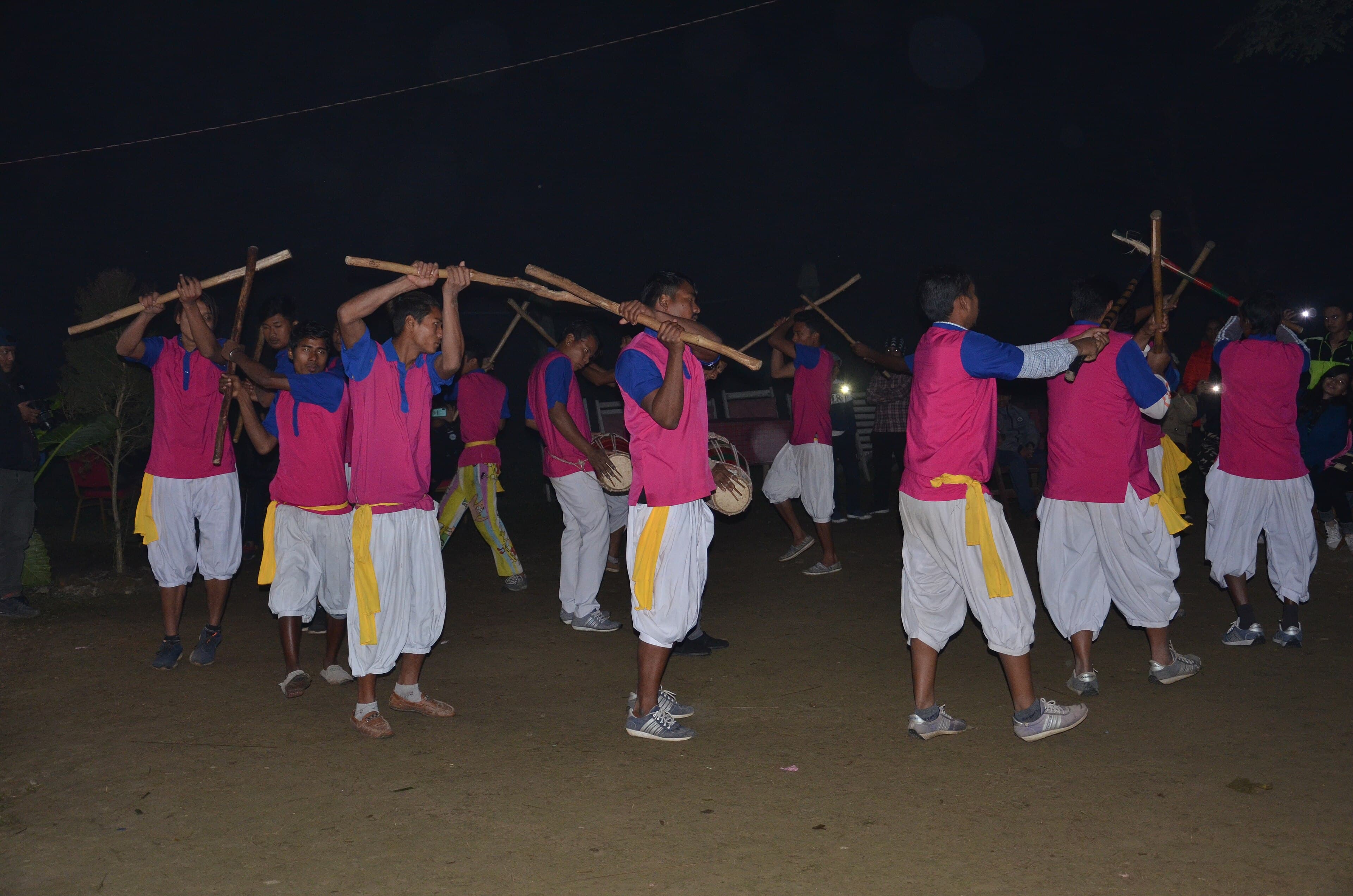
Chitwan and Bardiya — Tharu cultural performances are offered at many lodges. These are usually authentic in the sense that local Tharu communities perform them, but the relationship to traditional ritual versus tourist-oriented presentation varies. Asking lodge staff or your guide about the difference (and showing genuine interest) tends to deepen the experience.
Sagarmatha (Khumbu) — Sherpa Buddhist culture is woven into the landscape. Tengboche Monastery is a working monastery, not a tourist attraction. Mani Rimdu (the autumn festival) is a religious event you may attend respectfully. The Sherpa attitude to certain peaks (the prohibition on climbing them) is current and binding; treat it as you would a religious site in your own country.
Langtang — The 2015 earthquake destroyed Langtang village, killing over 300 people including most of its residents and many trekkers. The recovery is ongoing. Visiting the new Langtang village is welcomed; the rebuild has been substantial; the memorial is meaningful. Don't treat it as a tragedy site; treat it as a village that lost much and continues.
Shey Phoksundo / Upper Dolpo — The Dolpo-pa cultural context is strong; the area is one of the most traditional Tibetan Buddhist regions outside Tibet. Restricted Area Permit fees go partially to local development. Visit through registered local agencies; don't try to short-circuit the permit system.
Khaptad — Considered a sacred area, associated with the hermit-saint Khaptad Baba. The plateau monasteries and Hindu shrines are active religious sites.
Across the parks — The Nepal Army presence is the protective force for both wildlife and visitors. Treat army personnel respectfully; understand they are not park staff in the visitor-service sense.
A note on what this page does not cover
We have written this page from publicly available responsible-tourism frameworks and the site author's own experience in Nepal. It is a starting orientation. The deeper specifics of how to visit each community, how to interpret each cultural setting, and how to navigate the layers of language and history beneath what visitors see — those require people closer to the ground than any single international-facing website can provide.
Future versions of this page will deepen with input from naturalists, conservation partners, and community representatives whose perspectives the site author does not hold. If something here is incomplete or imprecise, the gap is ours to close, not yours to ignore.
Next in /plan:
- When to visit — to time your trip well
- Getting around Nepal — the logistics
- Safety and altitude — the serious one
Sources & further reading:
- Nepal Tourism Board responsible tourism guidance: ntb.gov.np
- The Tharu of Chitwan and the Story of Conservation Displacement — established Nepali academic and journalistic literature on community displacement.
- International Porter Protection Group: porter welfare standards.
- Tourism Concern; Responsible Travel: international responsible-tourism frameworks adapted to Nepal context.
- Himalayan Trust and Sagarmatha Pollution Control Committee — local waste-management context for the Khumbu.
This is a planning guide, not an exhaustive cultural handbook. The communities described deserve fuller representation than a page like this can provide. We will continue to deepen it.