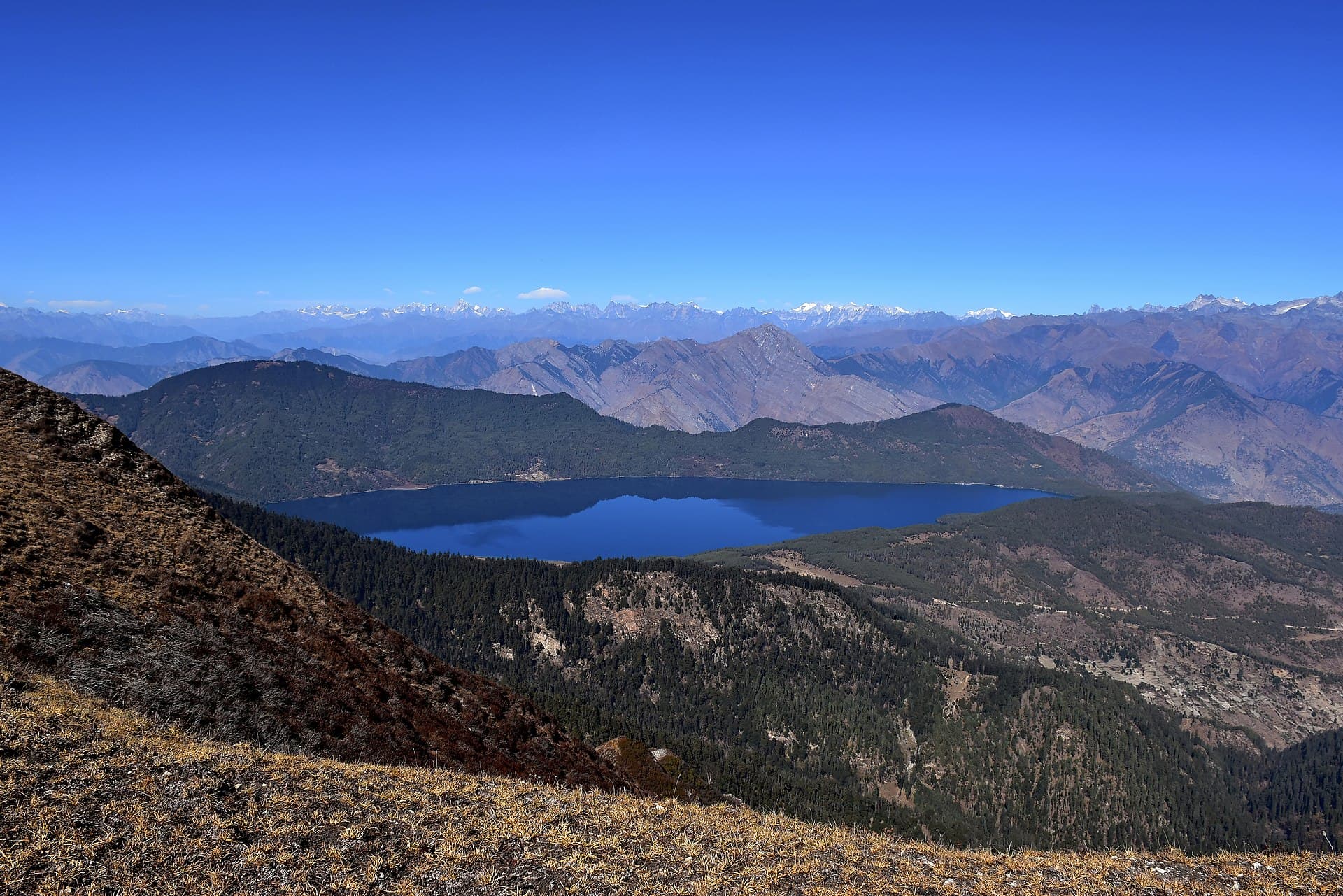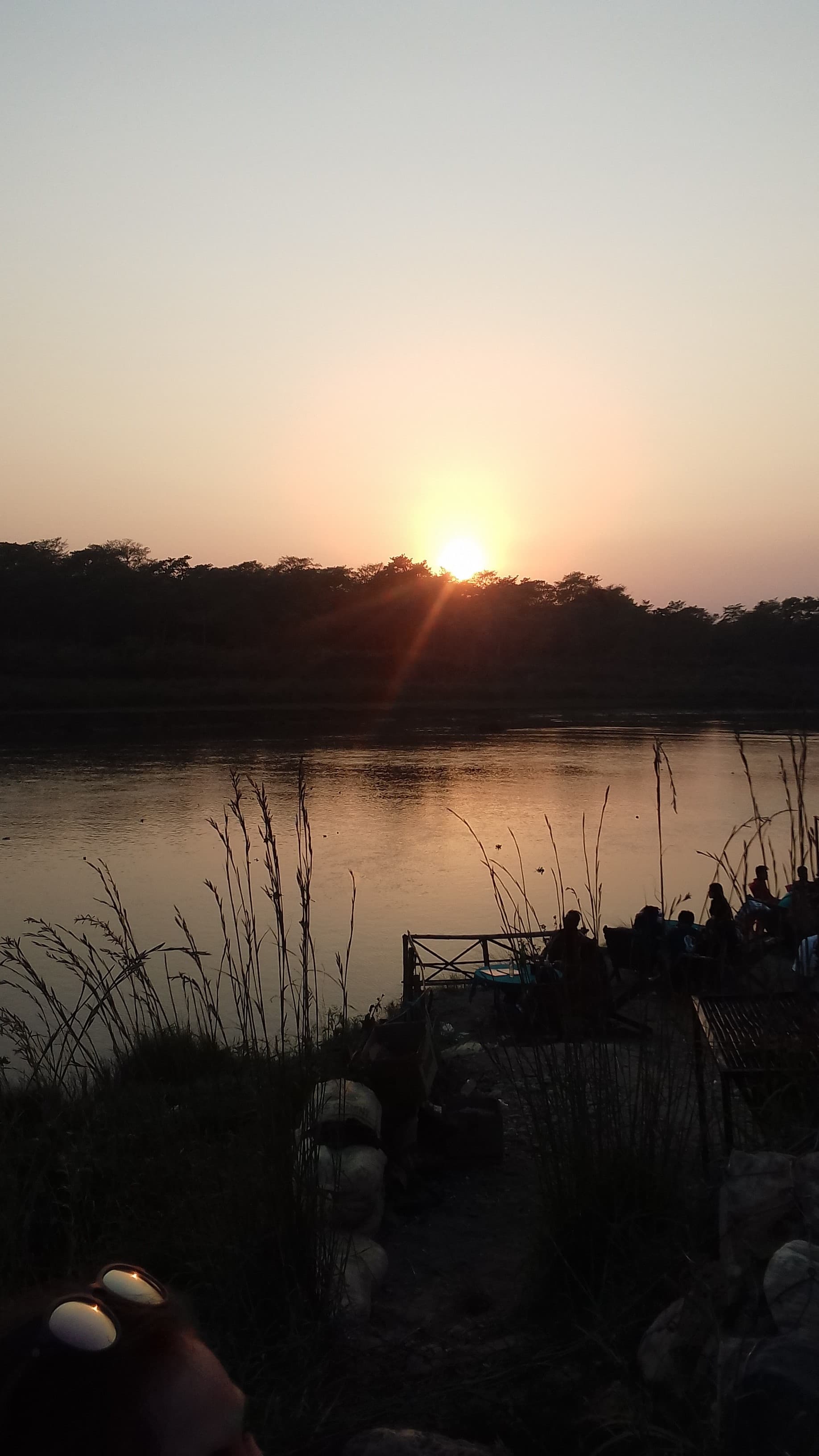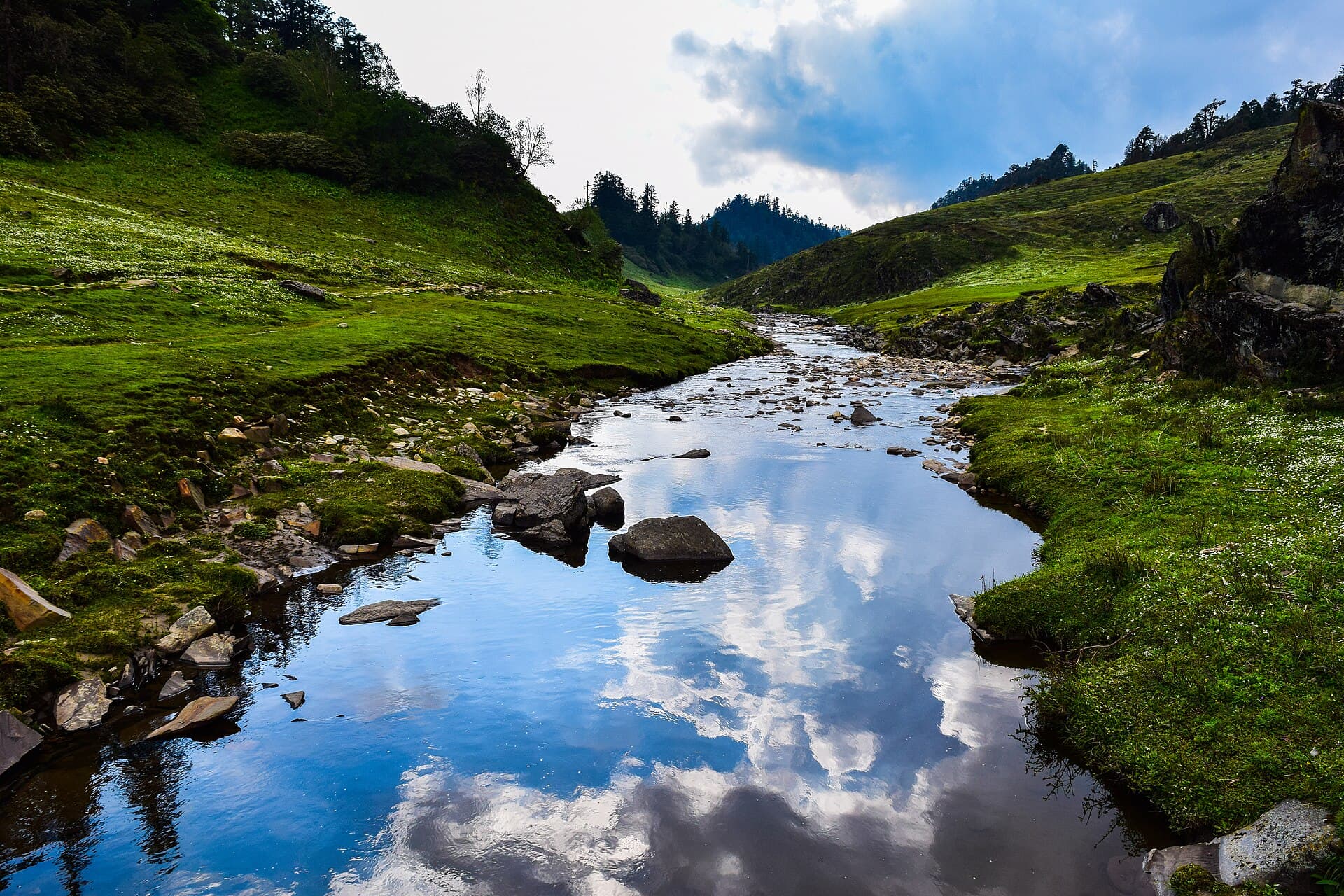
Rolling meadows of the Khaptad plateauPhoto: Anil Bhatta · CC BY-SA 4.0

National Parks / Hill / Khaptad

Est. 1984 · A sacred plateau

Khaptad

A rolling plateau of meadows and forest in Nepal's far west — as celebrated for its spiritual peace as for its wildflowers and wildlife.

225
km² area
1984
Established
270+
Bird species
Sacred
Pilgrimage site

Khaptad is a national park unlike any other in Nepal — a rolling, open plateau of grassy meadows and forest in the far-western mid-hills, as renowned for its spiritual significance as for its nature.

Covering 225 km² across the Bajhang, Bajura, Achham and Doti districts, it ranges through subtropical to subalpine zones. The park was established in 1984 on the advice of Khaptad Baba — a revered hermit who moved to the plateau in the 1940s to meditate and lived there as a spiritual saint for some 50 years.

His ashram remains a place of pilgrimage for hundreds of visitors each year, and the plateau holds deep religious importance.

Open grassy patans of the Khaptad plateauPhoto: Anil Bhatta · CC BY-SA 4.0

The Plateau

Rolling meadows and gentle hills

Unlike Nepal's dramatic peaks or steaming lowlands, Khaptad is a landscape of green rolling hills, open grassy meadows (patans) and patches of forest, set at a comfortable elevation. The summer climate is famously mild — rarely below 0°C or above 20°C — making the plateau a serene, restorative place quite distinct from the rest of the park system.
Wildlife

Forest and meadow life

Khaptad's varied vegetation supports a range of mammals, birds and butterflies.

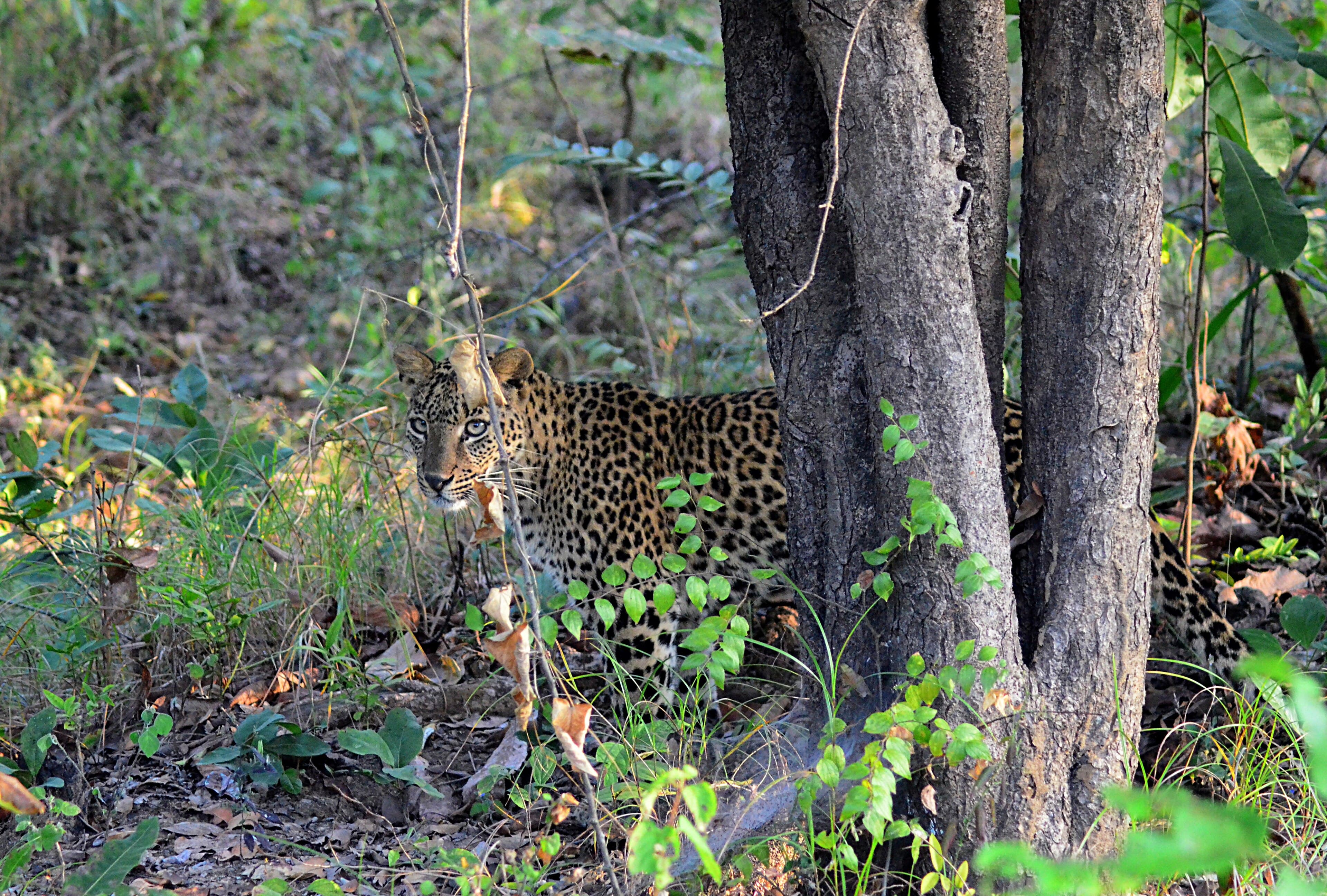
A leopardPhoto: Jenis Patel · CC BY-SA 4.0

Leopard & Wild Boar

Panthera pardus

Forest mammals range across the wooded slopes.

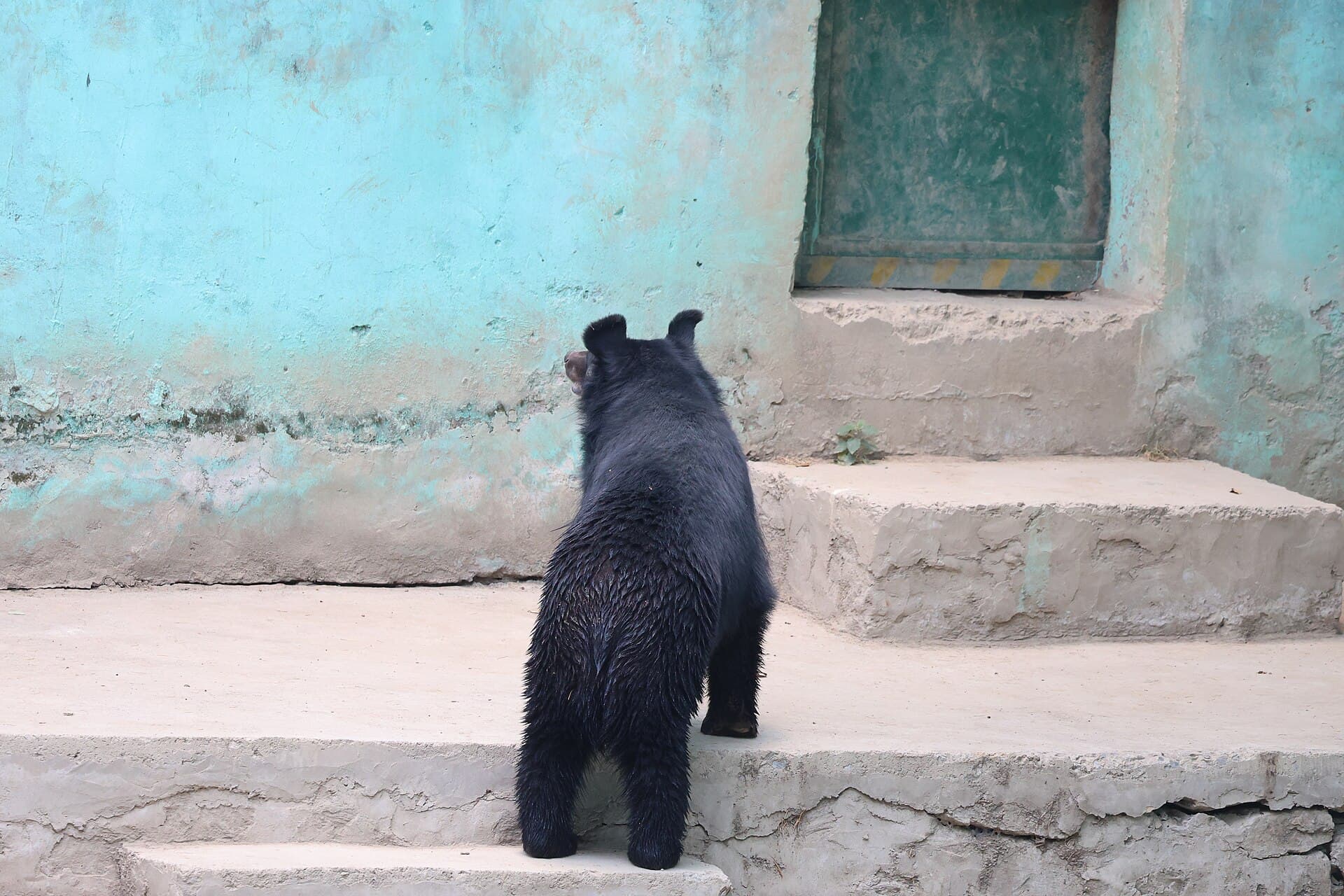
A Himalayan black bearPhoto: Ganesh Mohan T · CC BY-SA 4.0

Himalayan Black Bear

Ursus thibetanus

Present in the park's forests alongside barking deer and ghoral.

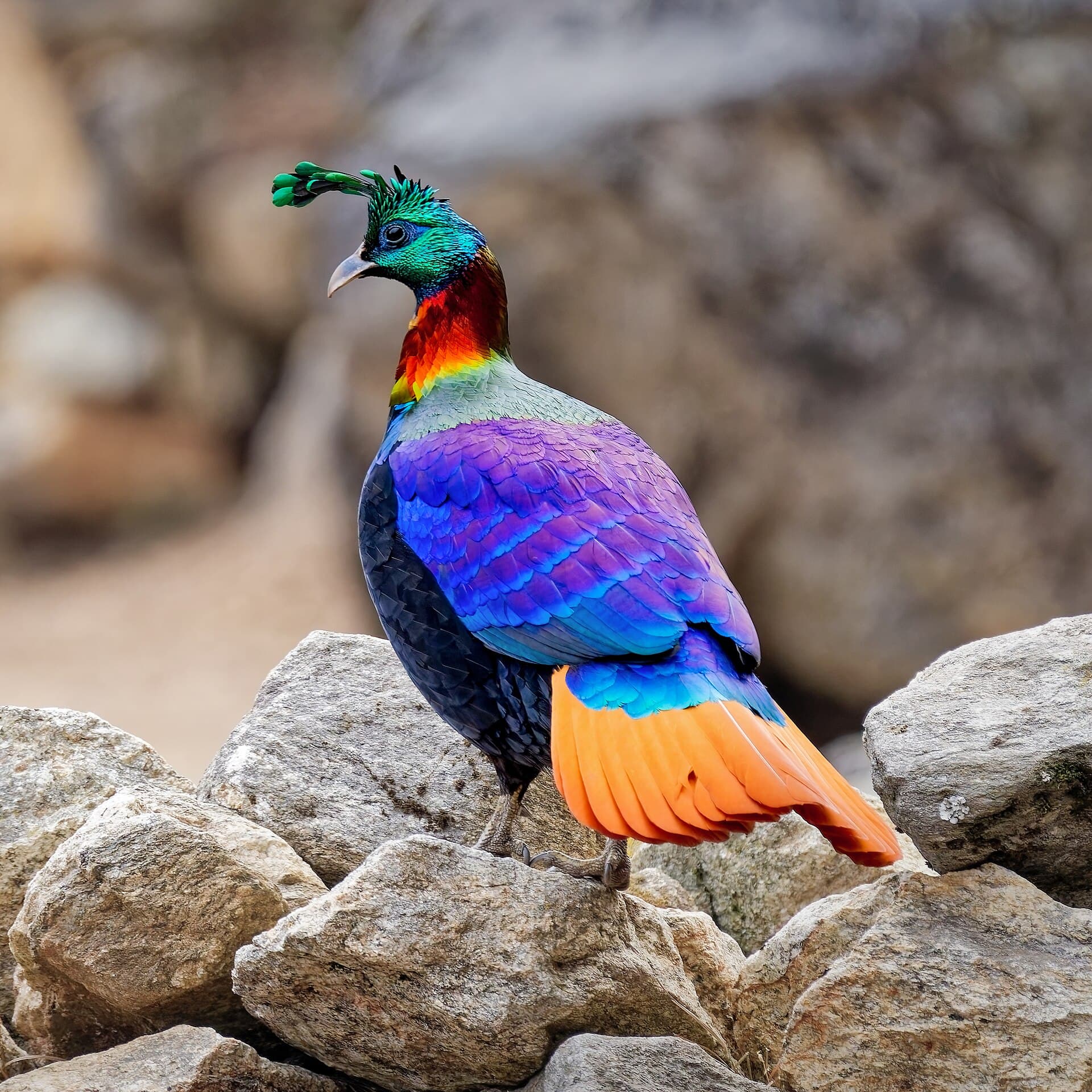
A Himalayan monal pheasantPhoto: Pratap Gurung · CC BY-SA 4.0

Birds & Butterflies

270+ species

The meadows and forests host over 270 bird species and abundant butterflies and wildflowers.

Vegetation ranges from subtropical forest through temperate oak and rhododendron to subalpine meadow, with spectacular wildflower displays in the monsoon and post-monsoon months.
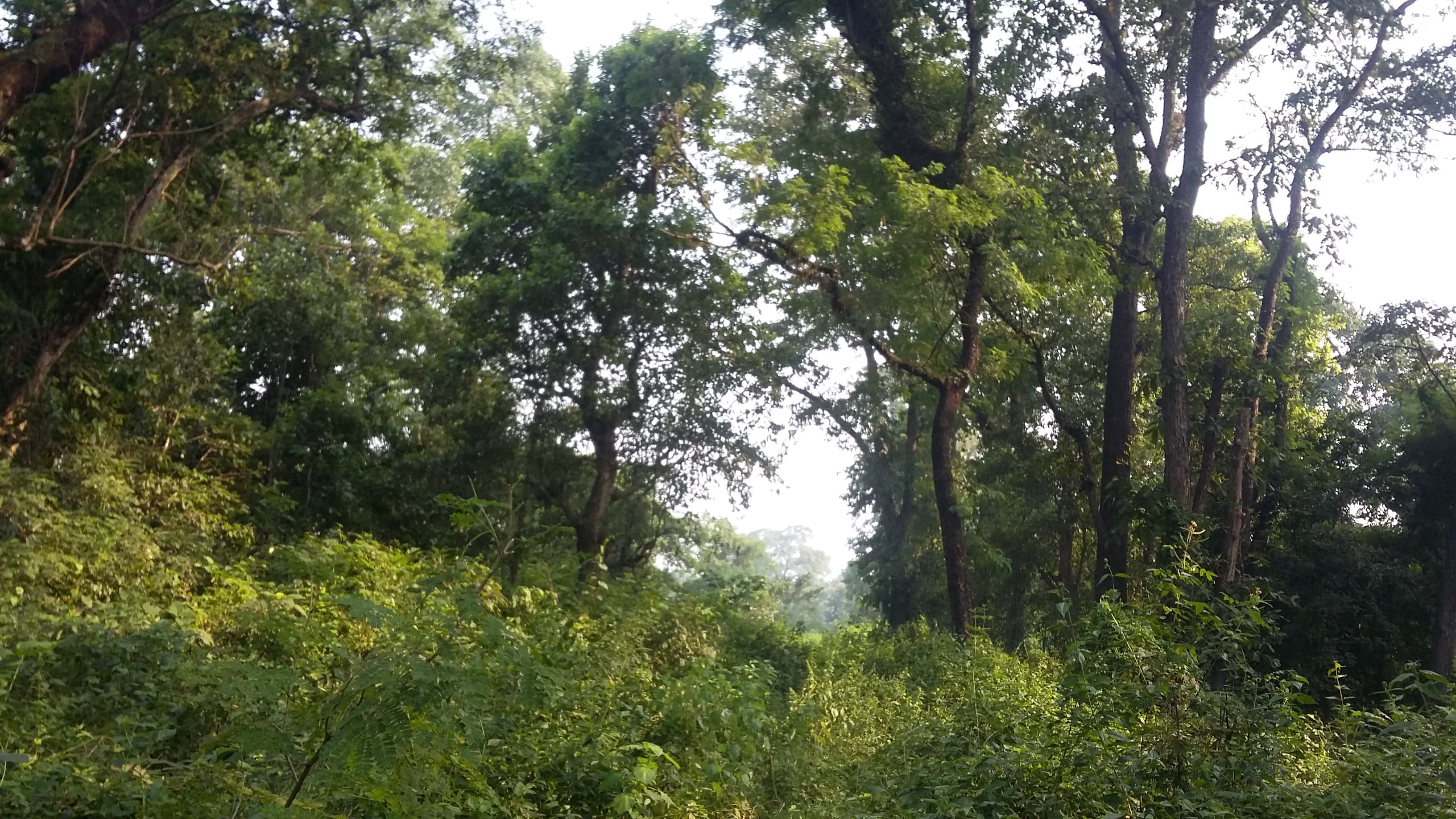
Forest and meadow on the sacred Khaptad plateauPhoto: Bharatadhikarimb · CC BY-SA 4.0

Spiritual Sites

Pilgrimage on the plateau

Khaptad is dotted with sacred places: the Khaptad Baba ashram; Sahasra Linga, the park's highest point; Triveni, where three streams meet; and nearby sites like Saileshwari and Ramaroshan linked to Hindu scripture. Within the park, alcohol, smoking and the slaughter of animals are prohibited out of respect for its sanctity.

Visiting

A trek for body and mind

Khaptad rewards those who make the effort to reach Nepal's far west.

Plateau trek

Trails wind across the patans between forest, meadow and shrine.

Pilgrimage

The ashram and sacred sites draw spiritual visitors each year.

Wildflowers

Monsoon and autumn bring spectacular meadow blooms.

Remote far-western location; typically reached via Dipayal/Silgadhi or Bajhang, then a trek. Confirm current access and permits.

Reference

Facts at a glance

Location
Bajhang, Bajura, Achham & Doti districts, Sudurpaschim Province
Area
225 km²
Established
1984 — on the advice of Khaptad Baba
Character
Sacred rolling plateau; subtropical to subalpine
Climate
Mild summers, rarely below 0°C or above 20°C
IUCN category
II (National Park)

Administration

Park leadership

Each park is managed on the ground by a chief warden who reports into Nepal's Department of National Parks and Wildlife Conservation (DNPWC).

Chief warden
Pending DNPWC verification
Headquarters
Verify with DNPWC
Reports to
DNPWC, Ministry of Forests and Environment
Office-holders rotate regularly and are administered separately, so we do not publish unverified names. For how Nepal’s protected areas are governed, see DNPWC and protected-area administration.

Wildlife & Ecology

Sacred plateau and meadow — Nepal's mid-hill spiritual park

Khaptad is unlike any other Nepali national park: 225 km² of rolling mid-hill plateau between 1,400 m and 3,300 m, broken by patans (meadows) and pilgrimage sites. It was established in 1984 on the recommendation of the ascetic Khaptad Baba, who meditated here for half a century — making it the only Nepali park created with explicit spiritual purpose alongside ecological protection. Roughly 567 plant species (224 medicinal), 287 birds and 23 mammals are recorded.

Common leopardVulnerablePanthera pardus · ChituwaThe plateau's top predator — Khaptad has no tigers, leaving the leopard as the apex cat.

A medium-large spotted cat present across forest and meadow edges; in Khaptad it is the dominant carnivore.

Behaviour

Solitary and crepuscular; uses forest edges and rocky outcrops.

Diet

Barking deer, wild boar, ghoral, small mammals; livestock depredation on the buffer-zone edges.

Habitat in this park

Oak and rhododendron forest of the slopes; emerges to hunt on the patan edges.

Status & numbers

Vulnerable globally; park-specific count not published.

Where to see it

Effectively impossible to see directly — sign is the realistic encounter.

References (1)
Himalayan black bearVulnerableUrsus thibetanusResident in the forested slopes — the largest mammal in the park.

A medium-sized bear with the characteristic white V on the chest.

Behaviour

Mostly crepuscular; ranges widely; can be aggressive when surprised.

Diet

Fruit, nuts, insects, small mammals.

Habitat in this park

Oak and rhododendron forest on the slopes off the plateau.

Status & numbers

Vulnerable globally; park-specific count not published.

Where to see it

Uncommon; sign is the realistic encounter.

References (1)
Himalayan monalLeast ConcernLophophorus impejanus · Danphe — Nepal's national birdNepal's national bird; one of the most reliable Khaptad sightings around the treeline.

Iridescent metallic-green and copper male; brown female; an unmistakable Himalayan pheasant.

Behaviour

Ground-foraging pheasant; males display brilliantly in the breeding season.

Diet

Tubers, roots, seeds and insects.

Habitat in this park

Forest edges and the upper meadows of the plateau.

Status & numbers

Least Concern globally; one of 287 bird species recorded in the park.

Where to see it

Dawn around the forest edge of the upper patans.

References (1)

Other notable mammals

  • Barking deer / muntjac · Muntiacus muntjakThe most commonly seen deer of the plateau forest.
  • Ghoral · Naemorhedus goralMountain goat-antelope of the steeper slopes.
  • Wild boar · Sus scrofaCommon in the forest and patan edges.
  • Rhesus macaque, grey langurTwo primates of the lower forest belt.
  • Yellow-throated marten, jackalMid-sized carnivores of the plateau forest.

Birds

Around 287 bird species recorded — a high checklist for the park's modest 225 km² area, helped by the plateau's varied microhabitats and the elevation range from 1,400 m to 3,300 m. The Impeyan pheasant (monal) is the standout.

  • Himalayan monal (Danphe) · Lophophorus impejanusNepal's national bird; see flagship profile.
  • Cheer pheasant · Catreus wallichiiVulnerableA rare grassland pheasant of the mid-hill belt.
  • Koklass pheasant · Pucrasia macrolophaResident pheasant of the oak forest.
  • Various warblers, rosefinches, redstarts (winter)Migrant passerines and resident finches feature on Khaptad's checklist.
References (1)

Flora & vegetation zones

567 floral species recorded, of which 224 are medicinal plants — one of the highest medicinal-plant counts of any Nepali park, reflecting Khaptad's role in Ayurvedic and traditional medicine traditions.

Chir pine–rhododendron forest (lower)
Pinus roxburghii, Rhododendron arboreumThe forest belt that grades up onto the plateau.
Oak forest
Quercus spp.The classic mid-elevation forest type of the plateau slopes.
Himalayan fir–hemlock–oak forest
Abies, Tsuga, QuercusHigher cool-temperate forest of the upper slopes.
Patans (meadows)
Mixed alpine herbs and grassesThe signature open meadows of the Khaptad plateau — the park's spiritual landscape and a habitat in their own right.
References (1)

Places of interest

  • Khaptad plateau (patans)Rolling alpine meadows broken by forest — the park's signature landscape.
  • Khaptad Baba ashramThe hermitage of the ascetic on whose recommendation the park was created in 1984; the spiritual heart of the park.
  • Sahasra LingaThe highest point of the park; a pilgrimage site with many small lingam stones.
  • TriveniA sacred three-stream confluence inside the park.
  • Khaptad LakeA small sacred lake on the plateau.
References (1)

Plan Your Visit

For international visitors

Practical context for visitors arriving from another country — how to get here, how long to stay, what you'll actually see, and whether this park fits the trip you have in mind.

From Kathmandu

Khaptad is Nepal's far-western highland park — a rolling plateau between roughly 1,400 m and 3,300 m, made up of pastures, mixed conifer-rhododendron forest and small lakes. It's one of the harder parks for international visitors to reach: fly Kathmandu → Dhangadhi (about 1 hour 15 minutes), then drive several hours and trek in on foot for two or three days, depending on the chosen entry village.

Why this park

For visitors who want a quiet, culturally rich highland walk well off the trekking-tourist track, Khaptad delivers. The park is also a major pilgrimage destination — the ashram and meditation cave of Khaptad Baba is its spiritual centre, drawing Nepali pilgrims especially around the full moon of the Hindu month of Bhadra. Wildlife is present but quiet; the landscape and the pilgrimage culture are the real reasons to come.

When to come

March to early June and September to November. April–May brings the rhododendron and primula bloom across the plateau pastures. Monsoon (Jun–Sep) is wet, with leeches in the forest belt. Winter is cold and parts of the plateau are snow-covered.

How long to stay

Minimum useful visit
4 days on the ground from Dhangadhi. Drive in from Dhangadhi or Dipayal, trek 1–2 days to the plateau, spend a day on the plateau itself, trek out. Anything shorter doesn't justify the access cost.
Ideal length
6–7 days for a proper plateau exploration. Adds time for full days on the plateau, visits to Tribeni (the meeting of three sacred streams), Sahasra Linga and the Khaptad Baba ashram, plus buffer for the rough access roads.

What you'll actually see

Khaptad is a landscape and pilgrimage park rather than a wildlife-spotting park. Expect rolling open pastures (the patans), pilgrimage sites, and a notably quiet highland environment.

Realistically expect

  • Open grassland pastures (patans) that flush with primula and other wildflowers in spring
  • Mixed oak, conifer and rhododendron forest on the plateau margins
  • The Khaptad Baba ashram and meditation cave — Nepali pilgrims arrive especially around Janai Purnima (full moon of Bhadra)
  • Tribeni — the meeting of three sacred streams, an active pilgrimage site
  • Wildflowers and butterflies in spring; bird life across more than 250 recorded species

Possible but not reliable

  • Himalayan black bear (forest belt; secretive)
  • Common leopard (rarely seen at trail elevation)
  • Musk deer (steep, dense forest; heavily threatened)
  • Goral on the plateau edges

Season note. Late April through May is the peak flowering window for the plateau. Janai Purnima (full moon of Bhadra, typically August) is the pilgrimage peak — expect a very different feel than a quiet trekking visit.

Practical realities

From Kathmandu
Air: about a 1 hour 15 minute domestic flight from Kathmandu to Dhangadhi (Dipayal is sometimes used as an alternative). From either airport it's several hours of road travel to one of the trail-heads (Silgadhi, Jhingrana, Bichpani), then 1–2 days of trekking onto the plateau. The road from Dhangadhi runs through middle-hill terrain and is slow.
When it's open
Open year-round, but trekking is concentrated March–early June and September–November. Monsoon makes the road in genuinely rough; winter brings snow at plateau elevation that closes the upper trails for periods. Pilgrimage season around Janai Purnima sees the largest visitor numbers of the year.
Accommodation
Very limited. A small handful of basic lodges and homestays on the trekking route and on the plateau itself; camping is common. Infrastructure is the simplest of any park covered here. We don't recommend specific properties.

Fees and permits

Khaptad's entry fee is not currently published on the Nepal Tourism Board's website, and we don't quote figures we can't verify against an official source. Confirm the current foreign / SAARC / Nepali fee structure directly with the DNPWC or the Nepal Tourism Board, or with your operator before booking. Khaptad is a highland park, so pricing is likely per entry rather than per day — verify rather than assume.

Other permits

  • TIMS card. TIMS is generally required for trekking in Nepal; check the latest rules with your operator before flying west.

Re-confirm before booking — DNPWC park fees and TIMS rules have been adjusted in past years and not always announced widely.

Visit if…

  • You want a genuinely off-track highland trek with very few other foreign visitors
  • Pilgrimage culture, sacred-landscape walking and ashram visits interest you
  • Spring wildflower meadows or autumn plateau clarity fit your travel window
  • You're comfortable with basic lodging or camping and rough access roads
  • You can spare a week including buffer days for the slow road in

Skip if…

  • You're after Himalayan peak views — Khaptad is plateau country, not snow-range country
  • You only have a short Nepal trip — Khaptad's access cost in days makes it impractical
  • You want developed teahouse infrastructure on the Annapurna scale
  • You're travelling deep in monsoon when the access road and forest belt are at their worst
  • You're hoping for reliable wildlife sightings — Khaptad is a quiet park

Suggested itineraries

Day-by-day plans for the most common ways to visit. Realistic timings, honest pacing.

Visitor Guide

Plan your visit

A sacred far-western plateau of rolling meadows and shrines — unusually gentle terrain for Nepal, with a strong spiritual character.

Places of Interest
  • Khaptad plateau (rolling meadows / patans)
  • Khaptad Baba ashram (pilgrimage)
  • Sahasra Linga (highest point)
  • Triveni (three-stream confluence)
  • Khaptad Lake
  • Saileshwari & Ramaroshan (nearby cultural sites)
Things to Do
  • Trekking across the plateau
  • Pilgrimage
  • Wildflower & meadow walks
  • Birdwatching
  • Photography
  • Meditation / retreat
Trails & Tracks

Gentle plateau trails link forest, meadow and shrines — unusually mild terrain for Nepal.

Main routes

  • Plateau (patan) circuit (easy–moderate)
  • Ashram & Triveni routes (easy)
Difficulty
Easy to moderate
Access
Remote far-west; trek in
Wildlife & Biodiversity

Flagship species

  • Leopard
  • Himalayan black bear
  • Barking deer
  • Ghoral
  • Wild boar

More than 270 bird species, with abundant butterflies and wildflowers in the monsoon and post-monsoon.

Flora & Plant Life

Vegetation

  • Subtropical forest
  • Temperate oak & rhododendron
  • Subalpine meadow (patans)

Spectacular wildflower displays and many medicinal and aromatic plants, on a sacred plateau ranging from subtropical to subalpine.

Accommodation & Camping

Access via

  • Silgadhi (Doti) / Bajhang

Types

  • Camping and basic lodges; limited

Specific lodge names and availability. Fees, hours and operators change — confirm current details with the DNPWC and Nepal Tourism Board before travelling.

Visitor Information
Best time
Spring & autumn; mild summers (rarely below 0°C or above 20°C)
Weather
Pleasant mid-hill plateau climate; the monsoon brings blooms

Entry fees and opening arrangements. Fees, hours and operators change — confirm current details with the DNPWC and Nepal Tourism Board before travelling.

Regulations

  • Alcohol, smoking and animal slaughter are prohibited (a sacred area)
  • Park permit required — confirm current rules

Safety

  • Remote; come prepared
Maps & Navigation
Approx. location
29.38°N, 81.13°E
Gateway
Via Silgadhi/Dipayal (Doti) or Bajhang
Nearest access
Silgadhi (Doti)

Transport details and visitor-centre information. Fees, hours and operators change — confirm current details with the DNPWC and Nepal Tourism Board before travelling.

Cultural & Historical

Home to far-western hill communities.

Sacred sites

  • Khaptad Baba ashram
  • Sahasra Linga
  • Triveni
  • Saileshwari
  • Ramaroshan (nearby)

Established in 1984 on the advice of Khaptad Baba, a hermit who meditated here for around 50 years — blending spiritual and ecological protection.

Events & Experiences

Guided experiences

  • Guided plateau treks
  • Pilgrimage to the Khaptad Baba ashram and sacred sites

Specific tour operators. Fees, hours and operators change — confirm current details with the DNPWC and Nepal Tourism Board before travelling.

The Khaptad plateau

Explore more of Nepal's parks

Thirteen parks, one extraordinary country.