The snow leopard in Nepal: a count, at last
The snow leopard is the great ghost of the Himalaya. It is harder to count than almost any large mammal on Earth — solitary, cryptic, ranging across hundreds of square kilometres of broken alpine terrain that often sits above the limits of comfortable human travel. For decades, every estimate of Nepal's snow-leopard population was a guess, sometimes a careful one, more often a number people repeated because nothing better existed.
In April 2025 that changed. The Government of Nepal, the National Trust for Nature Conservation, WWF Nepal and partners published the country's first consolidated national estimate, drawing together studies conducted between 2015 and 2024 across nine snow-leopard landscapes. The result: 397 snow leopards — Nepal's first defensible national figure for the species.
It is the fourth-largest population of snow leopards in the world.
The species
The snow leopard (Panthera uncia) is the apex predator of the high Himalaya and Central Asia's mountain ranges. Smaller than its lowland cousin the tiger — adult weights typically 22–55 kg — it carries adaptations for cold and altitude that no other big cat shares. A pale, smoky-grey rosetted coat fades into rock and snow. The tail is exceptionally long and thick, used for balance on steep ground and curled around the body for warmth at rest. The chest is deep, the nasal passages large for filtering thin cold air. The fur-cushioned paws act as natural snowshoes.
Snow leopards are solitary, crepuscular, and almost ghostlike in their elusiveness. Home ranges are vast — a single animal may roam 100 to 1,000 km² depending on prey density. They are ambush predators that use cliff edges, ridgelines, and broken terrain to approach prey within a final explosive rush. Their diet in Nepal is principally blue sheep (bharal) and Himalayan tahr, supplemented by ibex, marmots, pikas, and — where they overlap with high pastures — domestic livestock.
The species is classified as Vulnerable on the IUCN Red List, downlisted from Endangered in 2017 after a global reassessment. The global wild population is estimated at roughly 3,900 to 6,400 individuals across the twelve range countries.
The Nepali name Hiun chituwa — "snow leopard" — captures what the animal is in the cultural imagination of the country: a creature that belongs to the snow, the saviour of high-mountain ecosystems, and (for the herders whose yaks and goats it occasionally takes) a real cost.
Why counting is so hard
To understand the significance of the 397 figure, it helps to understand what a snow-leopard count actually involves. The tiger census in Nepal uses camera traps deployed on a 2x2 km grid across the lowland parks; results come within months. The rhino count uses observers on elephant-back sweeping through floodplain in coordinated blocks. Neither method works at altitude.
Snow leopards live across some 30,000 km² of Nepal's northern frontier — most of it above 3,000 metres, much of it above 4,500, some of it requiring multi-week expeditions to reach. The terrain is too vertical for elephant surveys and too vast for comprehensive camera-trap grids. The animals are too few and too dispersed to encounter directly with any reliability. Sign surveys (pugmarks, scats, scrapes) yield occurrence but not numbers. Camera traps work but must be placed by people who can walk in and back out, in weather that is often hostile.
Genetic analysis of scats — extracting and identifying individuals from DNA in faecal samples — emerged in the 2000s as a complement to camera traps, but logistics remained brutal.
For years the working estimate was 350 to 500 snow leopards in Nepal, a habitat-suitability projection that no one was confident in but everyone cited. The 397 figure replaces speculation with synthesised data.
The studies behind the number
The April 2025 national estimate drew on nine separate population studies conducted between 2015 and 2024 in seven protected areas and two unprotected landscapes. The headline contributors:
- Shey Phoksundo National Park — the most-studied snow-leopard area in the country. A spatial capture-recapture survey conducted between October 2019 and January 2020, using 9,531 camera-trap days across 4,156 km² of the park and its buffer zone, estimated 90 snow leopards at a density of 2.2 per 100 km². The report was released in February 2024.
- Eastern Dolpa (outside Shey Phoksundo) — a 2024 survey across roughly 2,000 km² of Chharka Tangsong, Kaike and Dolpo Buddha Rural Municipalities estimated 30 snow leopards at 1.5 per 100 km², lower than inside the protected area.
- Annapurna, Manaslu, Gaurishankar conservation areas — surveyed by NTNC.
- Langtang National Park — included in the national synthesis.
- Kangchenjunga Conservation Area — included.
- Api Nampa Conservation Area — included.
- Humla-Limi Valley — included.
The synthesis applied a mean density of 1.56 snow leopards per 100 km² across Nepal's potential habitat. The honest caveat, surfaced by the report itself: this national estimate is based on only 43% of Nepal's potential snow-leopard habitat. Important areas — Dhorpatan, Api-Nampa, parts of the far west — remain under-surveyed. The 397 figure is the best Nepal currently has; it is not the last word.
The national assessment contributes to the Population Assessment of the World's Snow Leopards (PAWS), a global initiative to produce standardised estimates across all twelve snow-leopard range countries by similar methods. Until PAWS, no one really knew where the global population stood. Now, country by country, it is being measured.
The Sagarmatha story — returning from absence
Among Nepal's snow-leopard parks, Sagarmatha National Park holds a story unlike any of the others: the species was eliminated from the park area by hunting before/around the 1970s and then returned naturally as prey recovered.
After Sagarmatha was gazetted in 1976 and the Himalayan tahr population began to recover under protection, snow leopards reappeared. A 2004–06 study documented four individuals within the park, confirmed through camera-trap and sign-survey work — a number small enough to count individually but large enough to confirm that the species had re-established itself without human reintroduction.
The Sagarmatha return is rare in big-cat conservation. Reintroduction programmes — moving animals from one place to another — are well-documented across many species, including Nepal's rhinos and tigers. Natural return, where a species recolonises lost ground on its own, requires three things: prey recovery, protection from hunting, and a source population nearby that can disperse. Sagarmatha had all three. The tahr came back; the army-enforced protection held; and snow leopards from neighbouring habitats in Makalu Barun and across the Tibet border found their way in.
The park's snow-leopard population is still small — the high terrain and modest park area set a low ceiling — but its presence is real and tracked. For Sagarmatha visitors, the cat is functionally invisible; sightings are extraordinarily rare. The story is the point: a top predator can return when the conditions allow.
The parks, and what each holds
Nepal's snow-leopard parks span the full length of the country's northern frontier. The high-altitude species also lives in several conservation areas (Annapurna, Manaslu, Kangchenjunga, Api-Nampa, Gaurishankar) that fall outside the strict national-park system, but five of Nepal's national parks hold confirmed snow-leopard populations:
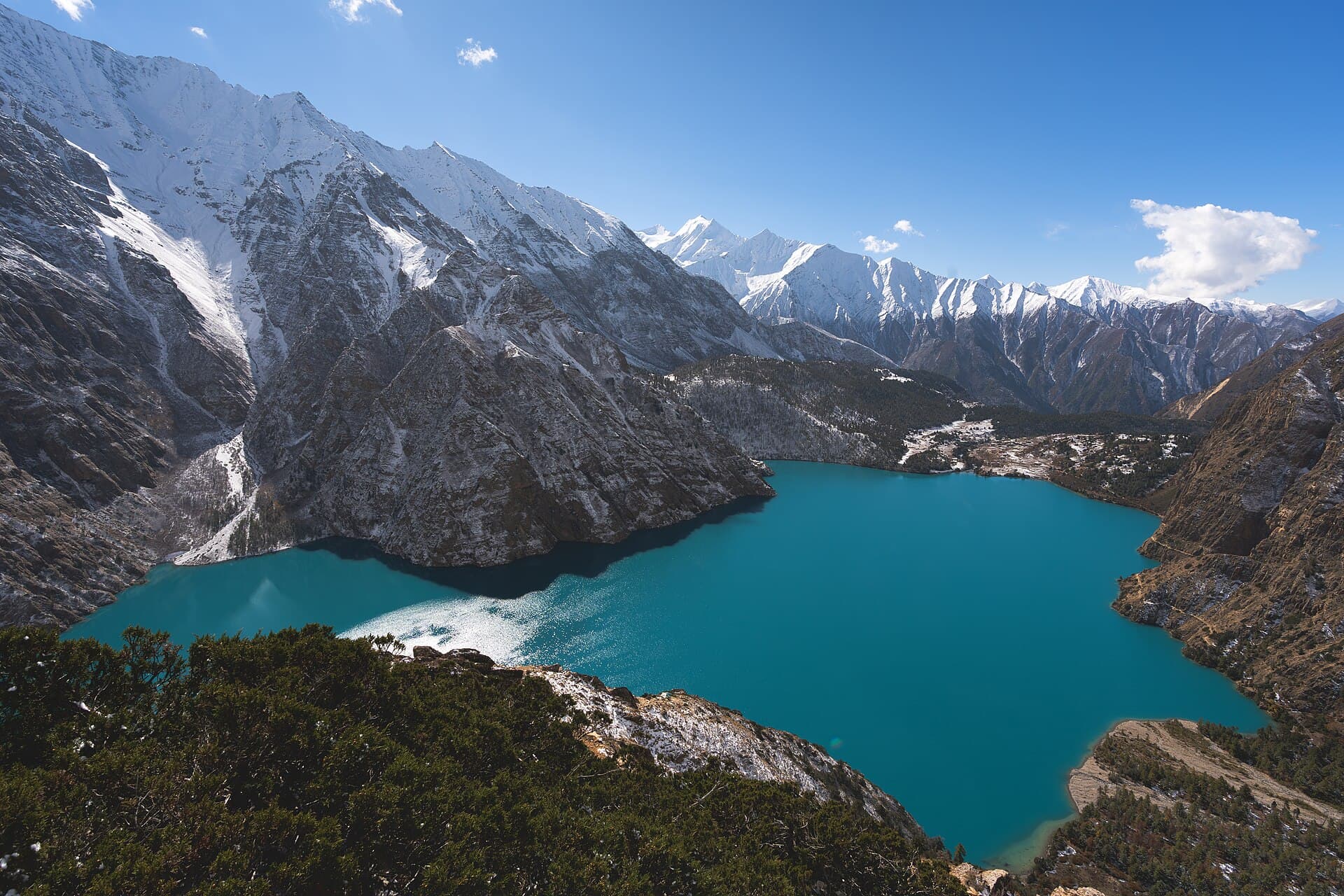
Shey Phoksundo is the country's snow-leopard centre. The 2019–22 survey's 90-animal count at 2.2 per 100 km² is among the highest documented densities for the species anywhere in its range. Shey Phoksundo's combination of trans-Himalayan habitat, healthy blue-sheep populations, low human density, and traditional Buddhist protection of wildlife has made it a global-class snow-leopard landscape. More on Shey Phoksundo →
Sagarmatha holds a small population whose history is the natural-return story above. The Sherpa cultural prohibition on hunting in sacred areas around Khumjung and Tengboche has been one of the underlying conservation factors. More on Sagarmatha →
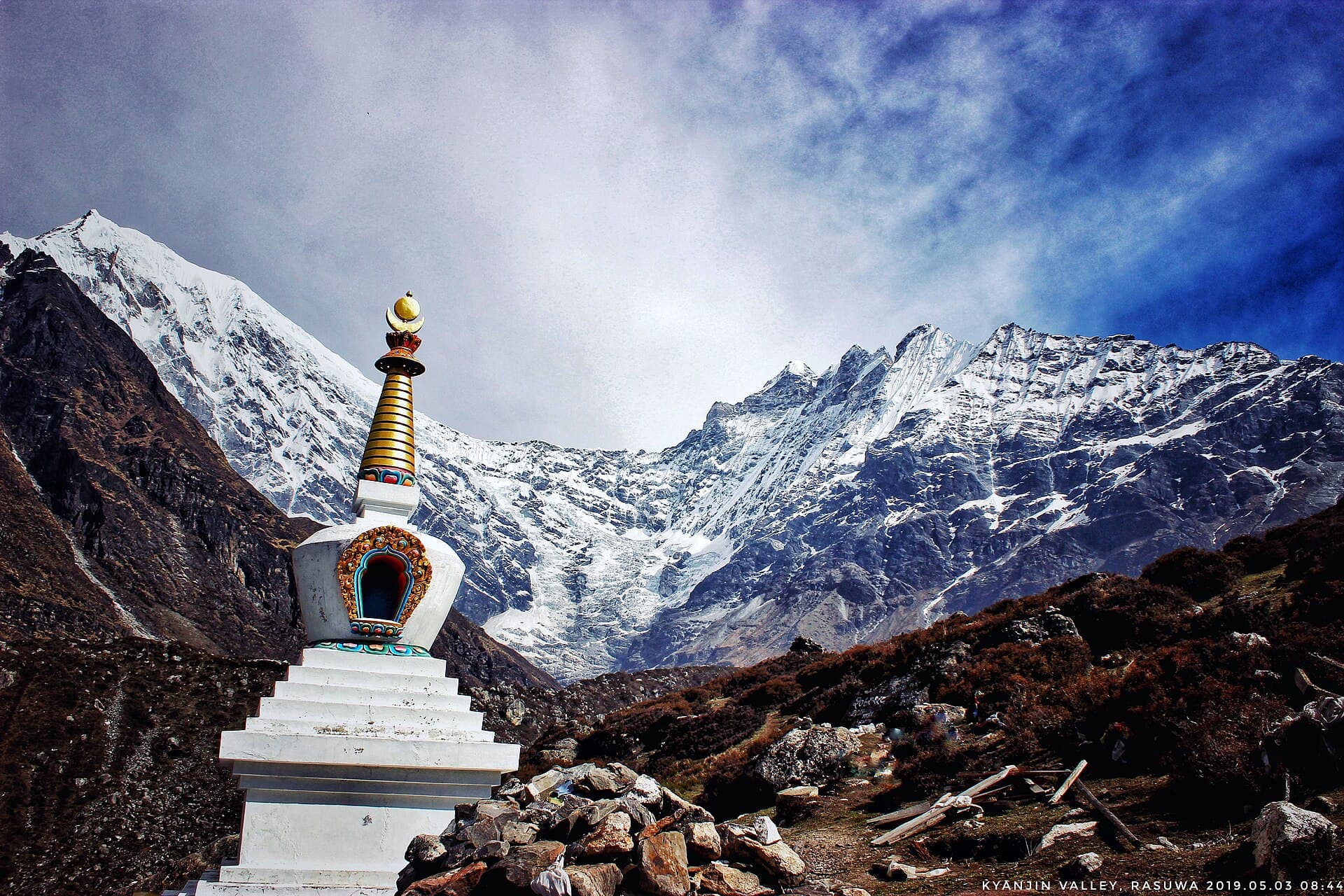
Langtang has confirmed snow leopards across its high alpine zones, though park-specific population counts are not separately published. The 2015 earthquake disrupted ecological studies; surveys have resumed since. More on Langtang →
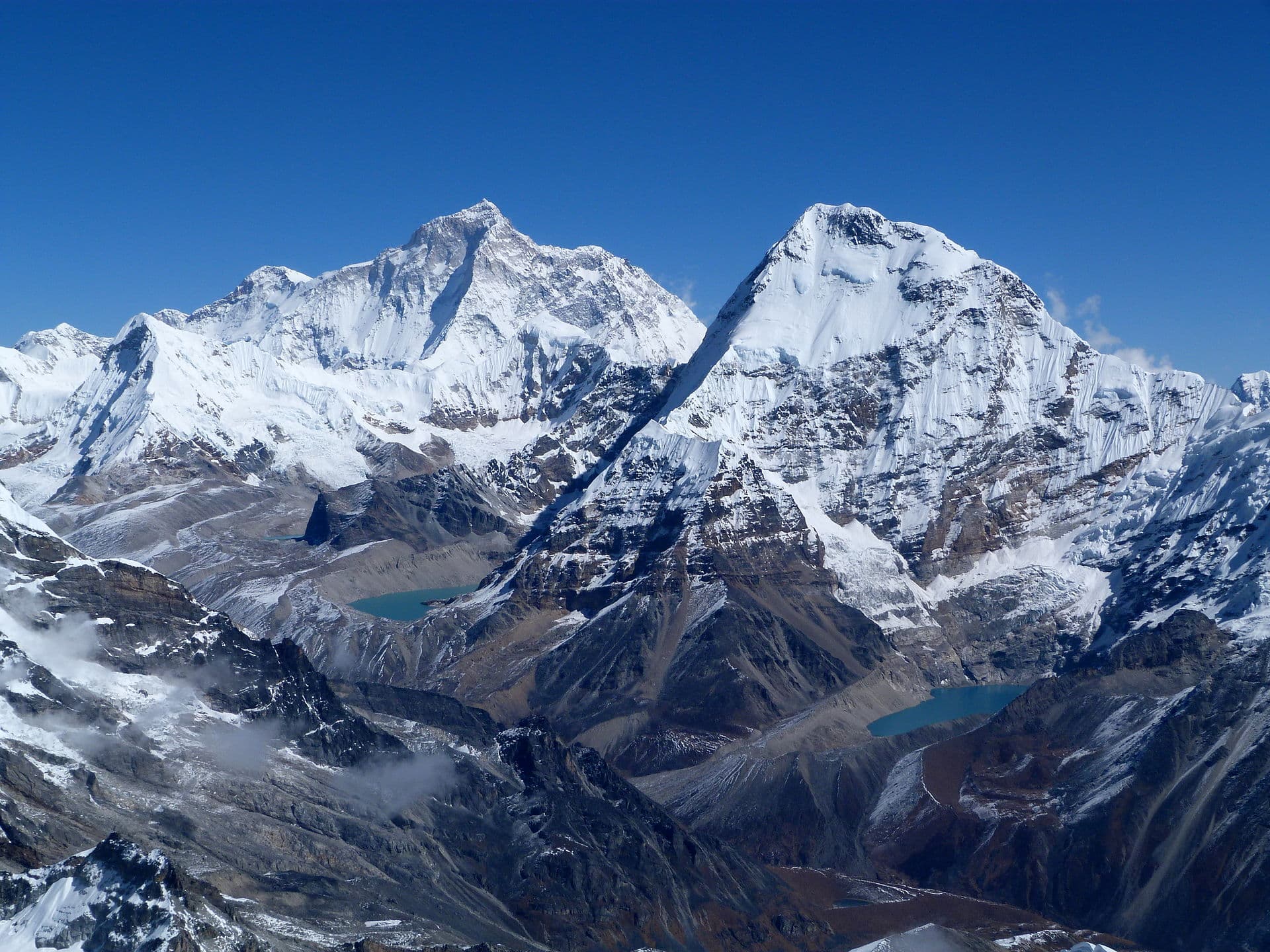
Makalu Barun holds snow leopards in its very high zones — the park reaches the 8,463-metre summit of Makalu itself. It is one of the most remote and least-studied parks for the species. More on Makalu Barun →
Chhayanath, Nepal's youngest national park (gazetted 29 August 2025, carved from the eastern flank of Shey Phoksundo), inherits snow-leopard habitat from its parent park. The 2019–22 Shey Phoksundo survey covered the area that is now Chhayanath, but how that count distributes between the two parks under their new boundaries is not yet published. The park sits at the centre of one of the most important snow-leopard landscapes in Asia. More on Chhayanath →
The threats that remain
Snow-leopard recovery globally has been real but uneven. In Nepal the threats that persist:
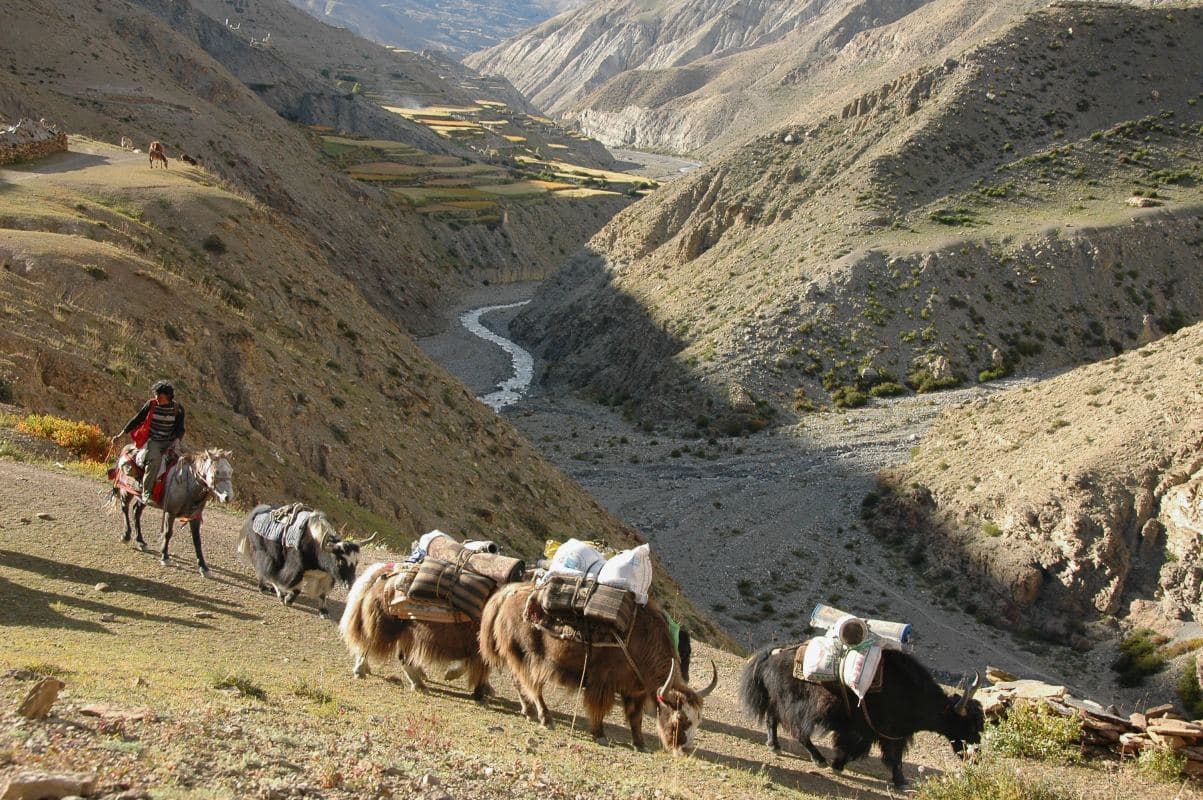
Retaliatory killing by herders. Snow leopards take livestock — yaks, goats, sheep — when wild prey is scarce or when herds graze high pastures during summer. The loss of a single yak can be catastrophic for a high-altitude household. Without compensation schemes and community-based conservation, the herder response has historically been to kill the cat. Nepal's snow-leopard conservation programmes now include insurance schemes, predator-proof corrals, and community engagement in several landscapes.
Climate change. Snow leopards are tied to alpine ecosystems that are shifting upward as the climate warms. The treeline is rising; alpine pasture is contracting from below as forest moves up the mountain. The species' habitat is being squeezed against the limits of the high terrain itself.
Prey depletion. Where blue sheep and tahr decline — from poaching, livestock competition for forage, or disease — the cat declines with them.
Poaching and the international trade. Demand for snow-leopard skins, bones and other parts persists in Central and East Asian markets. Nepal's interdiction has improved but the trade is hard to disrupt at source.
What "fourth-largest" actually means
Nepal's 397 snow leopards represent about 10% of the global wild population, despite the country holding only about 2% of the world's snow-leopard habitat by area. That density imbalance is the strategic point. Per square kilometre of suitable habitat, Nepal carries a disproportionate share of the species. The reasons — strict protection under the National Parks and Wildlife Conservation Act (1973), army anti-poaching enforcement in the major parks, cultural protections in Buddhist high country, healthy ungulate populations — make Nepal a critical state for the snow leopard's global survival.
The other top three range countries by population are China (the largest snow-leopard country by far), Mongolia, and India. Nepal's 397 places it just above Pakistan and other range states. PAWS will refine these comparisons over coming years as each country completes its own national assessment.
What's next
Nepal's national snow-leopard plan covers the period 2017–2026, with a successor plan in preparation. Priorities for the next phase: filling the survey gaps in Dhorpatan and Api-Nampa; expanding community-based insurance schemes; improving prey-base data; and continuing the standardised surveys that allow recovery to be measured rather than guessed at.
There will not be a four-yearly snow-leopard census on the tiger model — the species and terrain don't allow it. But by 2030, on current trajectories, Nepal will have a second consolidated national estimate. Whether it shows recovery, stability, or quiet loss will be one of the most important conservation numbers the country produces.
Related on this site: Shey Phoksundo · Sagarmatha · Langtang · Makalu Barun · Chhayanath · The Bengal tiger in Nepal · The one-horned rhinoceros in Nepal · Snow leopard country: Nepal's high-Himalayan parks
Sources & further reading:
- Snow Leopard Population in Nepal: A National Assessment, NTNC, DNPWC and WWF Nepal, April 2025 — the first consolidated national estimate.
- Population Assessment of Shey Phoksundo National Park's Snow Leopard And Prey, ResearchGate publication, April 2024 — the 90-snow-leopard / 2.2 density figure.
- Snow leopard population outside Protected Area of Dolpa unveiled, WWF Nepal, April 2024 — the eastern Dolpa survey.
- Mongabay News coverage of the national assessment, April 2025.
- Nepal's National Snow Leopard Conservation Action Plan; Eastern Snow Leopard Landscape Management Plan 2017-2026.
- IUCN Red List assessment for Panthera uncia (reclassification to Vulnerable, 2017).
- Population Assessment of the World's Snow Leopards (PAWS), the global standardised assessment initiative.
- Sagarmatha snow-leopard natural-return documentation in published surveys 2004–06.
All figures verified against published sources, June 2026. The 397 national estimate is from April 2025; this page will be updated as further surveys are published.