Kathmandu → Lukla → Phakding
Early-morning STOL flight into Lukla, then descend gently to Phakding on the Dudh Kosi. The trek starts immediately — there is no road.
Note. Lukla flights cancel frequently. Build buffer days at both ends of your trek.
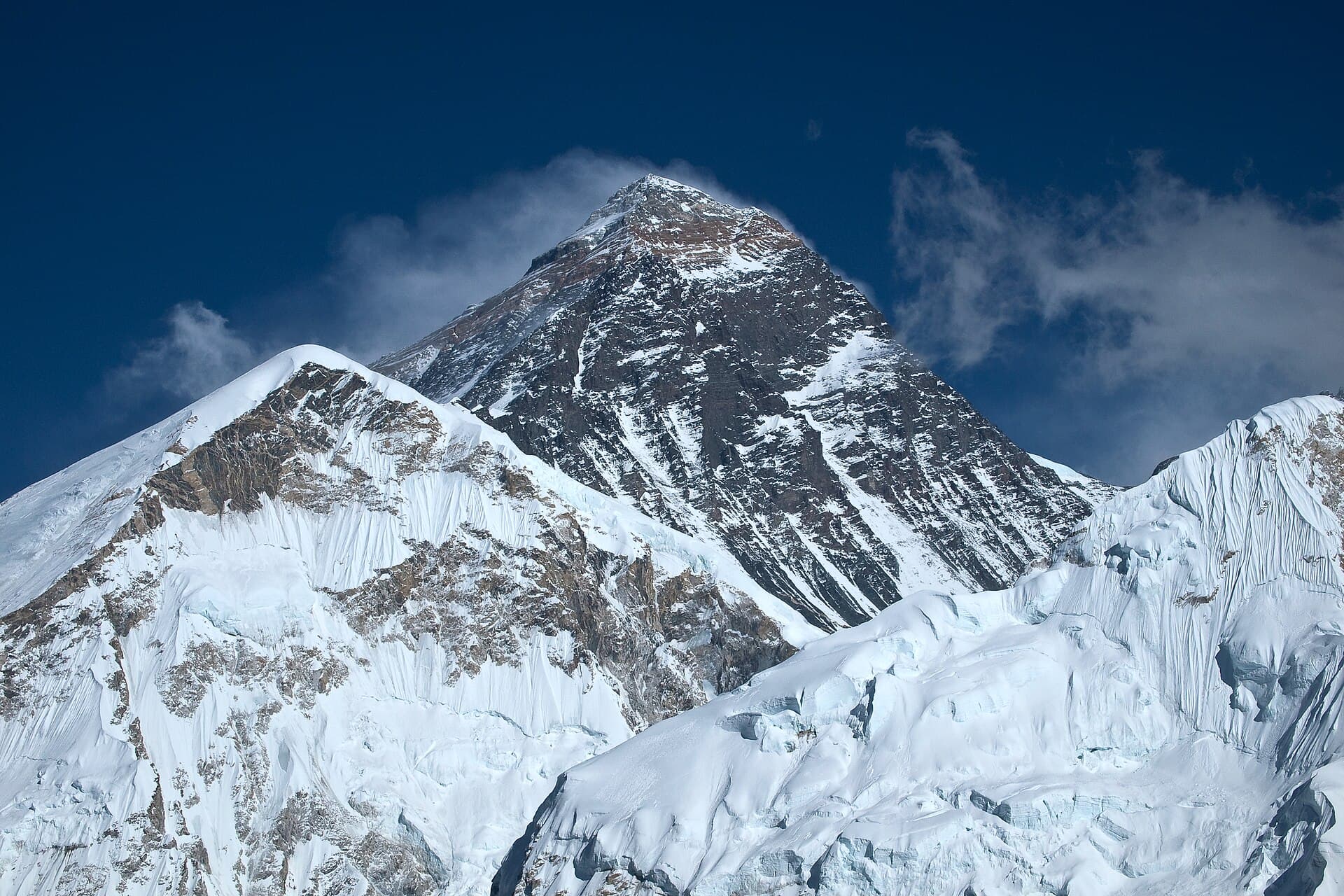 Photo: Vyacheslav Argenberg · CC BY 4.0
National Parks / Mountain / Sagarmatha / Itineraries / Gokyo Lakes
Sagarmatha Itinerary · 11 days
The other great Everest-region trek — a chain of turquoise glacial lakes at 4,700–4,990 m, with the panoramic Gokyo Ri viewpoint (5,357 m) replacing Kala Patthar. Eleven days door-to-door from Kathmandu, with the same Lukla flight constraint and the same acclimatisation discipline as Everest Base Camp.
Before you book
Read this before committing. The day-by-day plan only works if these conditions are met.
Day by day · 11 days
From Kathmandu and back, 11 days in total. Late September to November (sharp lake colour and clear peak views) or March to May.
Early-morning STOL flight into Lukla, then descend gently to Phakding on the Dudh Kosi. The trek starts immediately — there is no road.
Note. Lukla flights cancel frequently. Build buffer days at both ends of your trek.
Cross suspension bridges over the Dudh Kosi, enter the park at Monjo, then climb the long final pull to Namche. First Everest views from the upper trail if the sky is clear.
Climb to the Everest View Hotel (3,880 m) and the Sherpa village of Khumjung. Walk high, sleep low. This rest day is the only acclimatisation stop scheduled before the high-altitude push — it is not optional.
Note. Watch for AMS symptoms — headache, nausea, sleeping difficulty. If they appear, stay longer rather than push on.
The Gokyo route diverges from the EBC trail here, climbing northwest into the Gokyo Valley. Out of the rhododendron forest and into yak pasture; Cho Oyu (8,188 m) comes into view ahead.
A deliberately short day — keeps daily altitude gain inside safe acclimatisation limits. Machhermo is famous in Khumbu folklore as the site of a yeti story; in practice it's a small basic village with a Himalayan Rescue Association AMS aid post.
Note. Stop at the HRA post for the free afternoon altitude-sickness briefing if you have time. It's the best on the route.
Climb past the first two glacial lakes (Longpongo and Taboche) and arrive at the third lake (Dudh Pokhari) — Gokyo village sits at its shore. The lakes are a striking pale turquoise; the air is genuinely thin.
Pre-dawn climb of Gokyo Ri (5,357 m) for sunrise over Everest, Lhotse, Makalu, Cho Oyu and the Ngozumpa glacier — widely considered the best mountain panorama in the Khumbu. Afternoon options: walk on to the 4th (Thonak Tsho) and 5th (Ngozumpa Tsho) lakes for the closest possible view of the Ngozumpa Glacier.
Note. Cold and windy at altitude — pack proper insulation for the pre-dawn climb.
Retrace the route down the valley. Descending feels markedly easier — your body recovers fast in thicker air.
Long descent back to Namche. The forest and rhododendron belt feels lush after a week at altitude.
Final long day back to Lukla, retracing the early-trek path through Monjo and Phakding.
Morning STOL flight back to Kathmandu. Build at least one buffer day before any onward international flight.
Note. If the flight cancels, options are a Manthali/Ramechhap reroute, a helicopter charter (expensive), or sitting it out. Your operator should have a plan.
Honest framing
Editorial caveats — the stuff a brochure leaves out.
Other itineraries