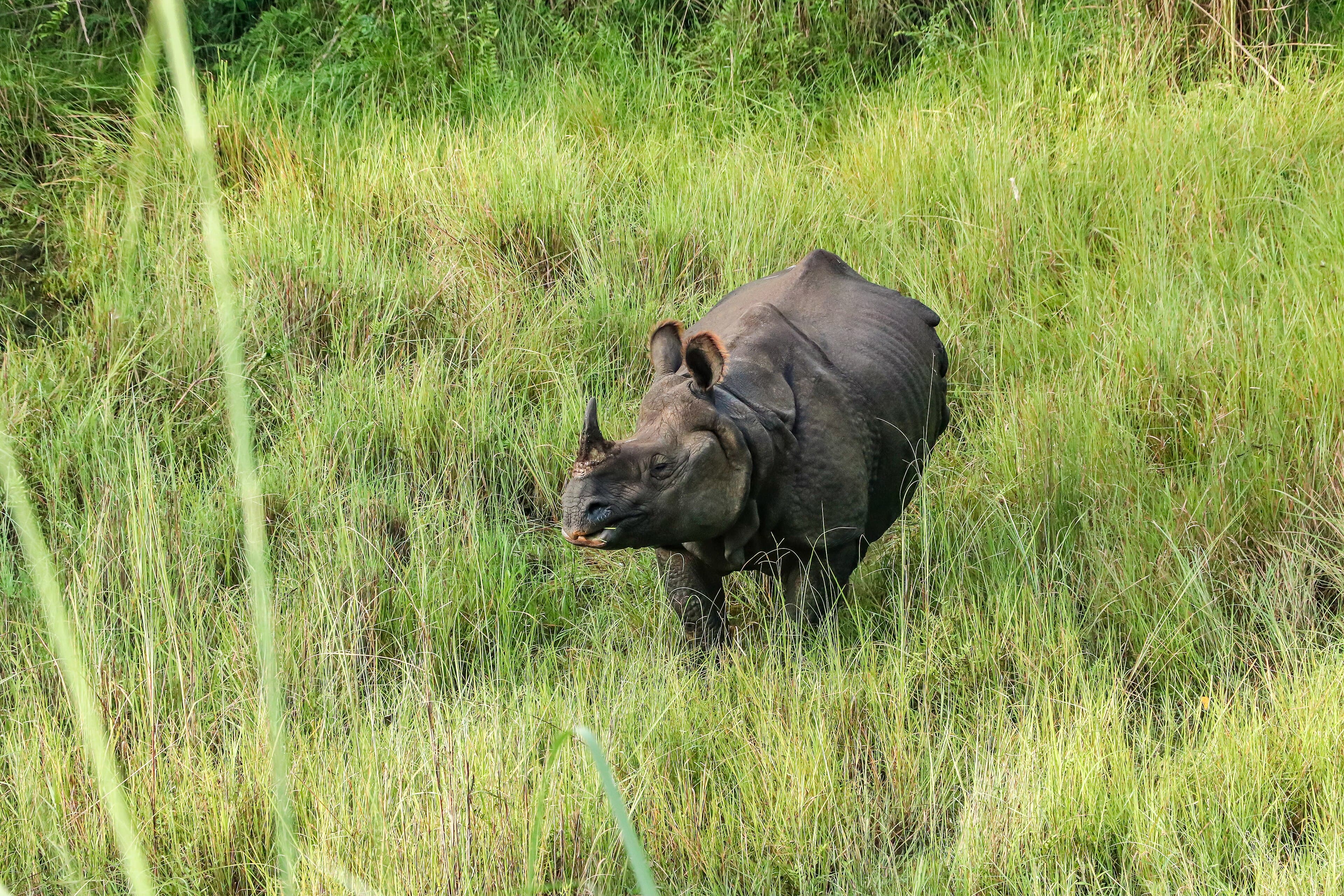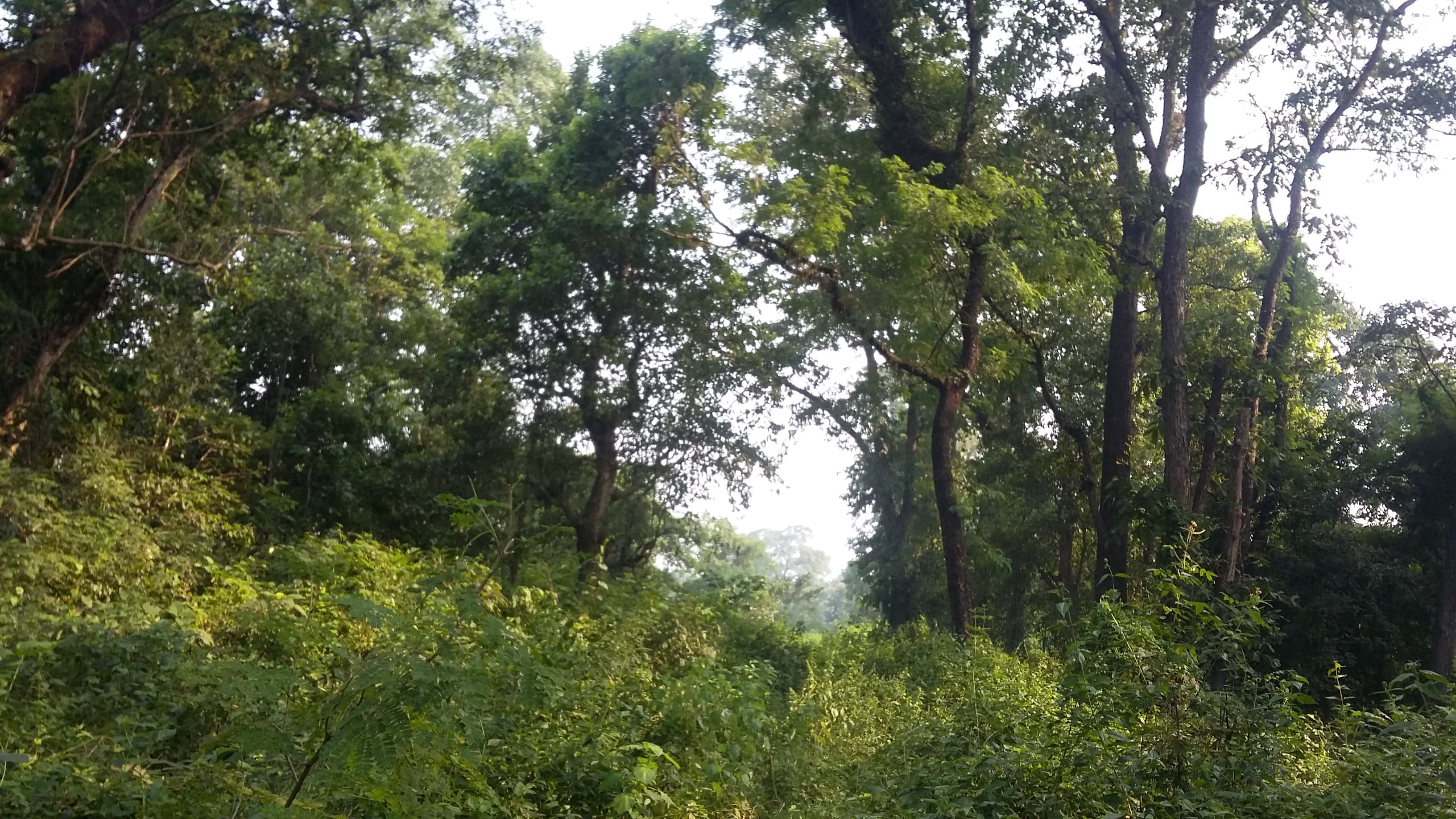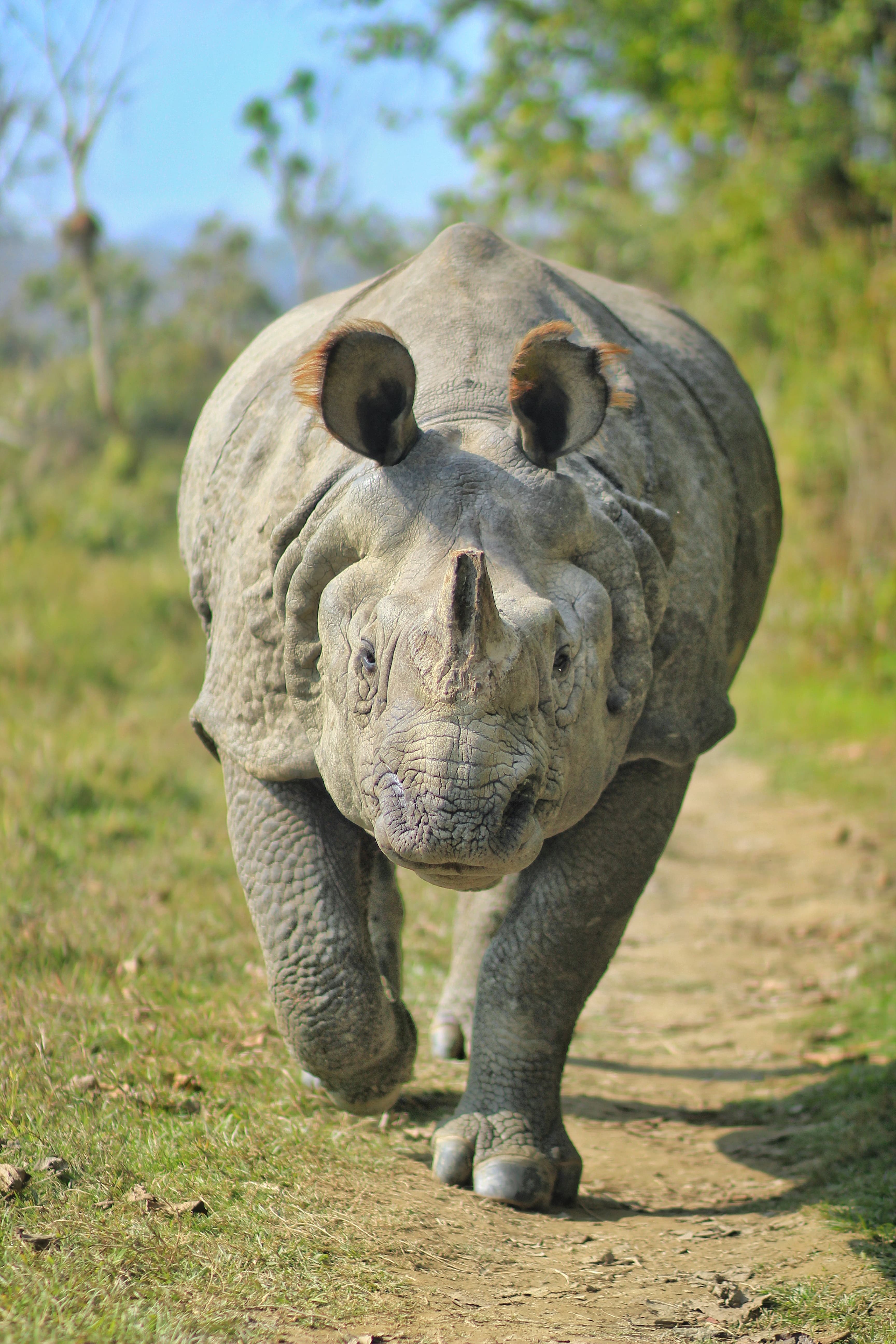
The greater one-horned rhinoceros is one of Nepal's defining animals — and one of conservation's genuine comeback stories. In Nepal it lives only in the Terai, the lowland grasslands and riverine forests of the south, across three national parks. If you simply want to see one, the answer is straightforward: go to Chitwan, where sightings are close to reliable.
Chitwan: the stronghold
By the late 1960s, after forest clearance and a surge in poaching, only about 95 rhinos remained in the Chitwan valley. The crisis prompted Nepal to establish the country's first national park here in 1973. Today the population has recovered to roughly 600 — the largest in Nepal — protected by army patrols and, crucially, used as a source to re-seed other parks.
For visitors, that abundance translates into the best rhino-viewing in the country. Around Sauraha, the main gateway, rhinos are often seen grazing the floodplain grasslands and wallowing along the Rapti River. A dawn dugout canoe, a jeep safari or a guided walk all stand a strong chance of an encounter.
Bardiya: the western population
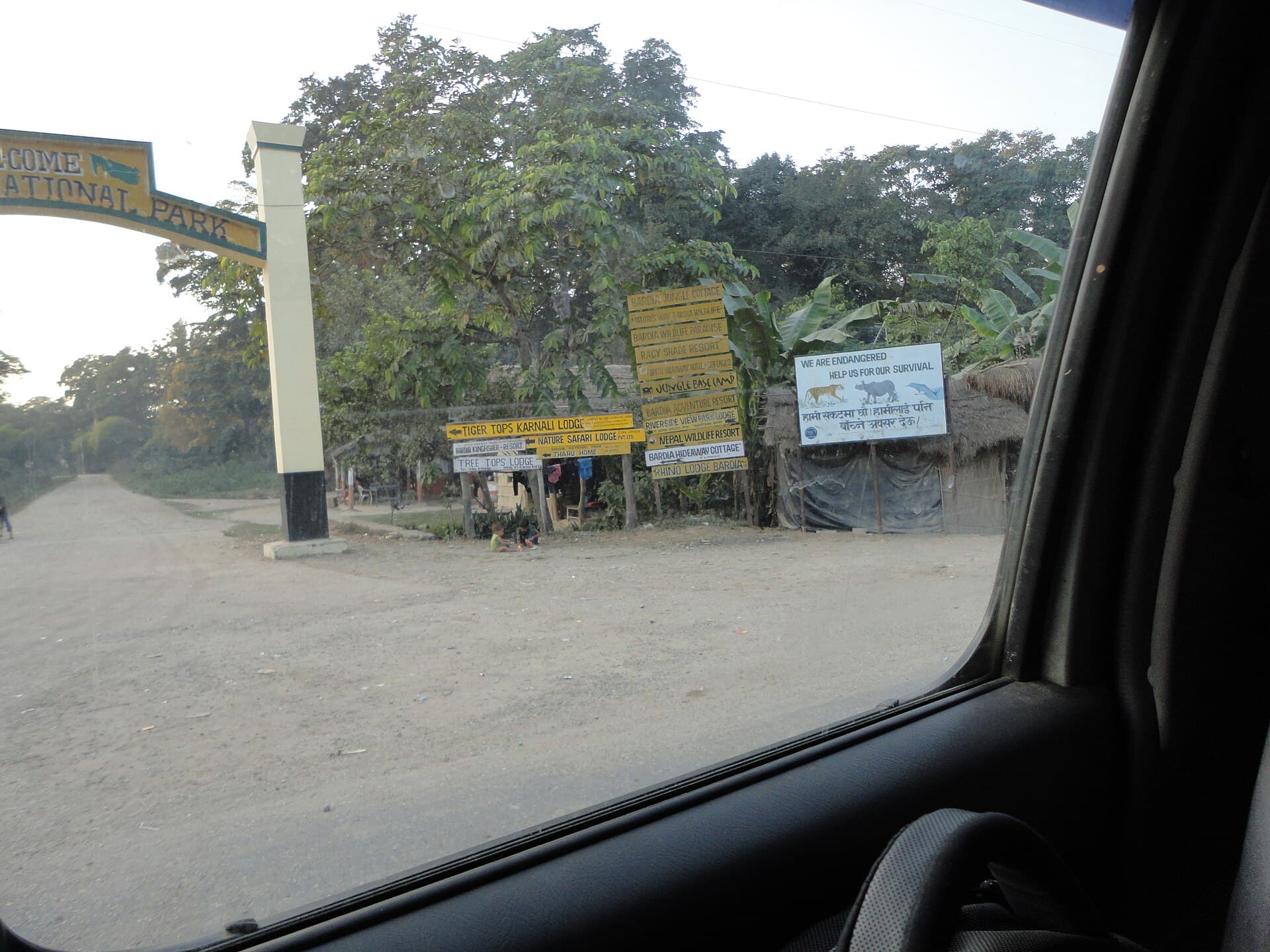
When Nepal needed to spread its rhinos as insurance against disease and localised poaching, Bardiya was one of the parks they were moved to, beginning in the 1980s. The result is a smaller but established population in a much wilder, quieter setting along the Karnali and Babai rivers. Sightings are less of a certainty than at Chitwan, but Bardiya rewards patience — and you will share the experience with far fewer people.
Shuklaphanta: a far-western chance
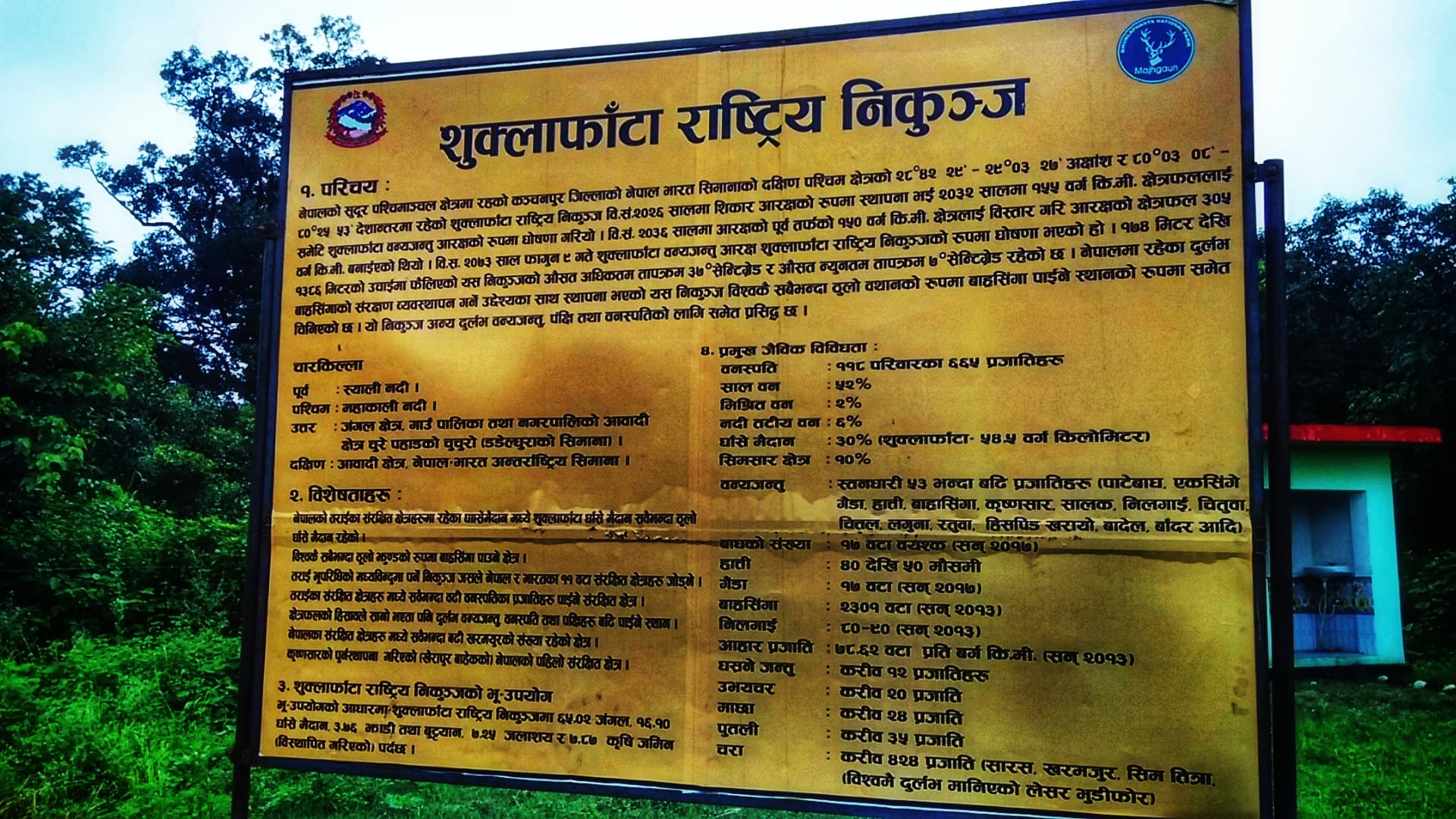
Shuklaphanta, in Nepal's far-western corner, also holds a small population of one-horned rhinos among its vast grasslands and the famous swamp-deer herds. Numbers are modest and the park is remote, so this is the option for the dedicated traveller already heading west rather than the place to base a trip around rhinos alone.
Seeing them responsibly
Rhinos are large, wild and occasionally unpredictable. A few principles make for a better — and safer — encounter:
- Go with a licensed guide. Walking inside these parks is only sensible (and, for safety, only permitted) with trained guides who read the animals' behaviour.
- Keep your distance. Never approach or crowd a rhino, particularly a mother with a calf.
- Choose the right season. The clear, dry months of roughly October to March offer the best visibility as the tall grasses are shorter and animals gather near water.
- Skip the rides. The modern, ethical way to meet the Terai's wildlife is on foot, by jeep or by canoe — and at the government breeding centres near Sauraha, not on the back of an animal.
Three parks, one remarkable animal, and a recovery that took it from fewer than a hundred survivors to the thriving population you can watch grazing the Rapti floodplain today.