Of Nepal's thirteen national parks, two carry the world's highest conservation honour. Chitwan National Park and Sagarmatha National Park are both inscribed on the UNESCO World Heritage List — recognised as places of outstanding universal value, belonging not just to Nepal but to all of humanity. They could hardly be more different: one is a steaming lowland floodplain a few hundred metres above sea level, the other climbs to the summit of the highest mountain on Earth.
Two parks, two worlds
The contrast between them is, in miniature, the contrast that defines Nepal itself. In the south, the Terai — flat, hot, forested, threaded with great rivers. In the north, the Himalaya — glaciated, thin-aired, and reaching beyond 8,000 metres. Chitwan protects the first; Sagarmatha the second. Between them they hold the one-horned rhino and the snow leopard, the gharial and the red panda, the Tharu of the lowlands and the Sherpa of the high valleys.
Both were among the earliest protected areas Nepal established, and both were recognised by UNESCO within five years of each other — Sagarmatha first, in 1979, and Chitwan in 1984.
Chitwan: the Terai floodplain (inscribed 1984)
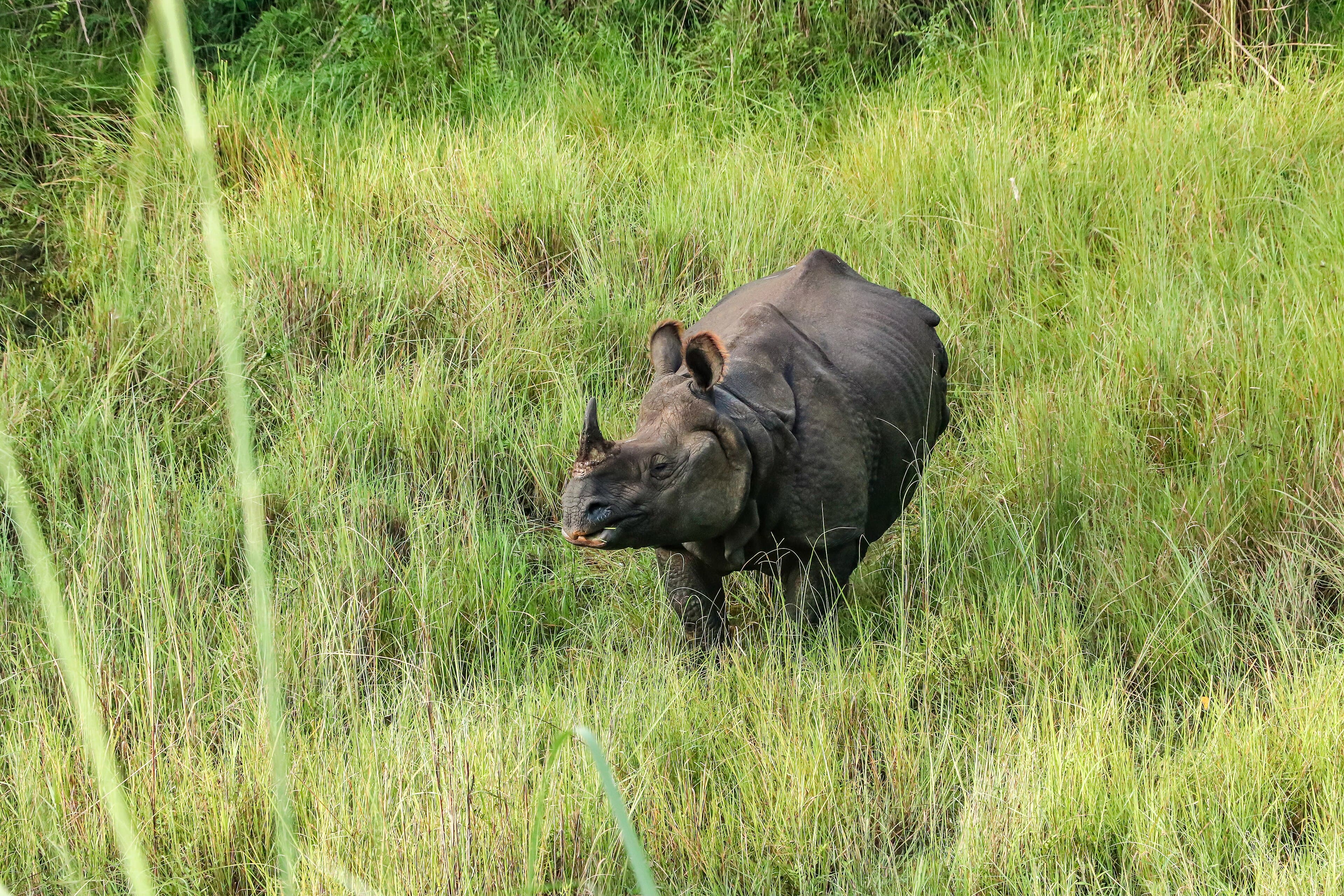
Chitwan was Nepal's first national park, gazetted in 1973, and remains the country's flagship for lowland wildlife. UNESCO added it to the World Heritage List in 1984 under natural criteria (vii), (ix) and (x) — for its scenic value, its ecological processes, and the biodiversity it shelters. You can read the full UNESCO listing for Chitwan (site 284).
It is best known for two animals that came back from the edge. The greater one-horned rhinoceros, reduced to fewer than a hundred animals in the valley by the mid-twentieth century, now numbers in the hundreds again. The Bengal tiger holds one of South Asia's important breeding populations here. Alongside them live the critically endangered gharial, mugger crocodiles, wild elephants, gaur, sloth bears and more than five hundred species of bird.
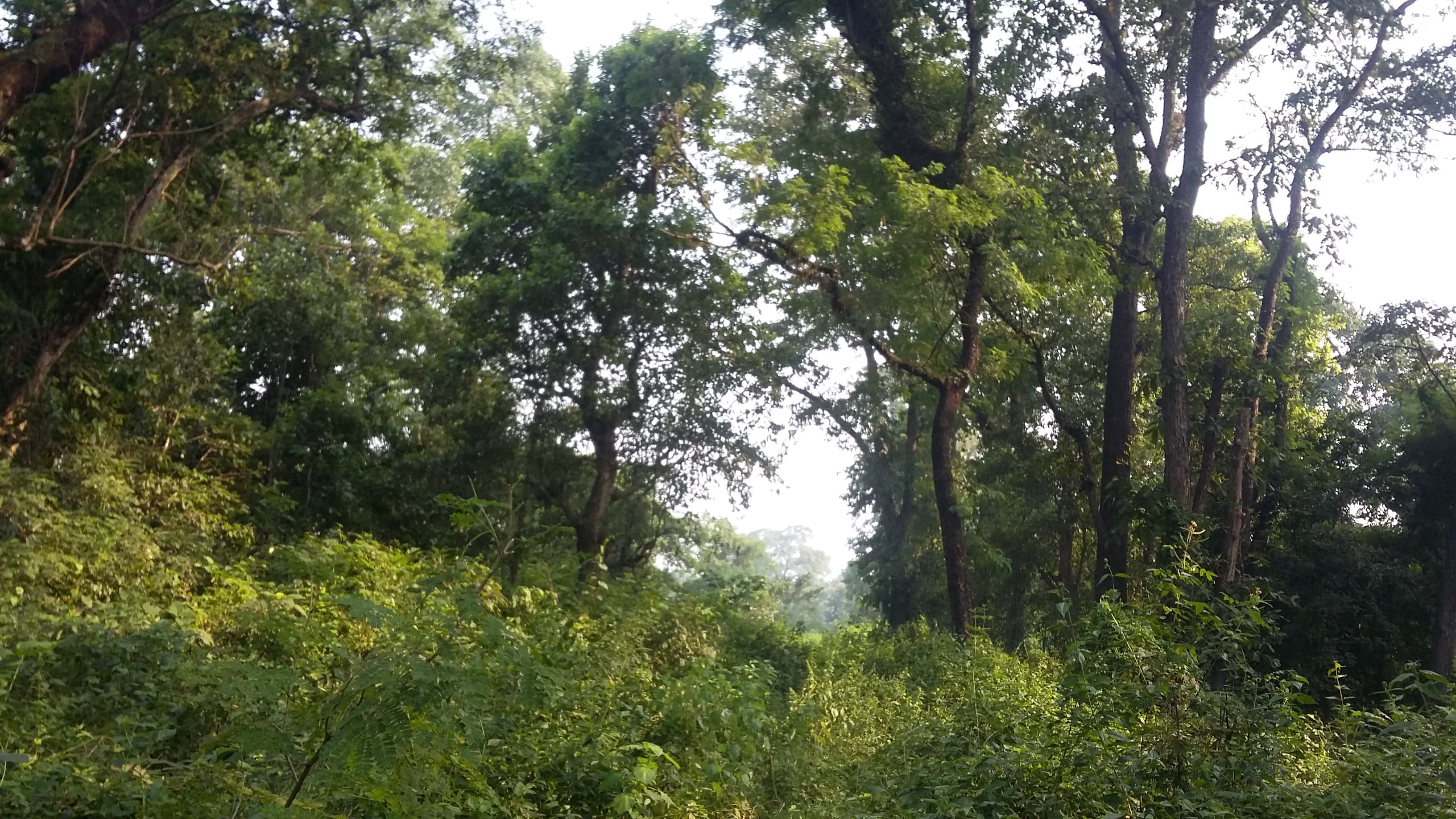
The park was originally gazetted as Royal Chitwan National Park; the "Royal" was dropped in 2011 after Nepal became a republic. Its core landscape is a mosaic of sal forest, tall elephant grass and the floodplains of the Rapti and Narayani rivers — country you explore on foot with a licensed guide, by jeep, or by dugout canoe.
Sagarmatha: the roof of the world (inscribed 1979)
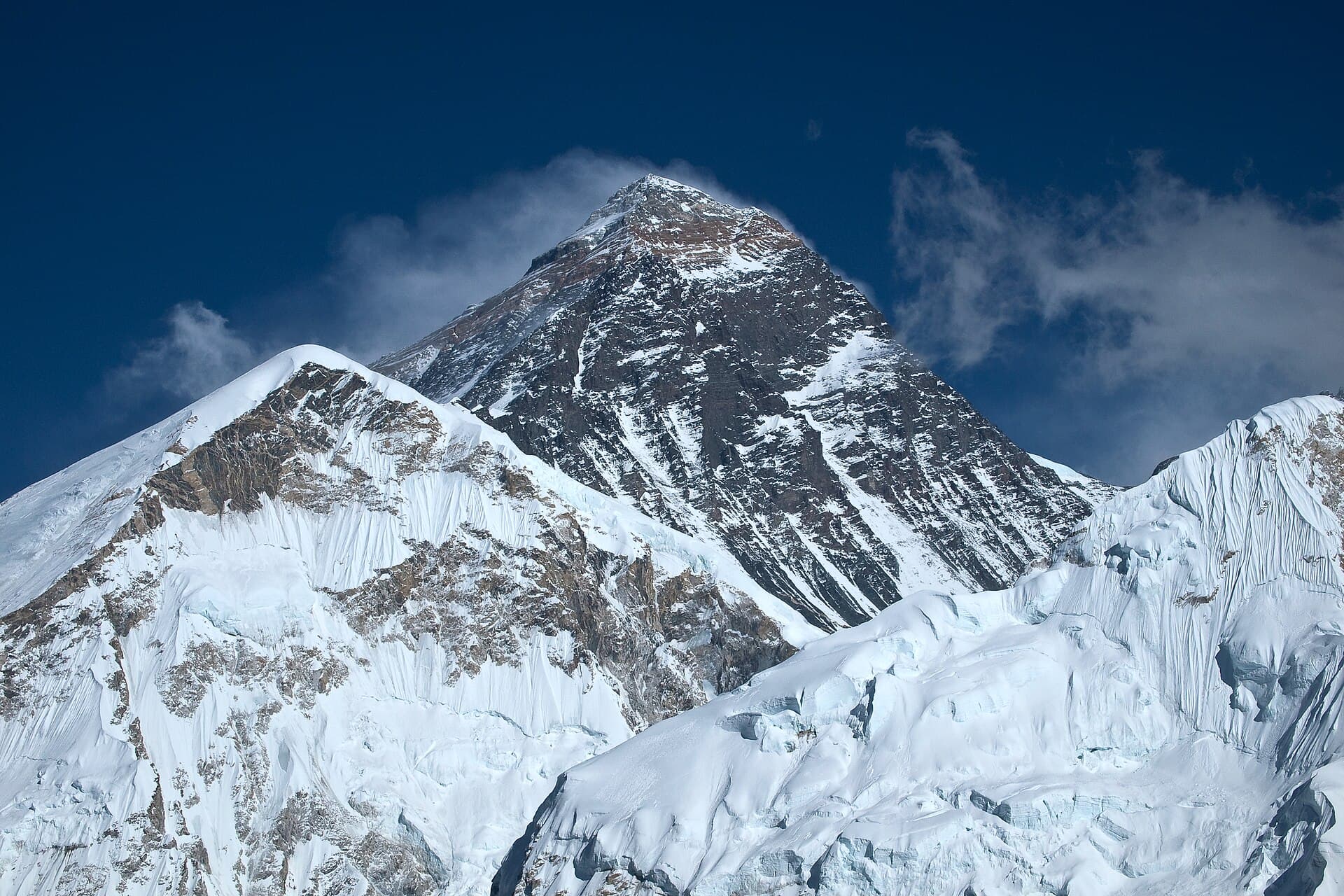
Sagarmatha — the Nepali name for Mount Everest — was established in 1976 and inscribed by UNESCO in 1979 as one of the world's first natural World Heritage Sites. Its UNESCO listing (site 120) describes a landscape unlike anywhere else on the list: a park where roughly 69% of the land lies above 5,000 metres, only a thin sliver — around 3% — is forested, and the rest is grazing land, rock and ice.
This is the country of Mount Everest (8,849 m), Lhotse, Cho Oyu and Ama Dablam, of the Gokyo lakes and the trail to Everest Base Camp. Its wildlife is elusive and superbly adapted to altitude: the snow leopard, the red panda in its lower forests, Himalayan tahr, musk deer, and the iridescent Himalayan monal — Nepal's national bird.
Sagarmatha is also a living cultural landscape. More than 2,500 Sherpa people live within it, in villages such as Namche Bazaar, Khumjung and Thame, and the park's Tibetan Buddhist monasteries — Tengboche chief among them — are central to both the community and the trekking experience.
Seeing both on one trip
The two parks sit at opposite ends of the country's geography, but they pair naturally into a single journey that captures Nepal's full range — jungle to ice. A common pattern is to combine a few days of lowland safari in Chitwan with a Himalayan trek into the Khumbu, using Kathmandu as the hub between them.
- Chitwan is reached by road or a short flight to Bharatpur, then on to the gateway town of Sauraha.
- Sagarmatha is reached by the mountain flight to Lukla, from where the trekking begins on foot.
Because their seasons broadly overlap — the clear, dry months of October to March suit Chitwan's wildlife viewing, while spring and autumn are the prime trekking windows for the Khumbu — an autumn trip in particular can take in both.
Fees and planning
Park entry fees differ between the two and change from time to time, so confirm the current figures before you travel. For Sagarmatha, the Nepal Tourism Board lists an entry fee of NPR 3,000 for foreign visitors, NPR 1,500 for SAARC nationals and NPR 25 for Nepali citizens, per person per entry — plus a separate local-government fee for the Khumbu; verify the current amounts before departure. For Chitwan, check the prevailing entry fee with the authorities rather than relying on older figures.
For official information on both parks, the best starting points are Nepal's Department of National Parks and Wildlife Conservation and the Nepal Tourism Board. Fees, permit rules and opening arrangements are all best confirmed there before a trip.
Two parks, one country, and very nearly the whole vertical span of life on Earth between them — from the rhino in the grass to the leopard in the snow.