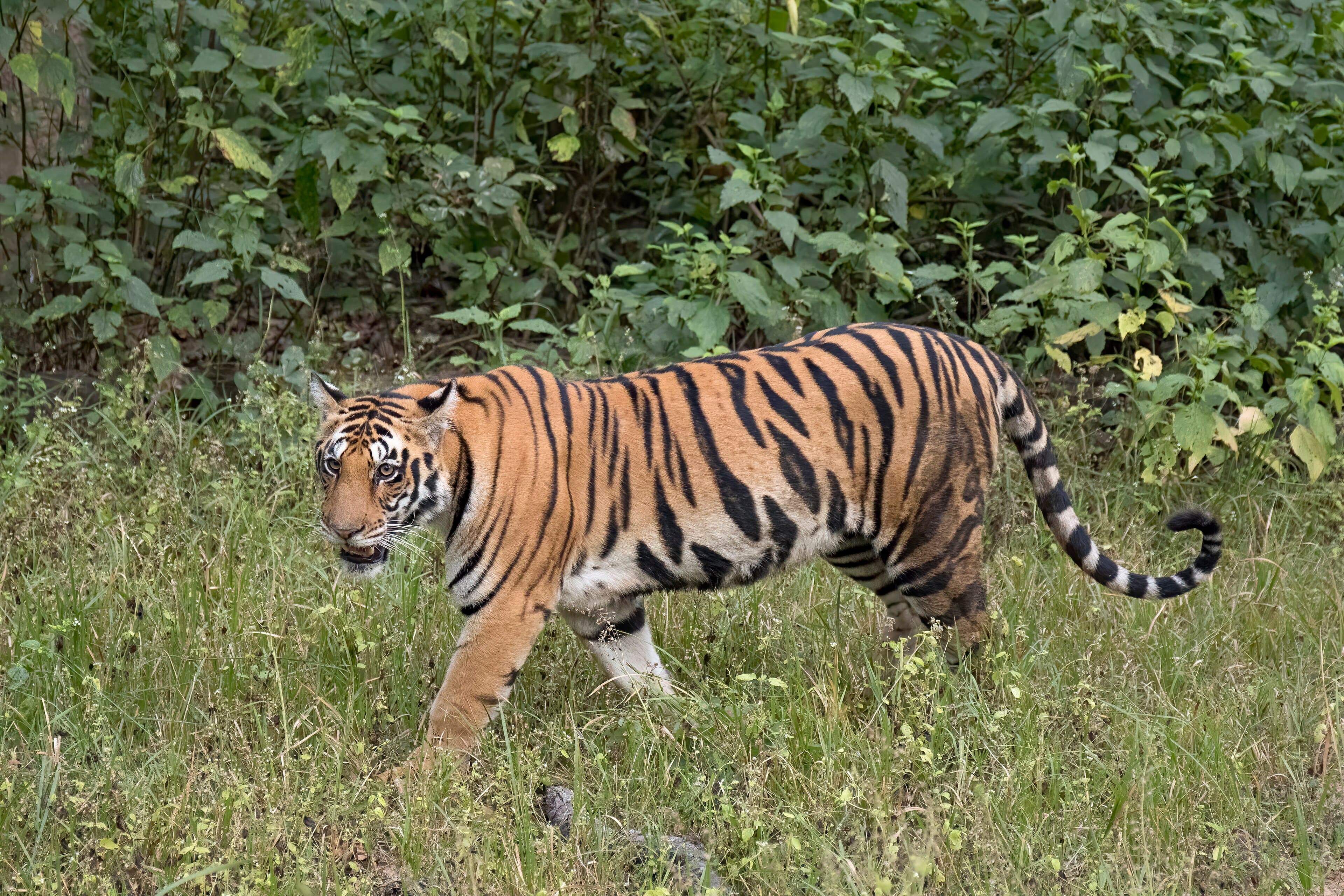
If you want to track a wild Bengal tiger in Nepal, you will be looking in the Terai — the lowland belt of grassland and sal forest along the southern border. Five national parks there protect tigers, and they are not interchangeable: one is the country's busy flagship, another is a quiet wilderness where sightings can be remarkable, and the rest are quieter corridor parks still building their visitor infrastructure.
Here is the short version, before the detail:
| Park | Tiger population (estimate) | What it's like |
|---|---|---|
| Chitwan | ~128 (2022 survey) | The flagship — most developed, easiest to reach |
| Bardiya | ~125 (Nepal's 2nd-largest) | Wild, quiet, excellent for serious tiger tracking |
| Shuklaphanta | ~40 adults | Far-western grasslands, few crowds |
| Parsa | Growing | Sal-forest neighbour of Chitwan |
| Banke | Shared Bardiya–Banke unit | Developing, a vital corridor |
Chitwan: the famous one
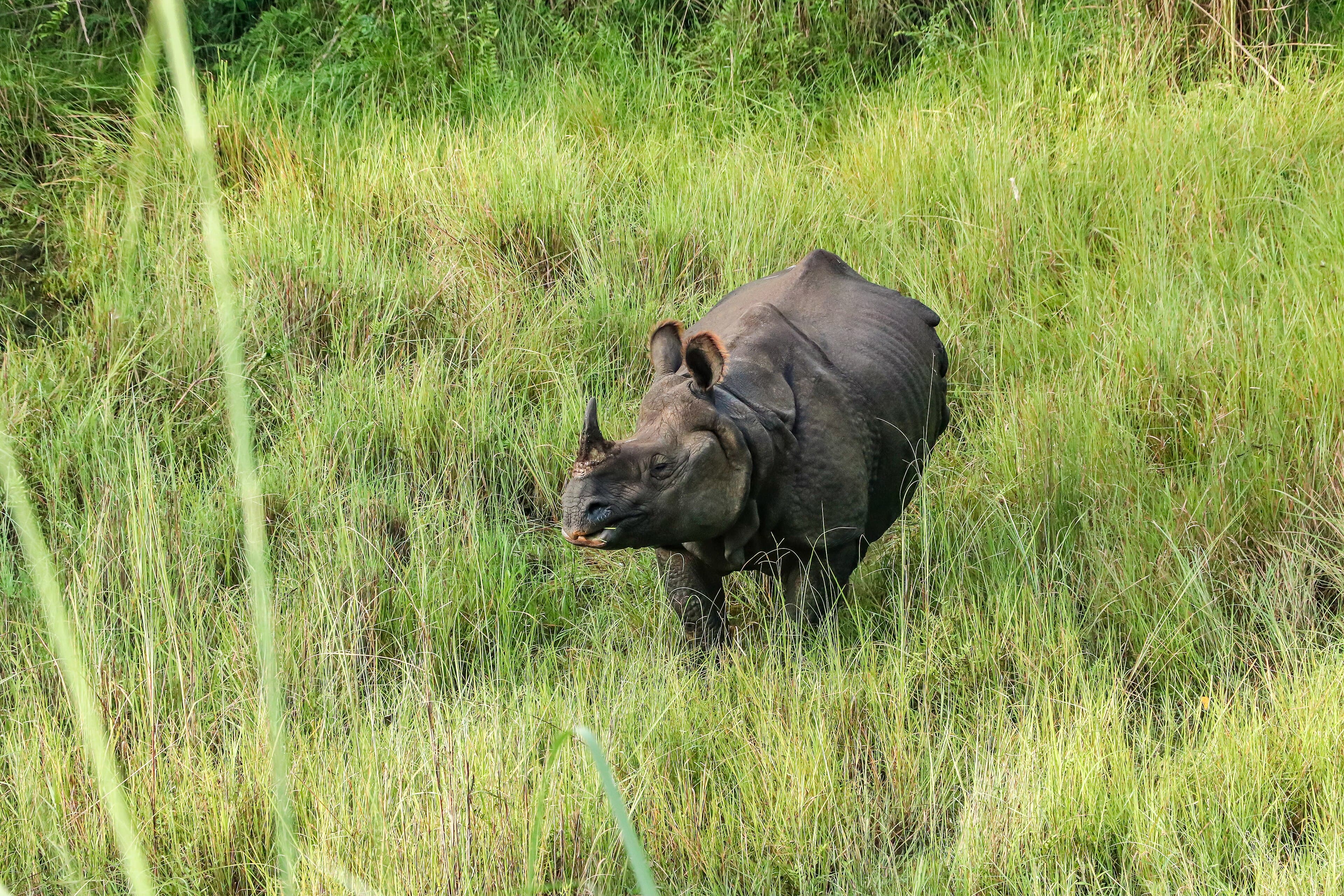
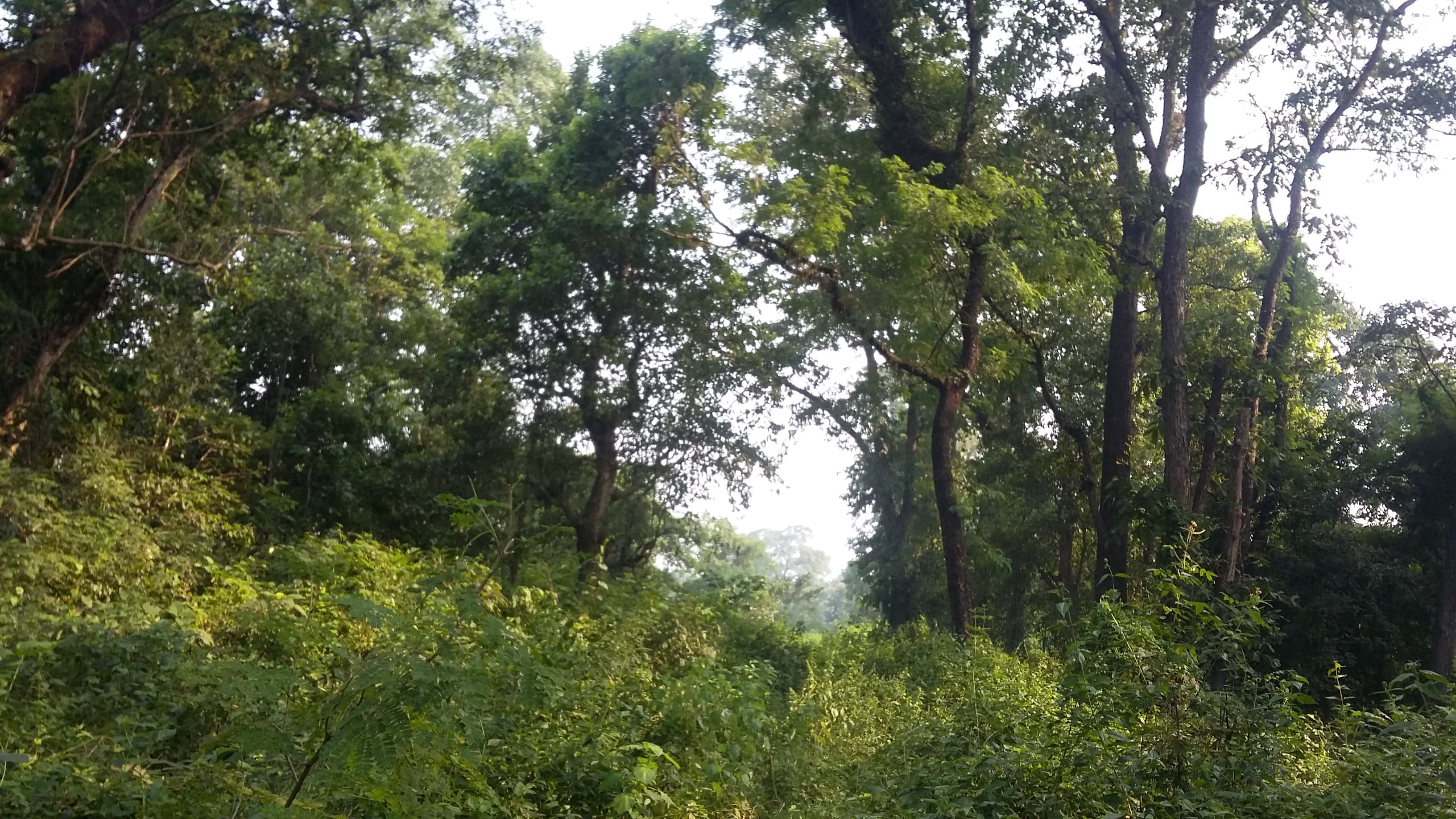
Chitwan is where most people meet the Terai. As Nepal's first national park (1973) and a UNESCO World Heritage Site, it has by far the most developed visitor infrastructure — licensed guides, jeep operators, lodges and the gateway town of Sauraha. Its tiger population was estimated at around 128 in the 2022 survey, one of South Asia's important breeding groups, sharing the forest with rhinos, gaur, sloth bears and more than 500 bird species.
The trade-off is that Chitwan is also the busiest. You are very likely to see rhinos; tigers are shyer, and the crowds are larger than anywhere else on this list. For a first visit to the Terai, it remains the natural choice.
Bardiya: the wild one
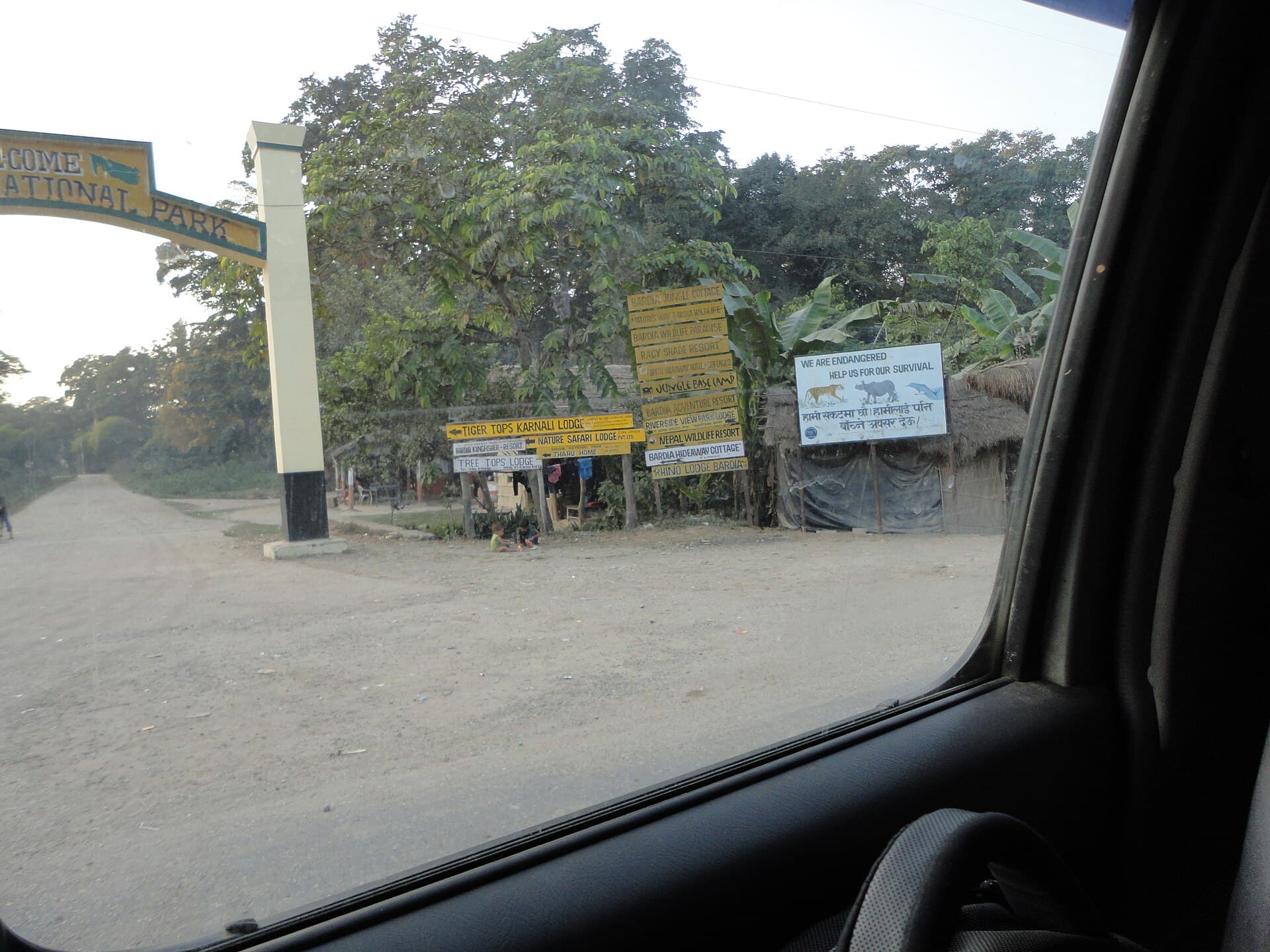
If your priority is the tiger itself, many people rate Bardiya above Chitwan. It holds Nepal's second-largest tiger population (around 125) across a larger, wilder and far quieter landscape, threaded by the Karnali and Babai rivers. With fewer visitors and a strong anti-poaching record, walking and jeep safaris here have built a reputation for genuinely good tiger encounters — especially in the dry season, when animals concentrate near water.
Bardiya asks a little more of you: it is further west, reached via Nepalgunj, and quieter on amenities. That remoteness is exactly the point.
Shuklaphanta: grasslands of the far west
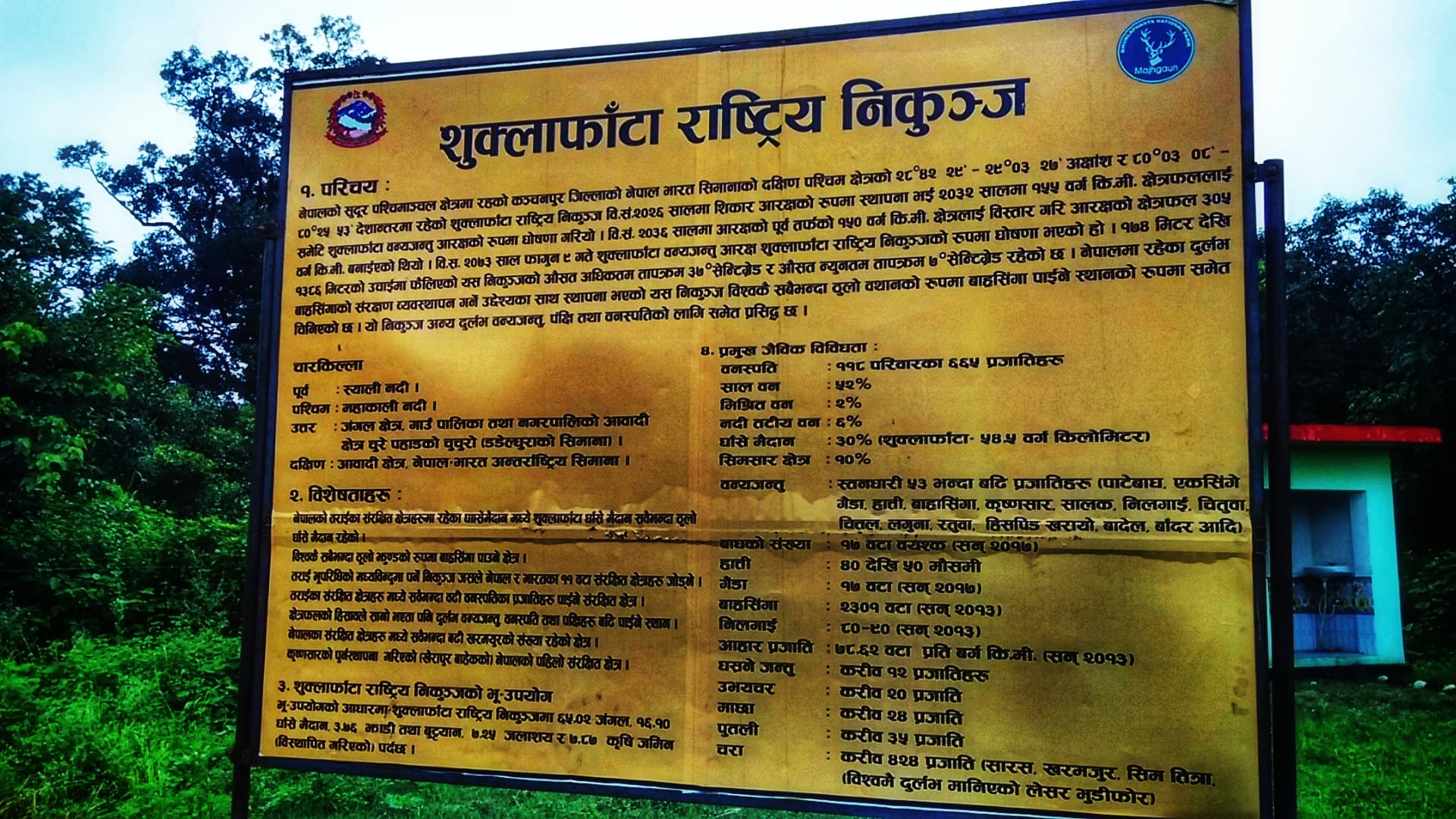
Shuklaphanta, in Nepal's far-western corner, protects the country's largest continuous grassland and an estimated 40 adult tigers. It is best known for an enormous herd of swamp deer, but the open phanta grasslands also make for distinctive tiger and prey viewing. It sees very few tourists, and access can be rougher — one for travellers who want solitude.
Parsa and Banke: the corridor parks
The remaining two are less about big visitor numbers and more about landscape connectivity. Parsa adjoins Chitwan to the east and shares its tigers as part of a single trans-boundary conservation landscape; its population is growing as the forest provides breeding and dispersal habitat. Banke, established in 2010, sits beside Bardiya and is managed with it as the Bardiya–Banke Tiger Conservation Unit, a roughly 1,518 km² block of protected habitat. Both are quieter, with developing facilities — rewarding for the independent-minded, and important for the tiger's long-term future even where you may not see one.
Which should you choose?
- First trip to the Terai, want the safest bet on wildlife? Chitwan.
- Serious about seeing a tiger, willing to travel? Bardiya.
- After space and solitude? Shuklaphanta.
- Combining with Chitwan, or exploring quietly? Parsa or Banke.
Whichever you pick, tigers are wild animals and sightings are never guaranteed. Go with licensed guides, give the dry months (roughly October to April) the best odds, and treat any encounter as the gift it is.