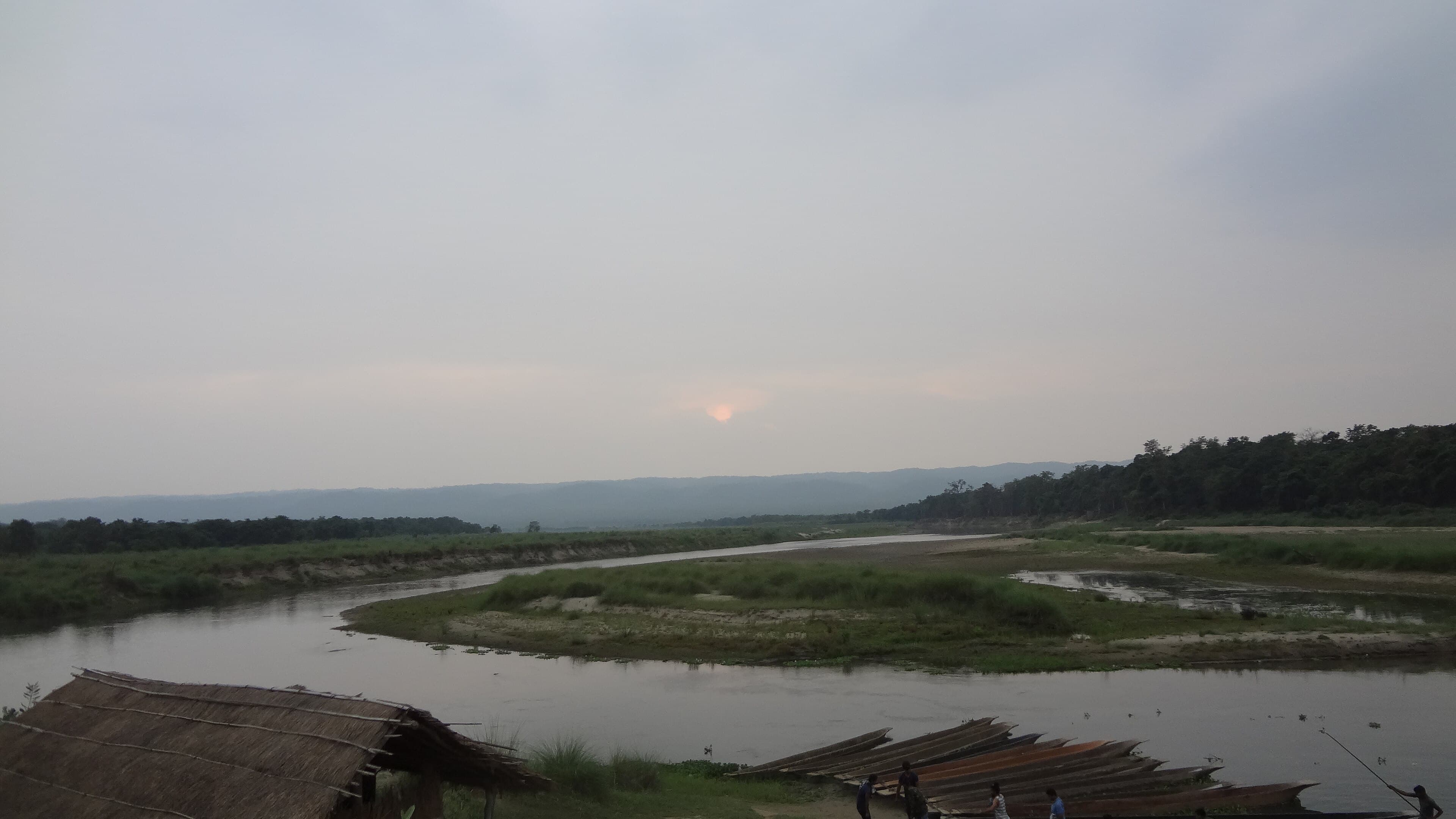
Sunset over the Terai floodplain at Chitwan National ParkPhoto: Nihaal Moktan · CC BY-SA 4.0

Home / Discover

The Story of the Valley

Discover Chitwan

One of the last undisturbed vestiges of the Terai — from royal hunting ground to a World Heritage Site of outstanding universal value.

Chitwan National Park covers 952.63 km² in the subtropical Inner Terai lowlands of south-central Nepal, spanning the Chitwan, Nawalpur, Parsa and Makwanpur districts.

Established in 1973 as the Royal Chitwan National Park, it was Nepal's first national park. It ranges from about 100 m in the river valleys to 815 m in the Sivalik Hills, and is the last surviving example of the natural ecosystems of the Terai region, which once extended across the foothills of India and Nepal.

The Narayani–Rapti river system forms a natural boundary to human settlement. Together with the adjacent Parsa National Park and India's Valmiki National Park, Chitwan forms the Chitwan–Parsa–Valmiki Tiger Conservation Unit, a 3,549 km² block of grasslands and forest.

A Timeline of Protection

From decline to designation

Pre-1950s

The Four Mile Forest

Known as the "Char Kose Jhadi", Chitwan was a renowned big-game hunting reserve for Nepal’s ruling Rana class and their guests, who camped for months hunting tigers, rhinos and other game.

1950s

Settlement and decline

Malaria was eradicated with DDT and farmers moved into the valley. Forest was cleared and wildlife declined sharply; by the late 1960s about 70% of the jungle was gone and only 95 rhinos remained.

1959–1963

First protections

The Tikauli forest was declared the Mahendra Deer Park in 1959; the area south of the Rapti River became a Rhino Sanctuary in 1963. An armed anti-poaching patrol, the Gaida Gasti, was formed.

1973

The park is established

Royal Chitwan National Park was formally established to prevent the extinction of the rhino — Nepal’s first national park, initially covering 544 km².

1977

Enlarged

The park was expanded to its present extent of 952.63 km².

1984

UNESCO World Heritage Site

Inscribed for its outstanding universal value (Reference No. 284).

1997

Buffer zone added

A 766.1 km² buffer zone was declared around the park to share conservation benefits with local communities.

2006

"Royal" dropped

Following the end of the monarchy era, the park was renamed simply Chitwan National Park.

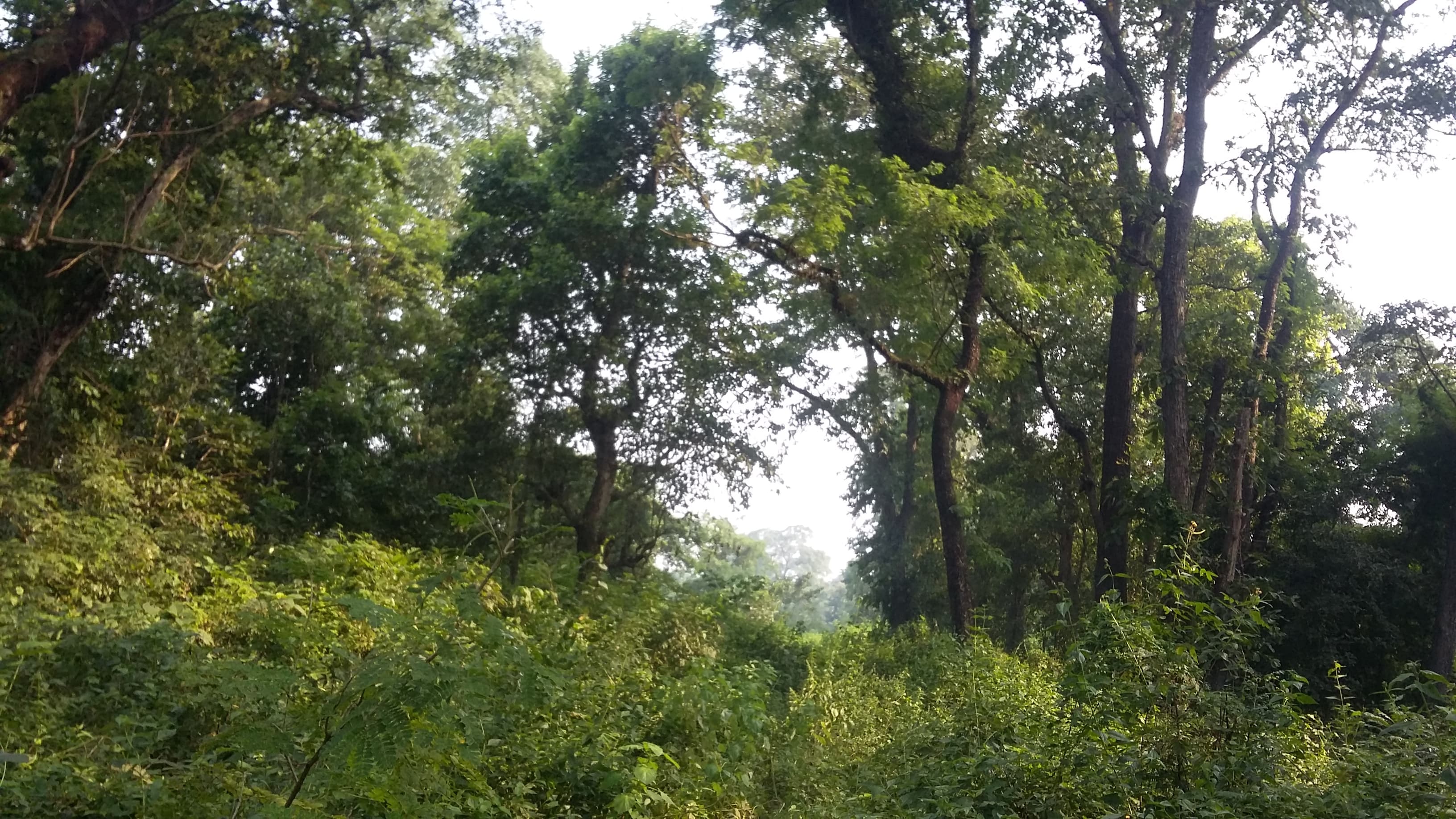
Sal forest under a humid Terai skyPhoto: Bharatadhikarimb · CC BY-SA 4.0

Climate

A humid subtropical monsoon

Most of the year's ~2,500 mm of rain falls during the monsoon, from mid-June to late September. From mid-October humidity drops and days cool from around 36 °C toward 18 °C. Winter nights fall to about 5 °C until late December before temperatures climb again.

World Heritage · Reference No. 284

Outstanding universal value

Chitwan was inscribed by UNESCO in 1984 under three natural criteria.

Criterion (vii)

Superlative natural phenomena and areas of exceptional natural beauty across forest, grassland and river.

Criterion (ix)

The largest and least disturbed example of sal forest and associated communities — an outstanding example of ongoing ecological and biological evolution.

Criterion (x)

The most important natural habitats for in-situ conservation of biodiversity, including threatened species like the rhino and tiger.

The Chitwan jungle

Meet the wildlife

68 mammal species, from the one-horned rhino to the elusive Bengal tiger.